USEFUL TIP: The engine is very heavy, so we recommend that you have someone help you when removing it.
WARNING: When removing and installing a heavy engine, use only fully functional lifting equipment designed for the corresponding load, and pay particular attention to the correct and secure connection of cables, crossbars, etc. to the engine's transport eyes.
1. For ease of work, remove the hood (see "Removing and installing the hood").
2. Reduce the pressure in the fuel system (see "Losing pressure in the fuel system").
3. Disconnect the wires from the battery and remove it from the vehicle (see "Removing and installing the battery").
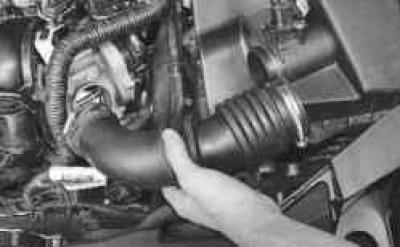
4. Remove the air supply hose (see "Removing and installing the air filter and intake silencer").
5. Remove the air filter (see "Removing and installing the air filter and intake silencer").
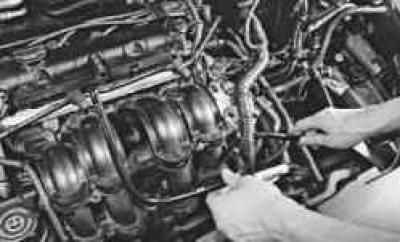
6. Remove the engine crankcase ventilation system pipe (see "Cleaning the crankcase ventilation system").
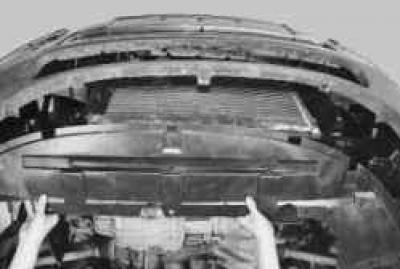
7. Remove the engine splash guard (see "Removing and installing the engine mudguard").
8. Drain the cooling system (see "Replacing the coolant").
9. If you remove the engine for repair, drain the oil from the oil pan (see "Changing engine oil and oil filter").
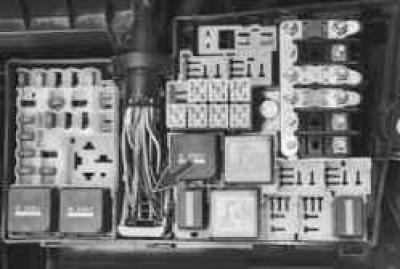
10. Remove the cover of the mounting block in the engine compartment (see "Mounting blocks") and disconnect the engine wiring harness connector from the block connector.
NOTE: The engine harness remains on the engine and will be removed with the engine.
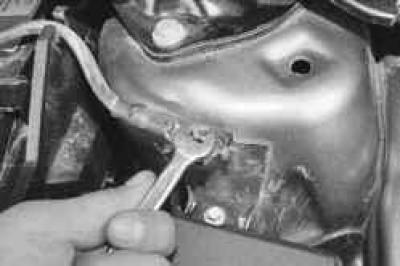
11. Disconnect the ground wire from the body by unscrewing the mounting bolt.
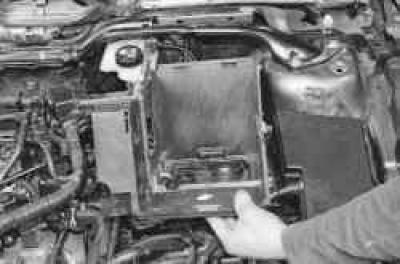
12. Remove the battery tray (see "Removing and installing the battery mounting shelf").
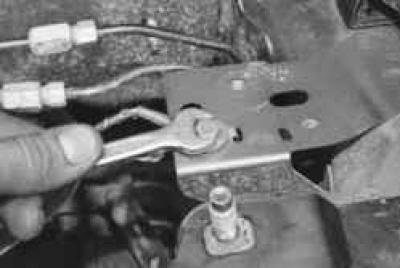
13. Disconnect the two ground wires from the body bracket by unscrewing the bolt that secures them.
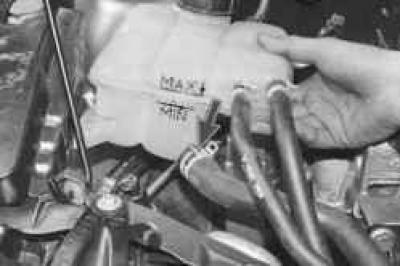
14. Remove the expansion tank of the cooling system from the body brackets, disconnect the liquid hose from it (see "Removing and installing the expansion tank") and move the expansion tank to the side.
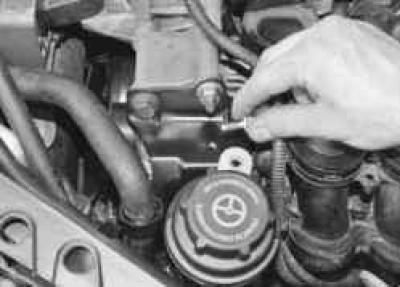
15. Disconnect the power steering reservoir from the bracket by unscrewing the mounting bolt and move the reservoir to the side.
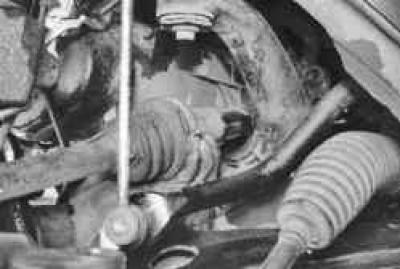
16. Remove the front wheel drives (see "Removing and installing front wheel drives").
17. Remove the air conditioning compressor drive belt (see "Replacing the Air Conditioning Compressor Drive Belt").
18. Remove the accessory drive belt (see "Replacing the accessory drive belt").
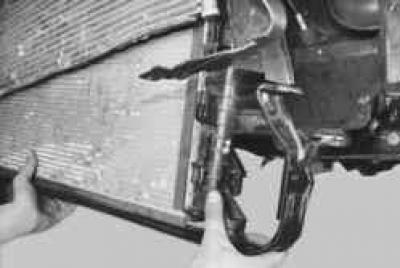
19. Remove the cooling system radiator (see "Replacing the cooling system radiator").
NOTE: If the vehicle is not equipped with air conditioning, the radiator does not need to be removed. Simply disconnect the outlet hose from the lower radiator hose.
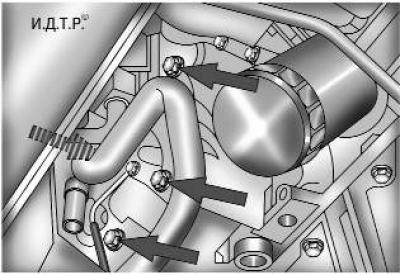
Fig. 5.19. Air conditioning compressor mount
20. Unscrew the air conditioner compressor mounting bolts (see Fig. 5.19). Without disconnecting the pipelines from the compressor, move it to the side and secure it in any available way (for example, by tying it with wire).
21. Disconnect the power steering pump from the engine (see "Replacing the power steering pump"), and then, without disconnecting the pipelines from it, move it to the side and secure it in the same way as you secured the air conditioner compressor.
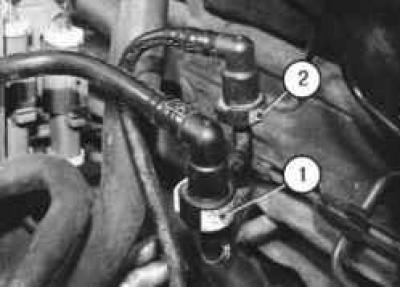
22. By squeezing the clamps, disconnect the fuel supply line 1 and the purge line 2 of the adsorber.
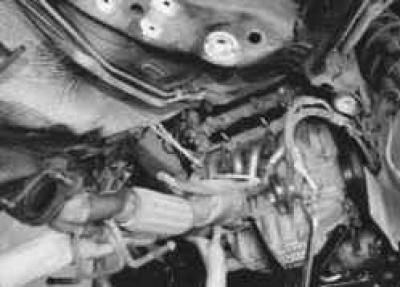
23. Remove the catalytic converter (see "Removing, installing the exhaust manifold and replacing its gasket").
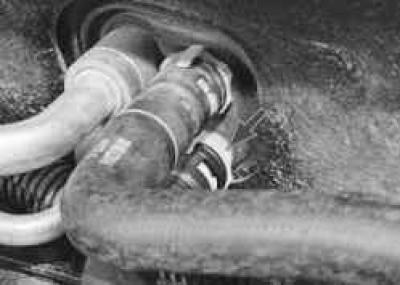
24. Disconnect the interior heater outlet hose by turning its clamp counterclockwise.
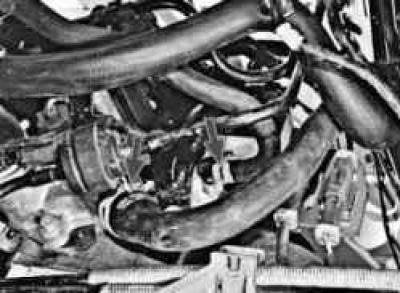
25. Using pliers, squeeze the clamps and slide them along the hoses, disconnect the steam outlet hose, the supply hose of the interior heater…
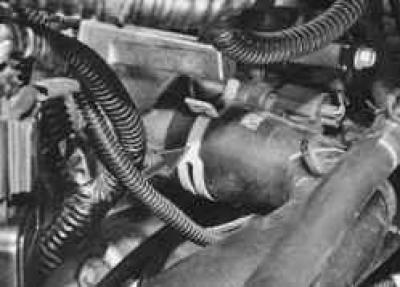
26. …and the radiator supply hose from the water jacket outlet pipe located under the ignition coil.
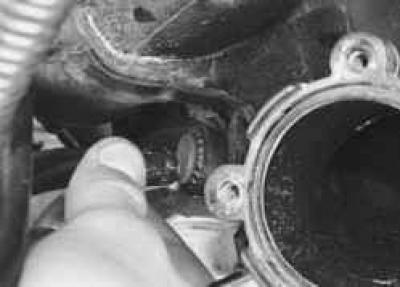
27. Disconnect the brake booster line from the inlet pipe.
NOTE: The throttle body has been removed for clarity. It is not necessary to remove it when removing the engine.
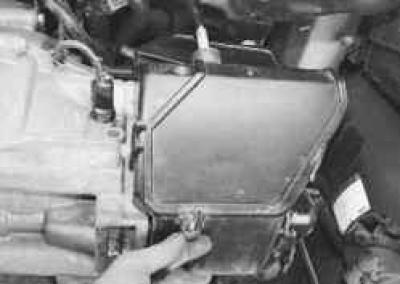
28. Unfasten the seven latches of the gearshift housing cover…
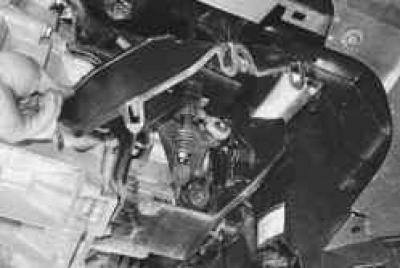
29. …and remove the lid.
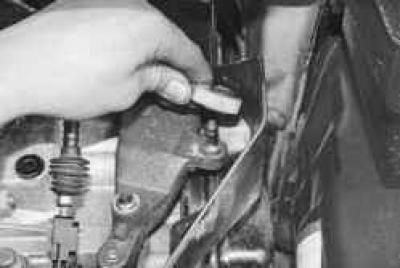
30. Disconnect the cable ends from the gear shift levers…
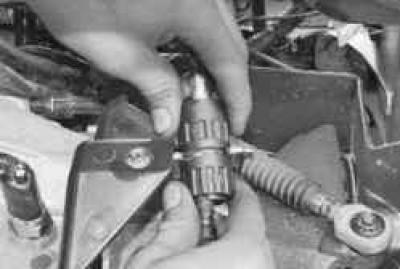
31. …and cable sheaths from gearbox brackets (see "Replacing the transmission control cables").
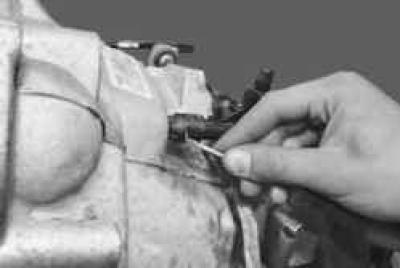
32. Pry it off with a screwdriver..
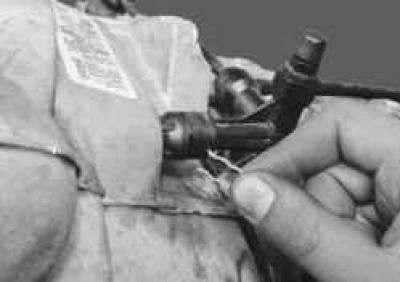
33. …remove the spring retainer of the clutch release hydraulic drive slave cylinder adapter…
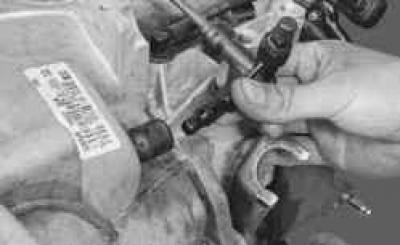
34. …and disconnect the adapter from the clutch housing together with the clutch release hydraulic drive pipeline.
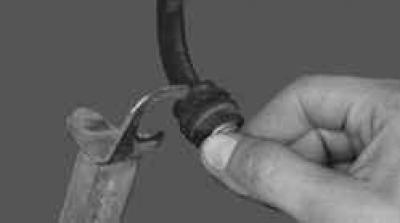
35. Remove the clutch release line hose holder from the bracket on the gearbox and move the line to the side.
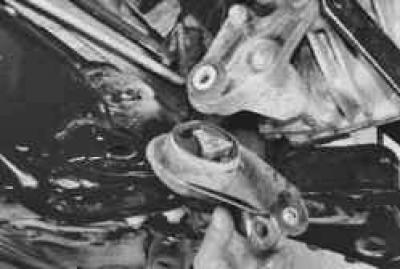
36. Place a reliable support under the engine and remove the rear support of the power unit suspension (see "Replacing the power unit suspension supports").
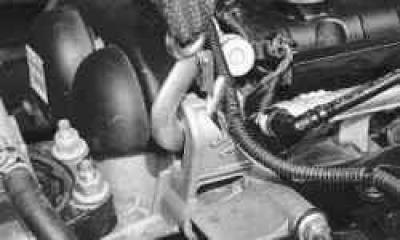
37. Attach the lifting gear slings to the front…
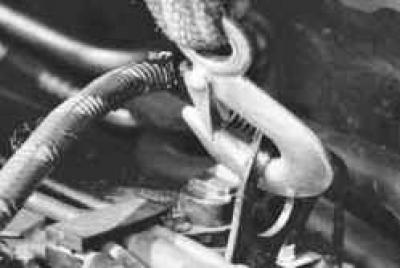
38. …and the rear transport eyes and tighten the straps.
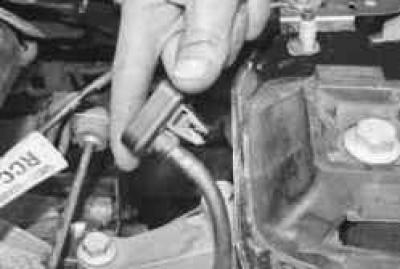
39. Remove the gearbox crankcase ventilation breather from the flange of the left powertrain suspension bracket.
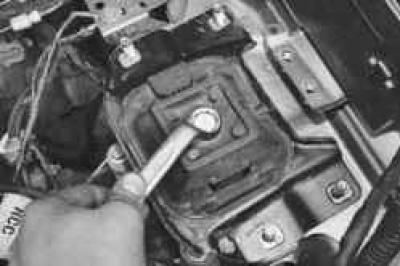
40. Remove the bolt securing the left support of the powertrain suspension to the bracket on the gearbox.
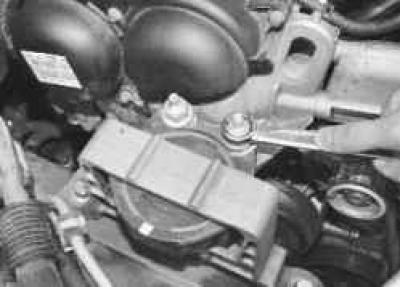
41. Remove the right powertrain suspension support (see "Replacing the powertrain suspension supports").
42. Check again that all wires, hoses and attachments are disconnected from the power unit.
43. Remove the support from under the engine and lower the power unit down to the floor.
44. Raise the front of the vehicle (lift the vehicle on a lift) to a height sufficient to remove the power unit from under the vehicle, and install reliable supports under the body.
45. Remove the power unit from under the vehicle.
46. Install the engine and all removed components and parts in the reverse order of removal, taking into account the following:
- before installing the power unit, use a tap to clean the threaded holes for mounting its supports from rust;
- be sure to replace the catalytic converter gasket with a new one;
- when connecting wires and pipelines, carefully ensure that they are correctly positioned in the engine compartment, avoiding contact with heating and moving elements of the power unit.
After installing the engine, do the following.
1. Fill the engine with oil (see "Changing engine oil and oil filter").
2. Fill the gearbox with oil (see "Changing the gearbox oil").
3. Fill with coolant (see "Replacing the coolant").
4. Adjust the gearbox control drive (see "Adjusting the gearbox control drive").
5. Remove air from the clutch release hydraulic drive (see "Bleeding the clutch release hydraulic drive").
6. Start the engine and check for fuel, oil and coolant leaks. Check the oil pressure. Listen to the engine: it should run smoothly, without any extraneous noise or knocking.