Car engine cooling system Ford Focus Turnier 1

Description of the design of the engine cooling system
The coolant level is clearly visible in the transparent expansion tank next to the right shock absorber dome. If you frequently add small amounts of coolant, check the...
The coolant level is clearly visible in the transparent expansion tank next to the right shock absorber dome. If you frequently add small amounts of coolant, check the...

Cooling system components
Water pump: in all Focus engines, the coolant is driven in the cooling system by a so-called centrifugal pump. Schematic representation of a water pump (centrifugal...
Water pump: in all Focus engines, the coolant is driven in the cooling system by a so-called centrifugal pump. Schematic representation of a water pump (centrifugal...

Cooling liquid
The coolant in the Focus is a mixture of antifreeze, anticorrosive agent and water. Ford fills the factory with a coolant that is approximately 50% coolant concentrate...
The coolant in the Focus is a mixture of antifreeze, anticorrosive agent and water. Ford fills the factory with a coolant that is approximately 50% coolant concentrate...

Checking the cooling system for leaks
Are the water hoses on the radiator, on the engine and to the heating radiator tight? You can easily recognize leaks by the white sediment around the leaky area. Check:...
Are the water hoses on the radiator, on the engine and to the heating radiator tight? You can easily recognize leaks by the white sediment around the leaky area. Check:...

Checking the level and adding coolant
Check the coolant level when the engine is cold - the cooling system is under virtually no pressure and the coolant has reached its normal expansion. When the engine is...
Check the coolant level when the engine is cold - the cooling system is under virtually no pressure and the coolant has reached its normal expansion. When the engine is...
Replacing the coolant
Ford recommends replacing the coolant only after 10 years or 240,000 km. Although this only applies to the original WSS-M97B44-D (Motorcraft Super Plus 2000) fluid. But...
Ford recommends replacing the coolant only after 10 years or 240,000 km. Although this only applies to the original WSS-M97B44-D (Motorcraft Super Plus 2000) fluid. But...

Resist winter — protection from frost down to -30°C
Frost protection down to -30°C is quite sufficient in our country. This corresponds to approximately 50% mixture based on Ford concentrate. But if you periodically...
Frost protection down to -30°C is quite sufficient in our country. This corresponds to approximately 50% mixture based on Ford concentrate. But if you periodically...

Help with cooling system and thermostat problems
Help with cooling system problems Help with thermostat problems
Help with cooling system problems Help with thermostat problems
The engine is losing coolant
If the engine has lost a large amount of coolant during a trip, do not add cold water under any circumstances: the hot engine will experience cold shock, which in...
If the engine has lost a large amount of coolant during a trip, do not add cold water under any circumstances: the hot engine will experience cold shock, which in...

Removing and checking the thermostat
Remove the thermostat only when the engine is cold. An experienced amateur can do this job, but a workshop will do it better. If you feel up to it, first release the...
Remove the thermostat only when the engine is cold. An experienced amateur can do this job, but a workshop will do it better. If you feel up to it, first release the...
The engine «boils» — a faulty radiator fan
Your Focus's cooling system copes equally well with long idling periods and stressful mountain-climbing drives. If, however, the temperature rises to the boiling point,...
Your Focus's cooling system copes equally well with long idling periods and stressful mountain-climbing drives. If, however, the temperature rises to the boiling point,...

Removing the radiator fan
Securely raise the front of the vehicle. Disconnect the battery ground cable (terminal 31) and the multi-pin connectors (arrows) at the defective blower motor. Loosen...
Securely raise the front of the vehicle. Disconnect the battery ground cable (terminal 31) and the multi-pin connectors (arrows) at the defective blower motor. Loosen...

Removing the radiator
Raise the front of the vehicle securely. Disconnect the battery ground cable (terminal 31) and the wire connectors at the blower motor. Disconnect the wire from the...
Raise the front of the vehicle securely. Disconnect the battery ground cable (terminal 31) and the wire connectors at the blower motor. Disconnect the wire from the...
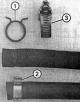
Replacing coolant hoses
If a coolant hose bursts while driving, temporarily seal the leak with adhesive tape. To be on the safe side, slightly loosen the radiator cap: then the operating...
If a coolant hose bursts while driving, temporarily seal the leak with adhesive tape. To be on the safe side, slightly loosen the radiator cap: then the operating...
Air filter (air intake noise damper)
In order to extend the service life of the engine, the intake air - before it combines with the fuel to form a flammable mixture - passes through a special filter...
In order to extend the service life of the engine, the intake air - before it combines with the fuel to form a flammable mixture - passes through a special filter...

Cleaning and replacing the air filter insert
You should clean the filter element and the place where it is installed - the foam dust collector in the air filter box - at least once a year and change it at least...
You should clean the filter element and the place where it is installed - the foam dust collector in the air filter box - at least once a year and change it at least...

Cleaning the air filter insert
Gently tap the filter element on a hard surface to remove large dust particles. Blow out finer dust particles with compressed air. Blow the dust out of the filter...
Gently tap the filter element on a hard surface to remove large dust particles. Blow out finer dust particles with compressed air. Blow the dust out of the filter...
This section is available on russian, bulgarian, belarusian, ukrainian, serbian, croatian, romanian, polish, slovak, hungarian
See other similar sections for Ford cars:
• Engine: Cooling system Ford Mondeo 1 and 2 (1993-2000)
• Diesel engines: Cooling and lubrication system Ford Escort 4 (1986-1990)
• Engine: Cooling system Ford Fiesta 2 (1983-1989)
• Engine: Cooling system Ford Taurus 1 and 2 (1986-1994)
• Power unit: Lubrication and cooling system Ford Fusion (2002-2012)
• Power unit: Cooling and heating Ford Transit 2 (1986-2000, diesel)
• Engine: Cooling system Ford Mondeo 1 and 2 (1993-2000)
• Diesel engines: Cooling and lubrication system Ford Escort 4 (1986-1990)
• Engine: Cooling system Ford Fiesta 2 (1983-1989)
• Engine: Cooling system Ford Taurus 1 and 2 (1986-1994)
• Power unit: Lubrication and cooling system Ford Fusion (2002-2012)
• Power unit: Cooling and heating Ford Transit 2 (1986-2000, diesel)
Focus 2
Focus Turnier 1
Focus 1
- General information
- Vehicle device
- Owner's manual
- Faults en route
- Maintenance
- First maintenance
- Second maintenance
- Applications
- Consumables and spare parts
- Auto mechanic tips
- Power unit
- Engine repair
- Engine seal parts
- Cooling system
- Exhaust system
- Supply system
- Clutch
- Car gearbox
- Front wheel drives
- Chassis
- Front suspension
- Rear suspension
- Steering
- Brake system
- Wheels and tires
- Body and coating
- Body elements
- Side doors
- Tailgate
- Salon elements
- Safety system
- Windshield wipers and washers
- Body Care
- Electrical equipment
- Instruments and motors
- Battery and alternator
- Egnition lock
- Engine management
- Headlights and lighting
- Switches and sensors
- Schematic diagrams
Focus Turnier 1
- General information
- Introduction to guide
- Car care
- Power unit
- Engine repair
- Lubrication system
- Cooling system
- Fuel injection (gasoline)
- Fuel injection (diesel)
- Ignition system
- Power and exhaust system
- Transmission
- Clutch and drive shafts
- Mechanical gearbox
- Automatic gearbox
- Chassis
- Car suspension
- Steering
- Wheels and tires
- Brake system
- Body
- Exterior
- Interior
- Heating and ventilation
- Electrical equipment
- Equipment and devices
- Lighting and signaling
- Power devices
- Electrical circuits
Focus 1
- General information
- Using the manual
- Identification codes
- Power unit
- Engine
- Engine 1.4/1.6 Zetec-SE
- Engine 1.6/1.8/2.0 Zetec-E
- Engine Duratec ST 2.0 l
- Engine Duratec 8V 1.6 l
- Diesel engine 1.8 l
- Engine cooling
- Fuel supply
- Accessory drive
- Launch system
- Ignition system
- Air and vapor
- Engine management
- Exhaust toxicity
- Exhaust system
- Automatic gearbox
- Clutch
- Mechanical gearbox iB5
- Mechanical gearbox MTX-75
- Mechanical gearbox MT285
- Chassis
- Front suspension
- Rear suspension
- Wheels and tires
- Front axle axles
- Brake system
- Hydraulic brake
- Anti-lock braking system
- Steering
- Body and coating
- Body panels
- Body elements
- Salon elements
- Glass, frames and mechanisms
- Windshield wipers and washers
- Car sunroof
- Seat belts
- Body repairs
- Back elements
- Electrical equipment
- Climate control
- Heating and ventilation
- Instruments and control lamps
- Battery and alternator
- Audio system
- Headlights and lighting
- Power distribution
- Electronic Function Group