The control device in the system is the electronic control unit (ECU). Based on the information received from the sensors, the ECU calculates the parameters for regulating fuel injection and controlling the ignition timing. In addition, in accordance with the embedded algorithm, the ECU controls the operation of the electric motor of the engine cooling system fan and the electromagnetic clutch of the air conditioner compressor, performs the function of self-diagnosis of the system elements and notifies the driver of any malfunctions.
If individual sensors and actuators fail, the ECU switches on emergency modes to ensure engine operability.
The amount of fuel supplied by the injectors is determined by the duration of the electrical signal from the ECU. The electronic unit monitors engine condition data, calculates the fuel requirement and determines the required duration of fuel supply by the injectors (signal duration). To increase the amount of fuel supplied, the signal duration increases, and to reduce fuel supply, it decreases.
The engine management system, along with the electronic control unit, includes sensors, actuators, connectors and fuses.
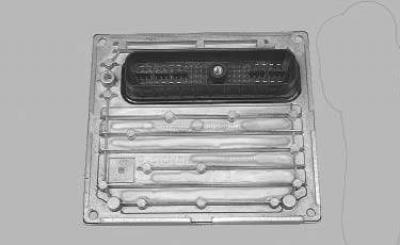
Electronic control unit (ECU) is connected by electrical wires to all the sensors of the system. Receiving information from them, the unit performs calculations in accordance with the parameters and control algorithm stored in the memory of the programmable read-only memory (EPROM), and controls the executive devices of the system. The program version recorded in the EPROM memory is designated by the number assigned to this modification of the ECU.
The control unit detects the fault, identifies and stores its code, even if the fault is unstable and disappears (e.g. due to poor contact). The engine management system fault indicator lamp in the instrument cluster goes out 10 seconds after the faulty unit is restored to working order.
After repair, the fault code stored in the control unit memory must be erased. To do this, disconnect the power supply to the unit for 10 seconds (remove the fuse of the power supply circuit of the electronic control unit or disconnect the wire from the negative terminal of the battery).
The unit supplies direct current of 5 and 12 V to various sensors and switches of the control system. Since the electrical resistance of the supply circuits is high, the control lamp connected to the system terminals does not light. To determine the supply voltage at the ECU terminals, use a voltmeter with an internal resistance of at least 10 MOhm.
The ECU is not suitable for repair; in case of failure it must be replaced.
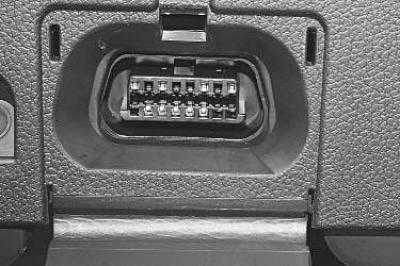
Diagnostic connector serves to output from the ECU memory the error codes detected during operation of the engine management system.
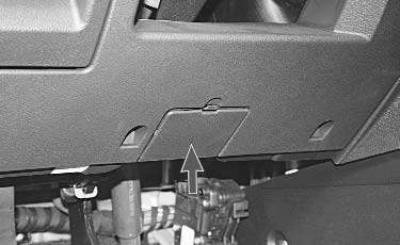
The diagnostic connector is located in the passenger compartment on the left side of the instrument panel under the steering column and is hidden behind a folding panel. A scanning device can be connected to the diagnostic connector, which reads information from the serial data line.
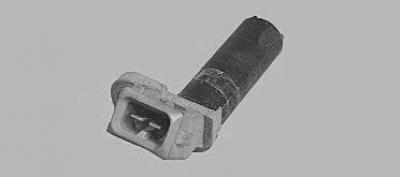
Crankshaft position sensor inductive type is designed to synchronize the operation of the electronic control unit with the TDC of the pistons of the 1st and 4th cylinders and the angular position of the crankshaft.
The sensor is installed at the rear of the engine opposite the timing teeth on the flywheel. The timing teeth are made on the flywheel surface at equal intervals. One tooth is missing to create a synchronization pulse (the "reference" pulse), which is necessary to coordinate the operation of the control unit with the TDC of the pistons in the 1st and 4th cylinders.
When the crankshaft rotates, the teeth change the magnetic field of the sensor, inducing AC voltage pulses. The control unit determines the crankshaft rotation frequency based on the sensor signals and sends pulses to the injectors.
If the sensor fails, the engine cannot be started.
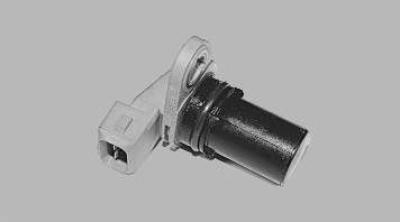
Camshaft position sensor (phase sensor) inductive type determines the TDC of the compression stroke of the piston of the 1st cylinder. The signal from the sensor is used by the electronic control unit and serves to organize phased fuel injection in accordance with the order of operation of the cylinders. If a malfunction occurs in the circuit of any of the sensors, the controller enters its code into its memory and turns on the signal lamp.
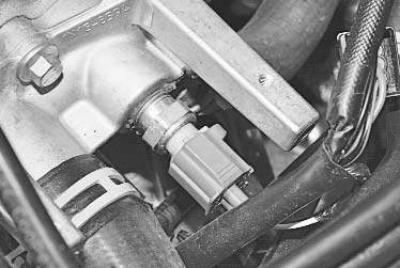
Coolant temperature sensor is installed in the coolant distributor housing on the rear side of the engine. The sensor's sensitive element is a thermistor, the electrical resistance of which changes inversely proportional to the temperature. At low coolant temperatures (–40°C), the thermistor's resistance is about 100 kOhm; when the temperature rises to +130°C, it decreases to 70 Ohm.
The electronic unit supplies the temperature sensor circuit with a constant reference voltage. The sensor signal voltage is maximum when the engine is cold and decreases as it warms up. Based on the voltage value, the electronic unit determines the engine temperature and takes it into account when calculating the injection and ignition adjustment parameters. If the sensor fails or there are problems in its connection circuit, the ECU sets a fault code and stores it.
In addition to the above, the sensor also indirectly serves as a coolant temperature gauge sensor in the instrument cluster. Based on the information from this sensor, the electronic engine control unit changes the gauge readings. To eliminate the malfunction, check the reliability of the contact connections in the wiring to the sensor or replace the sensor.
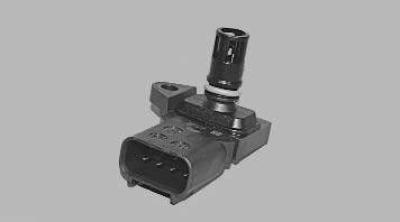
Combined manifold absolute pressure and intake air temperature sensor is made in the form of a variable resistor sensitive to pressure changes. It records the change in pressure in the intake manifold in accordance with changes in load and engine speed. Depending on the information received from the sensor, the controller records the amount of fuel injected and the ignition advance angle.
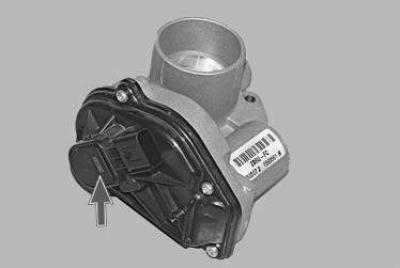
Throttle position sensor made as a single piece with the throttle body cover.
The sensor is a potentiometer, to one end of which the "plus" of the supply voltage (5 V) is supplied, and the other end is connected to the "ground".
From the third output of the potentiometer (from the slider) the output signal goes to the electronic control unit.
When the throttle valve turns (from the action on the control pedal), the voltage at the sensor output changes. When the throttle valve is closed, it is below 0.5 V. When the valve opens, the voltage at the sensor output increases, when the valve is fully open, it should be more than 4 V.
By monitoring the output voltage of the sensor, the controller adjusts the fuel supply depending on the throttle opening angle (i.e., at the driver"s request).
The throttle position sensor does not require adjustment, since the control unit perceives idle speed (i.e., completely closed throttle valve) as a zero mark.
Vehicle speed sensor the gearbox does not have a speed sensor, its function is performed by the front wheel speed sensors of the anti-lock braking system (ABS), installed in the steering knuckles of the front suspension. The front wheel speed sensors transmit a signal read from the pulse rings installed on the front wheel hubs to the ABS control unit and additionally to the electronic engine control unit. The operating principle of the sensor is based on the Hall effect. The sensor sends rectangular voltage pulses to the electronic control unit with a frequency proportional to the rotation speed of the drive wheels.
Oxygen concentration sensors (lambda probes) screwed into the threaded holes of the catalytic converter. Two oxygen concentration sensors are installed on Ford Fusion vehicles:
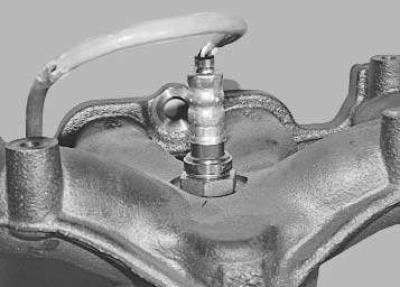
- control sensor designed to control the composition of the fuel-air mixture (at the inlet to the neutralizer);
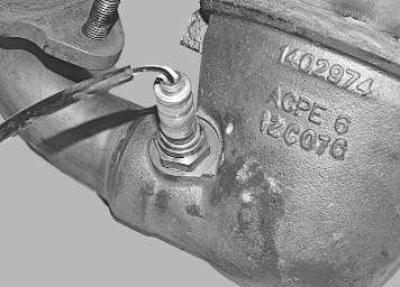
- diagnostic sensor designed to assess the efficiency of the neutralizer (at the output).
The sensor's metal flask contains a galvanic element washed by the exhaust gas flow. Depending on the oxygen content in the exhaust gases, the sensor's signal voltage changes as a result of combustion of the fuel-air mixture.
The sensors differ in parameters and have different markings. If at least one of the oxygen concentration sensors is faulty, the toxicity of exhaust gases can increase sharply, and fuel consumption can increase.
For ease of replacement, the sensors are distinguished by the color of the pads. The pad of the sensor wiring harness at the input to the neutralizer (control) is green, and at the output from the neutralizer (diagnostic) is purple.
Information from each sensor is sent to the control unit in the form of low (from 0.1 V) and high (up to 0.9 V) level signals. With a low level signal, the control unit receives information about a high oxygen content. A high level signal indicates a low oxygen content in the exhaust gases.
By constantly monitoring the voltage of the sensor signals, the control unit adjusts the amount of fuel injected by the injectors. When the sensor signal level at the input of the neutralizer is low (lean fuel-air mixture), the amount of fuel supplied increases; when the signal level is high (rich mixture), it decreases. If the difference between the signal levels of the sensors at the input and output of the neutralizer is less than the values allowed for this operating mode, the control unit identifies a malfunction of the catalytic converter.
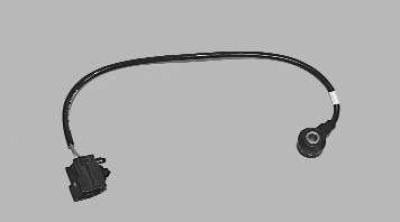
Knock sensor is attached to the top of the cylinder block in the area between the 2nd and 3rd cylinders and detects abnormal vibrations (detonation shocks) in the engine.
The sensitive element of the knock sensor is a piezoelectric crystal plate. During detonation, voltage pulses are generated at the sensor output, which increase with the increase in the intensity of detonation shocks. The controller, based on the sensor signal, regulates the ignition advance to eliminate detonation flashes of fuel.
Warnings
1. Before removing any components of the fuel injection control system, disconnect the cable from the negative terminal of the battery.
2. Do not start the engine if the battery cable terminals are not tightened properly.
3. Never disconnect the battery from the vehicle's electrical system while the engine is running.
4. When charging the battery, disconnect it from the vehicle's electrical system.
5. Do not expose the ECU to temperatures above 65°C when in operation and above 80°C when not in operation (e.g. in a drying chamber). The ECU must be removed from the vehicle if this temperature is exceeded.
6. Do not disconnect or connect wires to the ECU when the ignition is on.
7. Before performing electric welding work on the vehicle, disconnect the wires from the battery and the wiring harness connectors from the ECU.
8. Perform all voltage measurements using a digital voltmeter with an internal resistance of at least 10 MOhm.
9. Electronic components used in the fuel injection system are designed for very low voltage, so they can be easily damaged by electrostatic discharge. To prevent damage to the ECU, do not touch its terminals with your hands.
10. In all cases, a special scanner is required to diagnose the engine management system, so if any system malfunctions occur, contact a specialized service center.
[For more information, please visit the website: fordbook.ru]