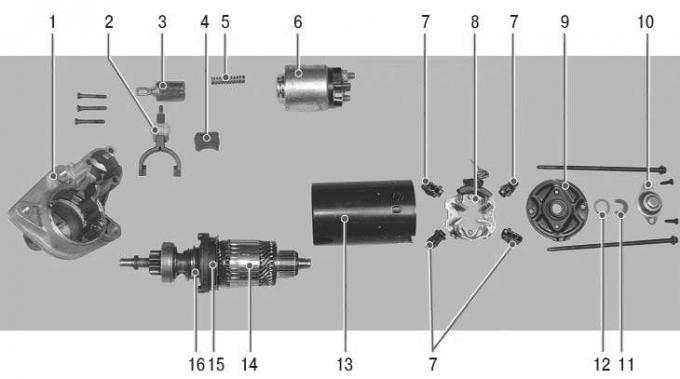
Fig. 10.3. Starter parts: 1 – drive side cover; 2 – drive lever; 3 – relay anchor; 4 – rubber seal; 5 – return spring; 6 – traction relay housing; 7 – brush housings assembled with springs; 8 – brush holder; 9 – cover from the collector side; 10 – bearing cover; 11 – lock washer; 12 – thrust washer; 13 – starter housing; 14 – starter rotor; 15 – planetary gear; 16 – freewheel clutch
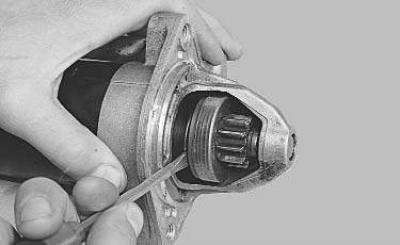
1. Using a screwdriver, check the ease of movement of the drive coupling along the shaft.
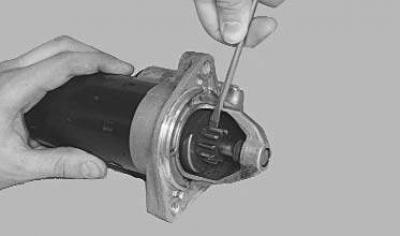
2. Turn the drive gear. The gear should easily turn relative to the clutch hub in the direction of rotation of the anchor and should not turn in the opposite direction.
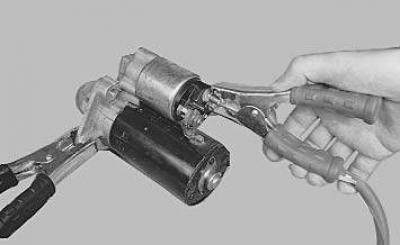
3. Connect the negative terminal of the battery removed from the vehicle to the starter housing using jumper wires. Connect one end of the second wire to the positive terminal of the battery and the other to the control wire terminal of the traction relay. If the traction relay is working properly, you will hear a click and the drive clutch will extend. Otherwise, the traction relay is faulty.
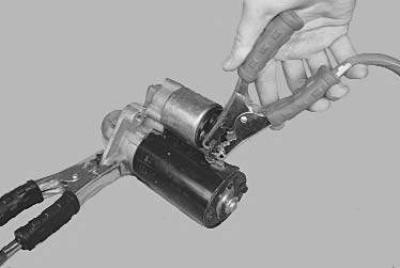
4. Disconnect the wire from the control terminal of the solenoid relay and connect it to the lower contact bolt of the solenoid relay. The starter armature should begin to rotate at a frequency of more than 6000 min⁻¹. Otherwise, repair the starter.
You will need: 10 mm and 13 mm wrenches, a TORX T25 socket wrench, flat- and Phillips-head screwdrivers, pliers, and a hammer.
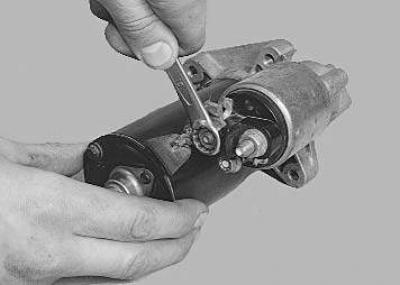
1. Unscrew the nut of the lower contact bolt of the traction relay…
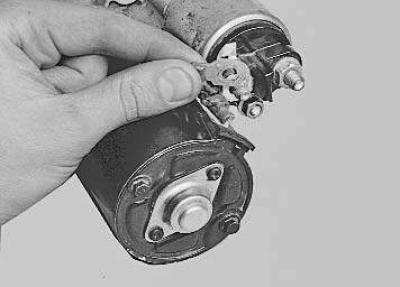
2. …and disconnect the busbar from the contact bolt of the traction relay.
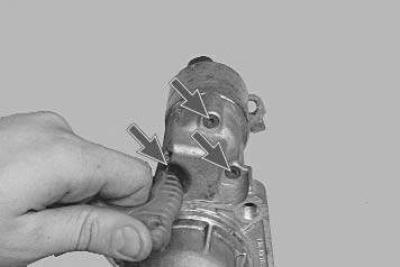
3. Remove the three screws securing the traction relay to the starter cover on the drive side...
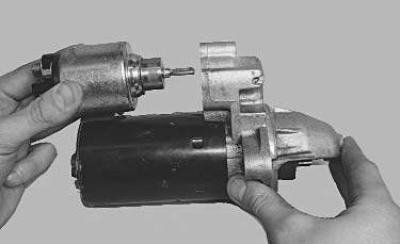
4. …and remove the traction relay by disconnecting the anchor from the drive lever.
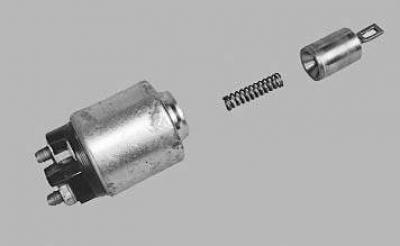
5. Remove the anchor and return spring from the traction relay housing.
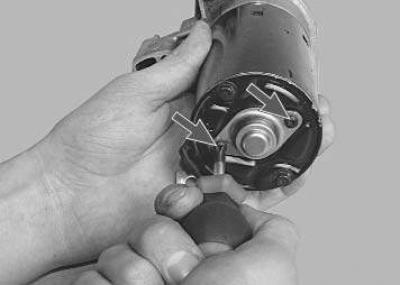
6. Remove the two bearing cover mounting screws…
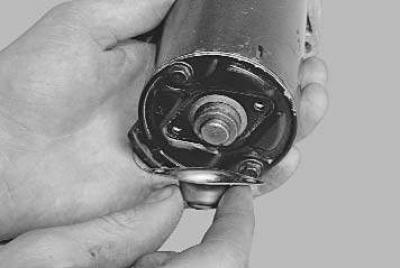
7. …remove the lid…
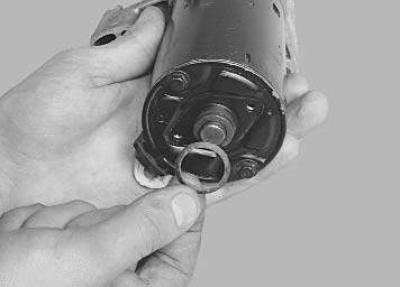
8. …and a sealing ring.
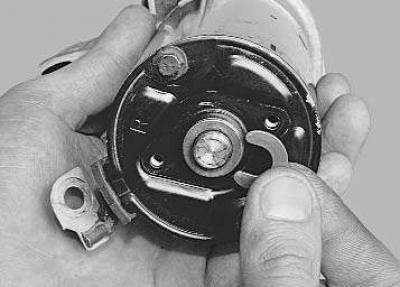
9. Remove the retaining ring…
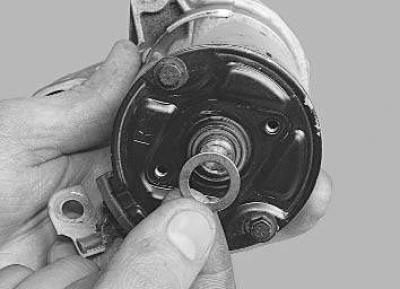
10. …and a thrust washer.
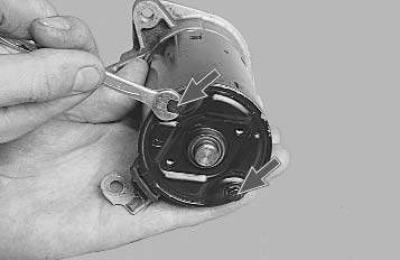
11. Unscrew the two cover mounting bolts from the manifold side…
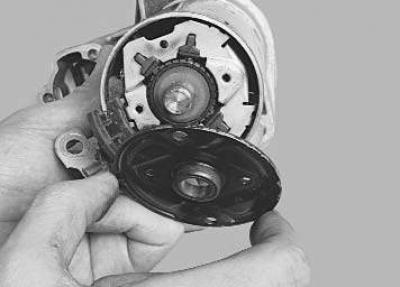
12. …and remove the lid.
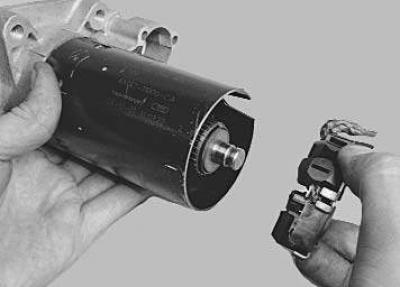
13. Remove the brush holder assembly with the brush housings.
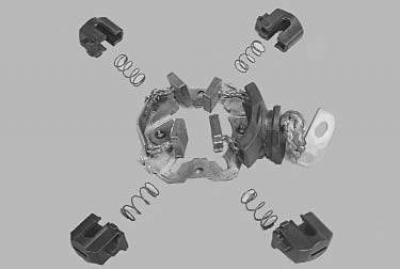
14. If necessary, remove the brush housings and springs.
15. Remove the drive side cover and remove the rotor from the starter housing.
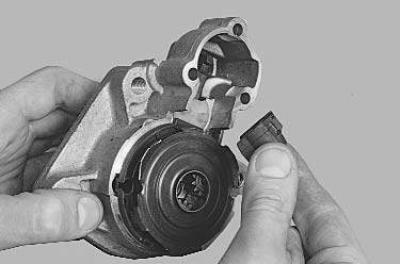
16. Remove the rubber seal…
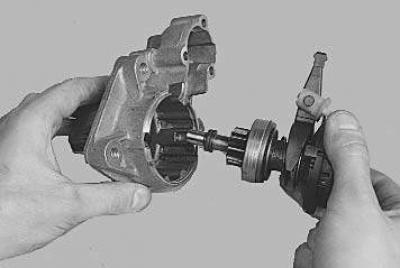
17. …and remove the drive assembly with the lever from the cover.
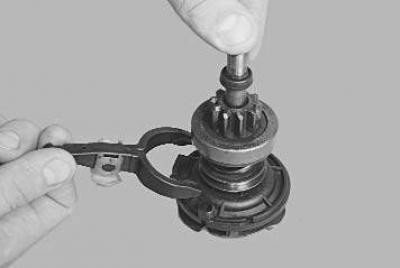
18. Remove the drive lever.
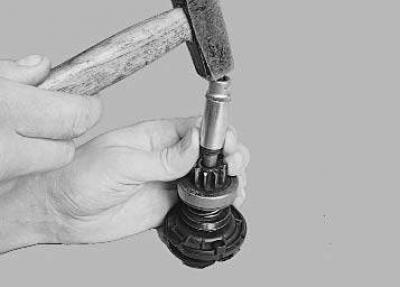
19. Slide the limiting ring along the planetary gear shaft…
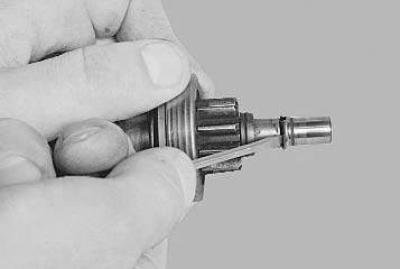
20. …and remove the retaining ring by prying it off with a screwdriver.
21. Remove the restrictor ring…
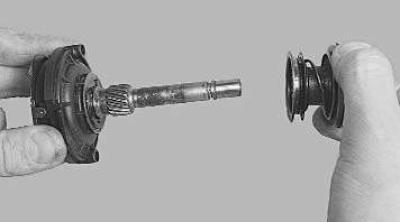
22. …and drive from the planetary gear shaft.
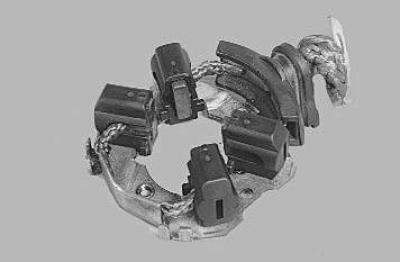
23. Inspect the brush holder. Check the height of the brushes protruding in the brush holder. Use an ohmmeter to check the insulated housings for short circuit with the housing. The resistance should tend to infinity.
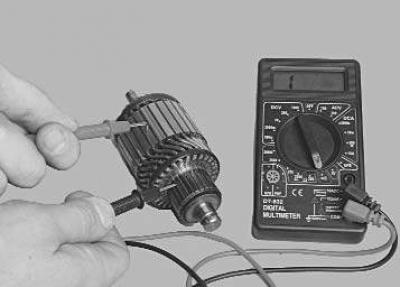
24. There should be no damage (nicks or burrs) on the splines and journals of the anchor shaft. The anchor collector should not have any signs of burning. Remove minor burning with a rag soaked in gasoline and fine-grained sandpaper. Use an ohmmeter to check the anchor winding for a short circuit. The resistance should tend to infinity.
25. Check whether the starter traction relay anchor moves easily and whether the contact bolts are closed by the contact plate (using an ohmmeter).
26. Check the drive. The drive gear teeth should not be significantly worn. The gear should rotate easily relative to the clutch hub in the direction of armature rotation and should not rotate in the opposite direction. If the gear teeth are worn or damaged, or the gear rotates in both directions, replace the drive.
27. There should be no cracks or signs of significant wear on the starter drive lever or fork grooves.
Assemble the starter in the reverse order of disassembly, taking into account the following features.
1. Lubricate the splined surface of the armature shaft with silicon-containing grease.
Attention! During operation, the drive coupling does not need to be lubricated. However, it must be cleaned of dirt. Do not use any means to clean the drive that can wash out the lubricant contained in its coupling.
2. Lubricate the bearings (bushings) in the starter covers with engine oil.
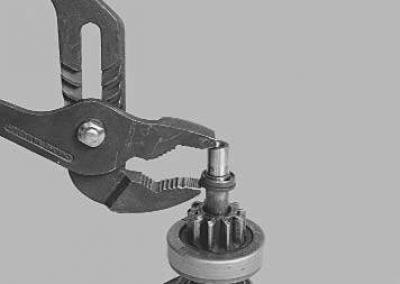
3. Use adjustable pliers to install the stop ring.
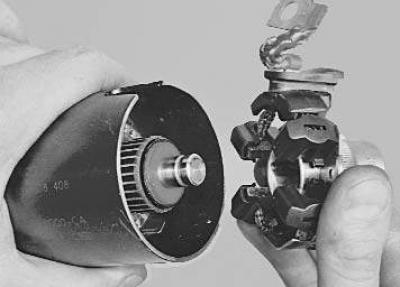
4. When installing the brush holder on the anchor, spread the brushes and secure them with a mandrel (for example, a socket head from the tool kit).
5. Before installing the traction relay, apply a thin layer of silicone sealant to the surface of the relay that contacts the starter cover on the drive side.
(Information for this article was taken from the website: FordBook)