- increased (compared to usual) noise;
- difficult gear shifting;
- spontaneous disengagement or unclear engagement of gears;
- oil leakage through seals and gaskets.
In addition, the gearbox is removed to replace the clutch, flywheel and rear crankshaft oil seal of the engine.
An automatic transmission is removed for almost the same reasons as a manual transmission, except for the need to replace the clutch and flywheel, which are absent in this case. The methods for removing and installing manual and automatic transmissions are almost the same and are described using a manual transmission as an example. The difference lies in the size and number of transmission control cables, as well as the presence of hydraulic system hoses in the automatic transmission, connecting the transmission to the cooling radiator.
USEFUL TIP: The work of removing and installing the gearbox is very labor-intensive, so first make sure that its malfunctions are not caused by other reasons (insufficient oil level, clutch drive defects, loose gearbox mounts, etc.).
USEFUL TIP: The gearbox is quite heavy and its shape is awkward to hold, so we recommend removing it with an assistant.
You will need: keys "8", "10", "13", "15", a socket head "13" with a ratchet handle, a screwdriver with a flat blade.
1. Place the vehicle on a lift or inspection pit.
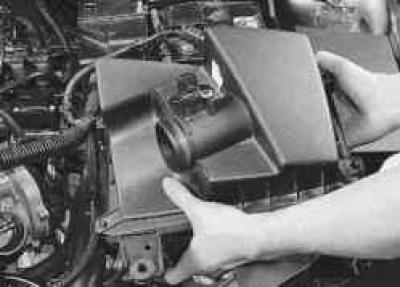
2. Remove the air filter (see "Removing and installing the air filter and intake silencer").
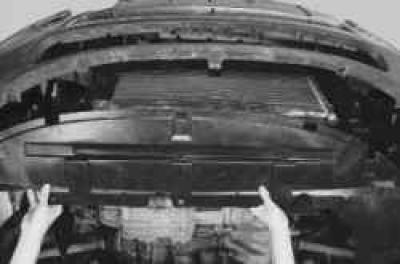
3. Remove the engine splash guard (see "Removing and installing the engine mudguard").
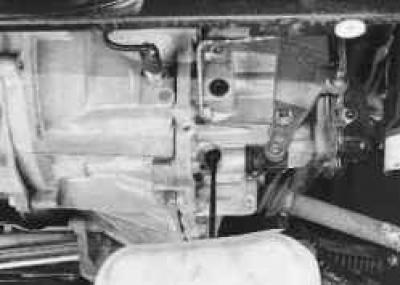
4. Drain the gearbox oil (see "Changing the gearbox oil").
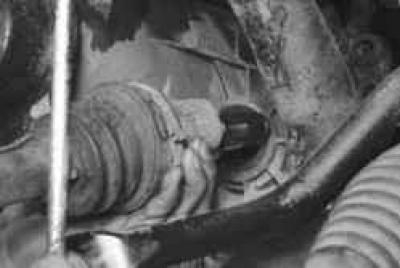
5. Remove the front wheel drives (see "Removing and installing front wheel drives").
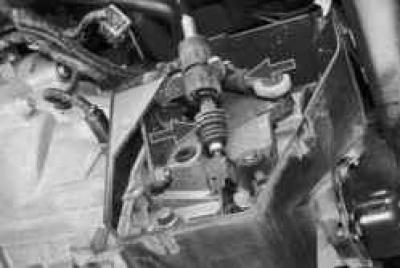
6. Disconnect the transmission control cables from the gearbox (see "Replacing the transmission control cables").
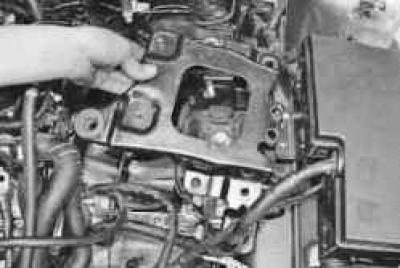
7. Remove the air filter mounting bracket (see "Replacing the left support of the powertrain suspension").
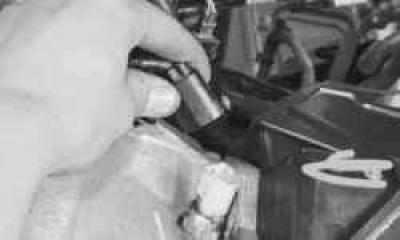
8. Disconnect the wiring harness connector from the reverse light switch (see "Checking and replacing the reverse light switch")…
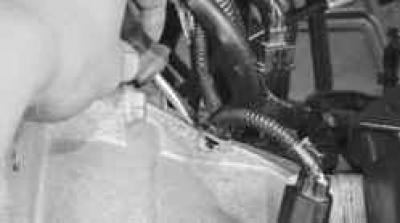
9. …pry it up with a screwdriver…
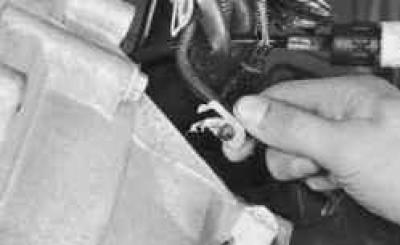
10. …disconnect the reverse light switch wiring harness holder from the gearbox housing and move the harness to the side.
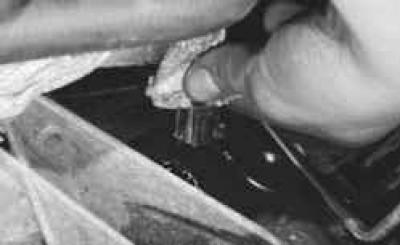
11. Disconnect the wiring harness connector from the speed sensor (see "Checking and replacing engine management system sensors").
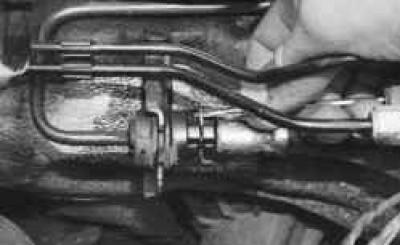
12. Using a screwdriver, remove the spring retainer of the clutch release hydraulic hose tip…
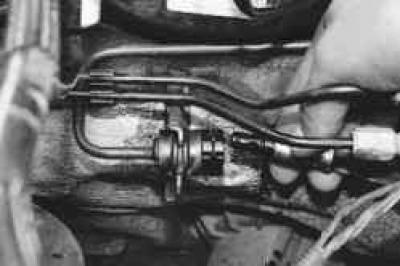
13. …and disconnect the hose from the hydraulic drive pipe.
NOTE: Take measures to prevent the working fluid from leaking out of the clutch release hydraulic tube (for example, by plugging the tube opening with a rag or a wooden plug).
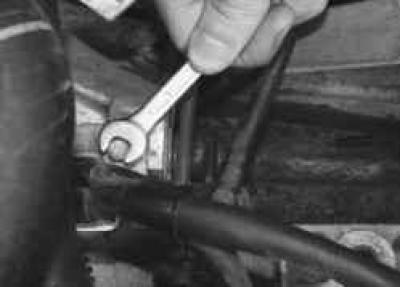
14. Unscrew the bolt securing the hose brackets to the gearbox housing…
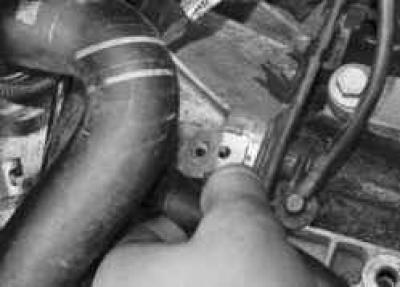
15. …and move the bracket together with the hoses to the side.
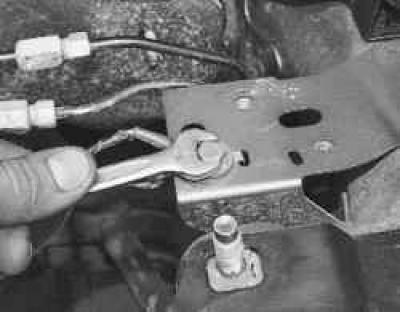
16. Unscrew the bolt securing the ground wires to the body bracket..
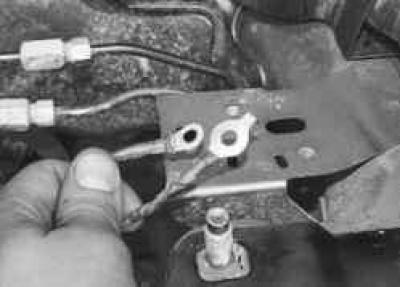
17. …disconnect the wires from the bracket and move them to the side.
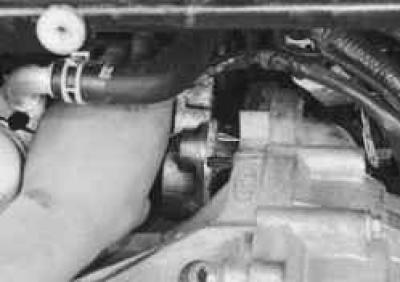
18. Unscrew the mounting bolts and remove the starter from the clutch housing without disconnecting the wires from it (see "Removing and installing the starter"). Move the starter to the side and secure it in any way so that it does not interfere with further work.
19. Install a reliable support under the engine or hang it up using a lifting mechanism. Install a similar support under the gearbox.
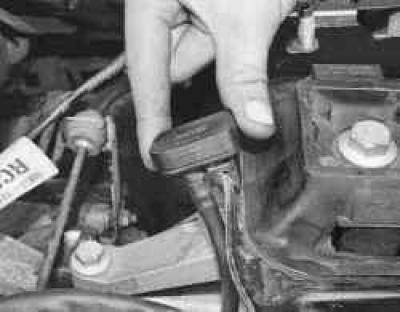
20. Remove the gearbox breather from the edge of the left powertrain support collar.
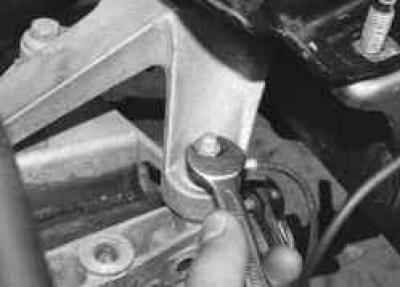
21. Unscrew the nut securing the ground wire to the stud securing the left support bracket of the powertrain suspension…
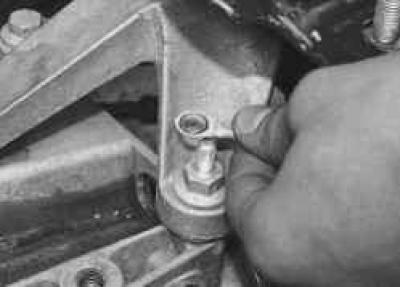
22. …remove the wire tip from the stud and move the wire to the side.
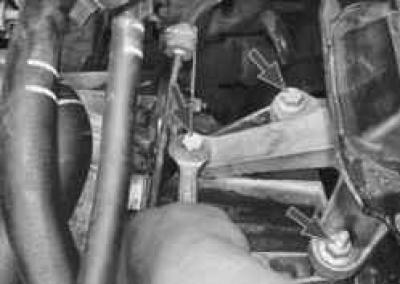
23. Unscrew the two bolts and the stud securing the left powertrain suspension bracket to the gearbox housing…
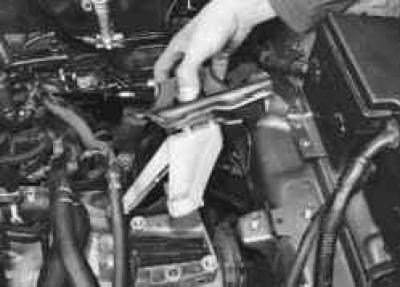
24...and remove the support together with the bracket.
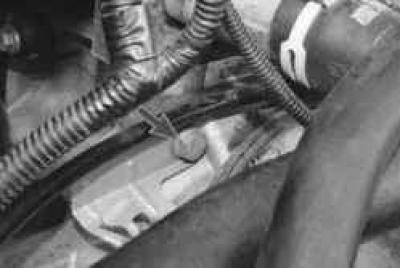
25. Unscrew one bolt securing the gearbox housing to the engine from the top left…
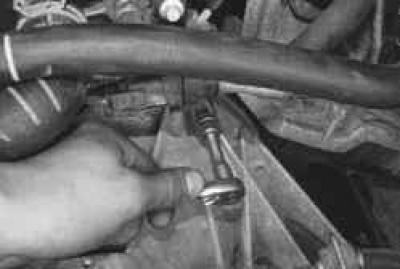
26. …and on the right…
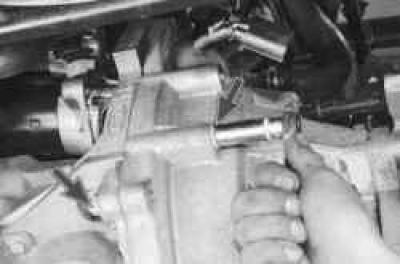
27. …two bolts on the left side…
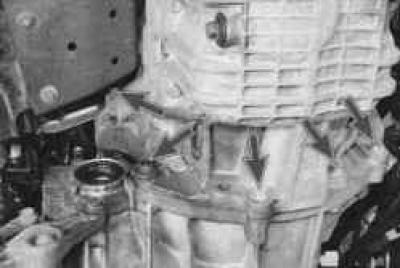
28. …and five bolts at the bottom.
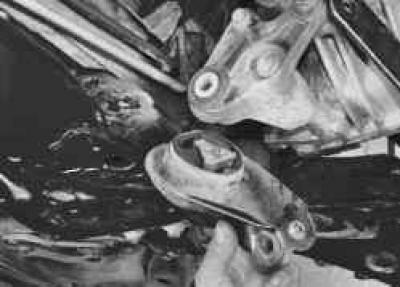
29. Remove the rear powertrain suspension support (see "Replacing the rear support of the powertrain suspension").
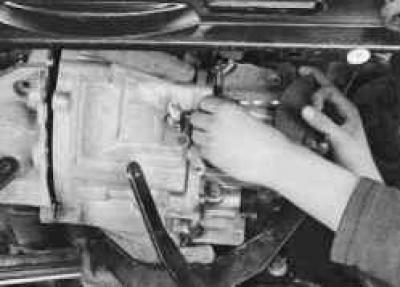
30. Move the gearbox back until the input shaft of the gearbox comes out of the hub of the driven clutch disc.
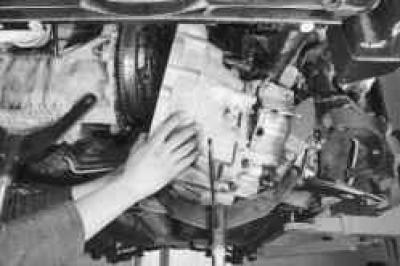
31. Move the box as far back as possible, remove the support from underneath it and, tilting the rear part of the box down, remove it from the car.
CAUTION: When removing the transmission, do not rest the end of the input shaft against the diaphragm spring petals to avoid deforming them.
32. Install the gearbox and all removed parts and assemblies in the reverse order of removal.
USEFUL TIP: Before installing the gearbox, we recommend lubricating the splines of the input shaft with a thin layer of high-melting grease.
USEFUL TIP: Check the alignment of the clutch driven disc using a special drift (see "Removing and installing the clutch").
33. Fill the gearbox with oil (see "Changing the gearbox oil").
34. Remove air from the clutch release hydraulic drive (see "Bleeding the clutch release hydraulic drive").
35. If necessary, adjust the gearbox control drive (see "Adjusting the gearbox control drive").