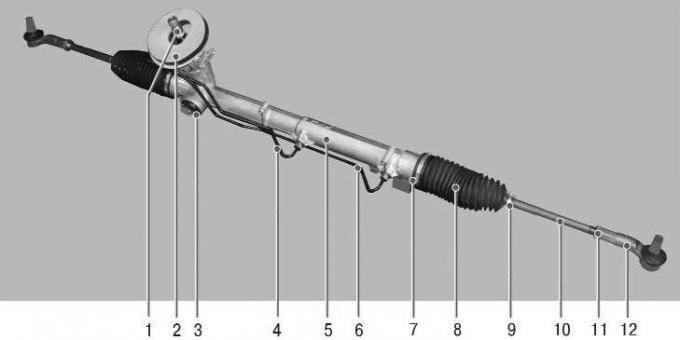
Fig. 8.1. Power steering: 1 – steering shaft; 2 – seal; 3 – adjusting nut; 4, 6 – pipelines; 5 – steering gear housing; 7, 9 – cover clamps; 8 – protective cover; 10 – steering rod; 11 – lock nut; 12 – steering rod end
The pressure of the working fluid in the power steering is created by a vane-type pump, which is installed on the engine and driven by a poly-V belt. If the power steering fails, the ability to control the car is retained, but the force on the steering wheel increases.
The steering gear housing is installed in the engine compartment and secured with bolts to the front suspension crossmember.
The steering column is trauma-safe, with a steering wheel adjustment mechanism, equipped with energy-absorbing devices that increase passive safety, and an anti-theft device in the ignition switch that blocks the steering wheel shaft from turning. The steering column also houses controls for the headlights, turn signals, windshield washer and wiper, and the rear door glass, combined into a block of steering column switches.