Caution: When adding coolant, make sure that you add a fluid containing the same antifreeze as the coolant already filled. You can identify the antifreeze by the color of the coolant in the expansion tank. Green-blue indicates FORD SUPER PLUS 4 antifreeze, and red indicates FORD SUPER PLUS 2000. If the coolant in the expansion tank is brown (green-blue and red antifreezes are mixed), this will cause serious damage to the engine. See also the chapter "Coolant" on page 38.
The following tool is required for testing: A densimeter, which is available inexpensively at stores selling accessories for motor vehicles and is also often offered for use at gas stations.
For safety reasons, it is necessary to regularly check the concentration of antifreeze in the cooling system coolant before the onset of winter, especially if the system has been refilled with clean water in between.
Warm up the engine until the upper coolant supply hose to the radiator becomes warm to the touch.
Open the expansion tank cap.
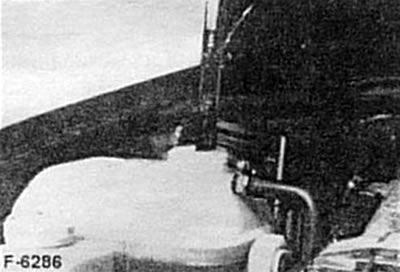
Suck up the coolant with a densimeter and determine its density by the position of the float. In our latitudes, the concentration of antifreeze should prevent the coolant from freezing to a temperature of -26°C, and in areas with extremely cold climates - to a temperature of -40°C.
Adding antifreeze
Caution: Only use antifreeze approved by FORD: either FORD SUPER PLUS 4 or FORD SUPER PLUS 2000.
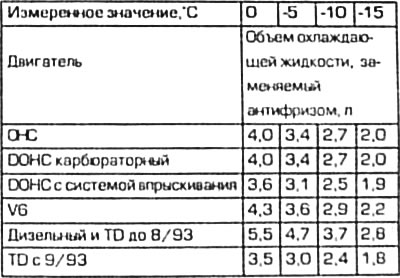
Close the expansion tank cap and, after a test drive, check the concentration of antifreeze in the coolant again.