The system uses a carbon adsorber to absorb vapors. It is mounted on the rear suspension crossmember and connected by pipelines to the fuel tank and the electromagnetic purge valve.
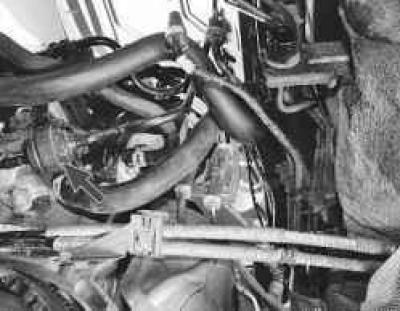
The electromagnetic valve for purging the adsorber, which switches the operating modes of the system based on signals from the engine control unit, is located in the engine compartment.
Fuel vapors from the fuel tank are constantly removed through the pipeline and accumulated in the adsorber filled with activated carbon (adsorbent). When the engine is running, the adsorbent is regenerated (restored) by purging the adsorber with fresh air entering the system under the action of vacuum transmitted through the pipeline from the inlet pipe to the adsorber cavity when the valve opens. Since fuel vapors enter the engine inlet pipe, the air-fuel ratio in the working mixture changes, which can disrupt the normal operation of the engine. To eliminate the negative consequences of changes in the composition of the working mixture, the electronic engine control unit regulates the intensity of the adsorber purge depending on the engine operating mode, sending a signal with a variable pulse frequency to the valve.
Under certain conditions, the purge valve of the adsorber closes (for example, at idle) or cannot operate (with the throttle valve fully open, insufficient vacuum is created in the intake pipe). In addition, the electronic engine control unit changes the frequency of pulses controlling the purge valve of the adsorber, in the case when the signals received from the oxygen concentration sensors in the neutralizer of the exhaust system indicate a non-optimal oxygen content in the exhaust gases.
Malfunctions of the fuel vapor recovery system lead to unstable idle speed up to engine stalling, increased toxicity of exhaust gases and deterioration of the vehicle's driving performance.