The system provides low-inertia regulation of air temperature, practically independent of the vehicle speed. The amount of air entering the cabin is mainly determined by the fan operating mode, so it should be turned on even when driving at high speed.
Outside air can enter the passenger compartment through the door windows when the windows are lowered and the air blower located in front of the windshield. Air from the air blower can enter the passenger compartment of the car through the windshield blower nozzles, side and central nozzles, as well as through the lower nozzles of the heater housing.
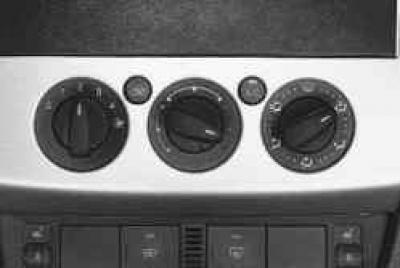
The volume, temperature, direction and intensity of air flows are regulated by switches installed in the control unit of the heating (air conditioning) and ventilation system.
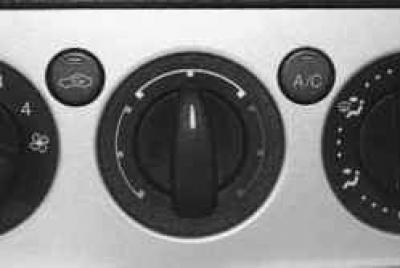
To change the temperature of the air entering the cabin, turn the temperature control knob. The blue part of the scale corresponds to the supply of the coolest air, the red part corresponds to the supply of the warmest air. When the knob is in the middle position, air is supplied to the cabin at the ambient temperature (white part of the scale).
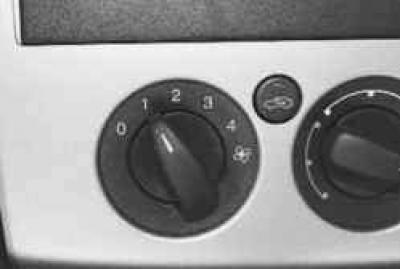
To increase the intensity of air supply to the passenger compartment while driving and to ensure air supply to a stationary vehicle, use the switch handle to turn on one of the four operating modes of the air blower fan.
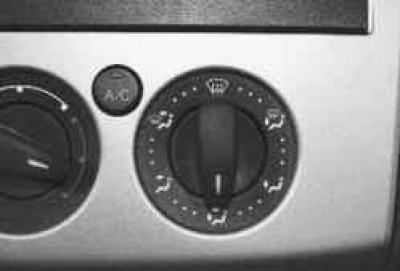
To change the direction of air flow, use the air flow distribution control knob to select one of the following options (clockwise):
– air supply to the upper and lower parts of the passenger compartment (through the side and central nozzles of the instrument panel, as well as through the lower nozzles of the heater housing);
– air supply to the upper part of the passenger compartment (through the side and central nozzles of the instrument panel);
– air supply to the upper part of the passenger compartment and to the windshield (through the side and central nozzles of the instrument panel and the windshield blower nozzles);
– air supply to the windshield (through the windshield blower nozzles);
– air supply to the lower part of the passenger compartment and to the windshield (through the lower nozzles of the heater housing and the windshield blower nozzles);
– air supply to the lower part of the passenger compartment (through the lower nozzles of the heater housing).
The regulator handle can be set to intermediate positions for more precise adjustment.
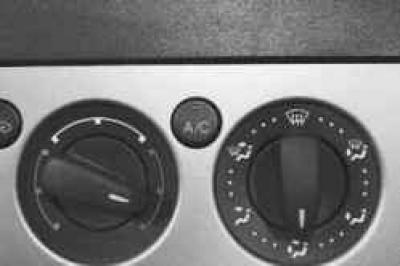
To cool the air entering the vehicle, press the air conditioner button (if installed in the vehicle).
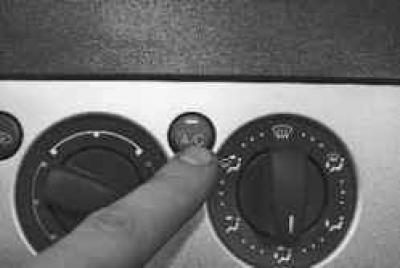
When the air conditioner is turned on, the indicator lamp in the button will light up. To turn off the air conditioner, press the button again (the indicator lamp will go out).
WARNING: Turning on the air conditioner while the engine is running in difficult conditions (long climbs, heavy city traffic, etc.) can cause the engine to overheat. Monitor the coolant temperature gauge: if the temperature exceeds the permissible value, turn off the air conditioner. During long trips in city traffic, the efficiency of the air conditioner may decrease due to the intense thermal conditions of the engine. This is not a sign of a malfunction; when driving in normal road conditions, the air conditioner will continue to work effectively.
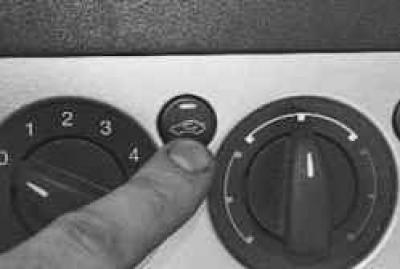
To turn on the recirculation mode, press the corresponding button (the indicator lamp will light up). When the recirculation mode is on, outside air does not enter the passenger compartment, and the air blower fan ensures air circulation inside the passenger compartment. This mode is used to quickly warm up the passenger compartment in cold weather, as well as in conditions of increased dustiness and gas pollution of the surrounding air.
WARNING: It is not recommended to leave the recirculation mode on for a long time while the vehicle is moving, as this will usually cause the windows to fog up.
Depending on the various combinations of the control unit switches, the heating and ventilation system operates in the following main modes:
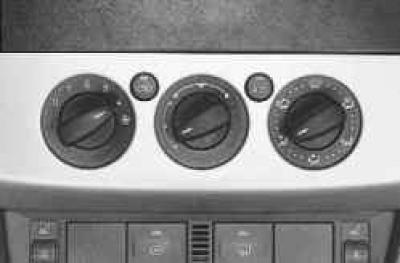
– maximum cooling mode. Used in hot weather and after prolonged parking in the sun to quickly cool the air in the cabin. In this case, before turning on the air conditioner, it is recommended to briefly open the windows to remove heated air from the cabin. The air conditioner and air recirculation mode must be turned on;
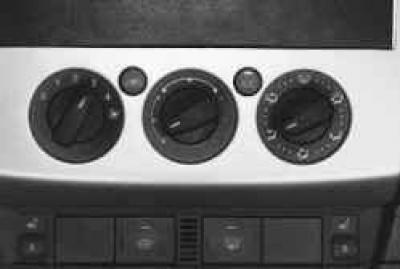
- normal cooling mode. Used when traveling around the city and outside the city in moderately warm weather. The air conditioner should be on, the recirculation mode should be off;
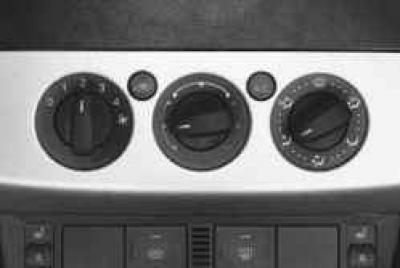
- ventilation mode. Used to ventilate the interior. The speed of the heater fan can be changed as desired;
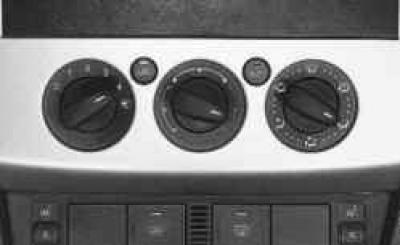
– maximum heating mode. Used at very low ambient temperatures and to quickly warm up the air in the cabin after a long period of parking. The air conditioner and recirculation mode must be turned off;
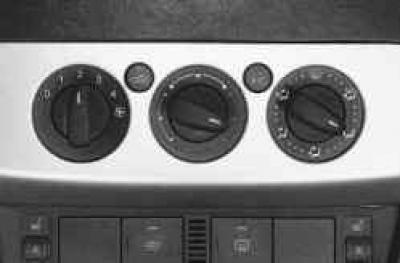
- normal heating mode. Used in the cold season to maintain the optimum air temperature in the cabin after its intensive heating in the maximum heating mode. The air conditioner and air recirculation mode must be turned off;
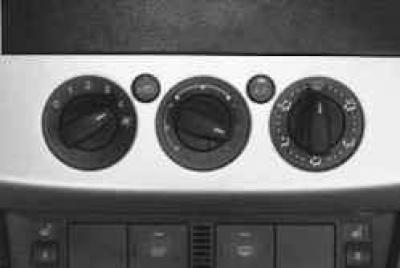
– mode for removing moisture or frost from the windshield. Used to quickly eliminate fogging of glass in high humidity conditions. The air conditioner must be on and the recirculation mode must be off;
– mode for reducing air humidity in the cabin. Turning on the air conditioner helps reduce the humidity in the cabin, which leads to faster cleaning of the glass from fogging.
NOTE: To prevent the glass from fogging up in rainy weather, turn on the blowing mode with the heater turned off, since the difference in temperature between the glass surface and the supplied air can cause condensation.
USEFUL TIP: For more efficient ventilation and heating at vehicle speeds below 50 km/h and when driving on particularly dusty road sections with the windows closed (to create excess air pressure in the cabin, preventing dust suction), we recommend turning the heater fan switch to low or maximum speed.
USEFUL TIP: To quickly eliminate fogging of the rear window and free it from ice and snow, turn on the heated glass.
USEFUL TIP: If you do not use the air conditioner for a long time, it is necessary to turn it on briefly once a week with the engine running to restore the lubricant layer on the compressor parts and seals.
(This publication was borrowed from the website: Fordbook.ru)