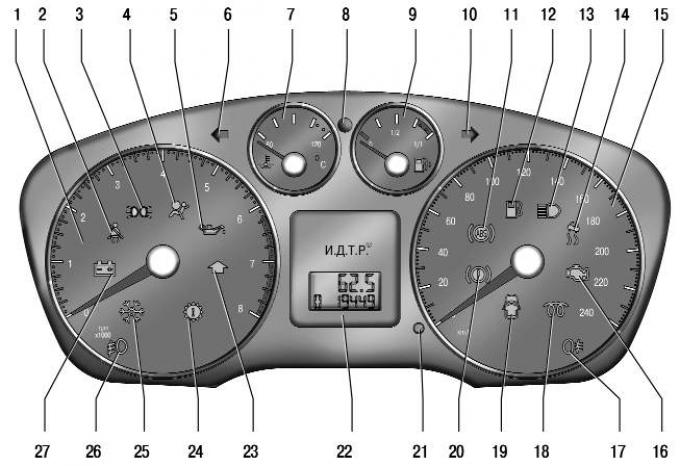
Fig. 1.8. Instrument cluster
The arrangement of instruments and indicators in the instrument cluster is shown in Fig. 1.8.
The following instruments and indicators are installed in the instrument cluster.
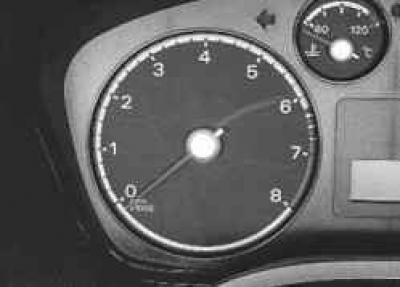
1 – tachometer electronic type shows the engine crankshaft speed. The scale has divisions from 0 to 8, the division value is 0.25. To find out the crankshaft speed in min⁻¹, you need to multiply the tachometer readings by 1000.
NOTE: On diesel vehicles the scale is graduated from 0 to 6.
2 – Driver's seat belt warning light (with a red filter). Lights up when the ignition is turned on and goes out after the driver's seat belt is fastened. In addition, when the ignition is turned on, a warning buzzer is turned on simultaneously with the lamp for 4-8 seconds.
3 – side light indicator lamplighting. Lights up when the side lights are turned on.
4 – Airbag malfunction indicator light (with red filter). Lights up when the ignition is turned on if there is a malfunction in the airbag system.
WARNING: If the warning light comes on, contact your car service immediately. In addition to possible failure in an emergency, it may suddenly go off while driving, which will lead to serious consequences.
5 – Oil pressure emergency drop indicator light (with a red light filter) lights up when the ignition is turned on and warns that the pressure in the engine lubrication system is below normal. The lamp should go out immediately after the engine is started.
WARNING: Do not drive the vehicle with the light on as this will result in engine damage.
6 – left turn signal indicator light (in the form of an arrow with a green filter) lights up with a flashing light when the left turn signal is turned on (synchronously with it). Flashing of the control lamp with double frequency indicates that the lamp in one of the left turn signals has burned out.
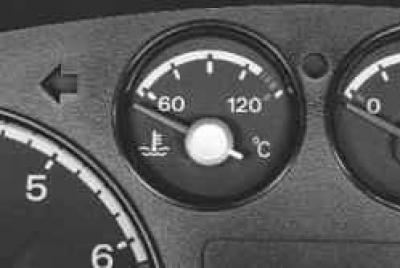
7 – coolant temperature indicator in the engine cooling system. The red zone warns of engine overheating. If the arrow has moved into the red zone, you should stop, let the engine cool down and eliminate the cause of overheating.
8 – immobilizer control lamp.
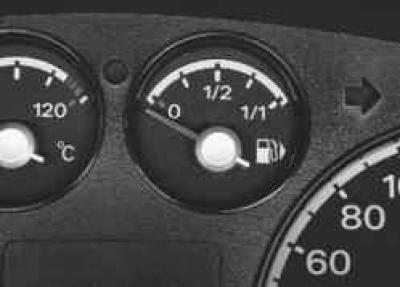
9 – electromagnetic fuel level indicator. The red zone indicates the remaining fuel reserve.
WARNING: If possible, avoid driving on reserve fuel. Operation of the electric fuel pump without a continuous fuel supply with air entering the system will lead to pump failure!
10 – Right turn signal indicator light (in the form of an arrow with a green filter) lights up with a flashing light when the right turn signal is turned on (synchronously with it). Flashing of the control lamp with double frequency indicates that the lamp in one of the right turn signals has burned out.
11 – Anti-lock brake system malfunction indicator lamp (with a yellow filter). Functions if the car is equipped with an anti-lock braking system. Lights up when the ignition is on for 3 s (at the same time, lamp 20 lights up). When the starter is turned on, both lamps are constantly on. After starting the engine, lamp 11 should go out immediately, and lamp 20 - after 3-4 s. If the system fails, the lamp is constantly on.
WARNING: If the lamp lights up, contact a car service center, since braking in all cases will occur without the participation of the anti-lock system.
12 – minimum fuel reserve indicator light in the tank (with a yellow filter) lights up when there is approximately 80 km of fuel remaining in the tank.
WARNING: If possible, avoid driving on reserve fuel. Operation of the electric fuel pump without a continuous fuel supply with air entering the system will lead to pump failure!
13 – High beam indicator lamp (with blue filter) lights up when the high beam headlights are turned on.
14-Dynamic Stabilization System (ESP)warning light. When the ignition is turned on, it lights up briefly. When the system is turned on, the lamp starts to flash, and if there is a system malfunction, it lights up constantly.
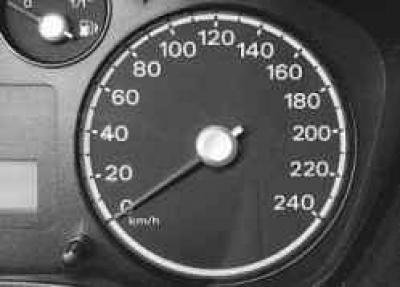
15 – speedometer. Shows the current speed of the car. The scale is graduated from 0 to 240 km/h, the division value is 10 km/h.
16 – Engine management system indicator lamp (with a yellow filter). Lights up when the ignition is turned on and remains lit during engine start-up. The lamp should go out immediately after the engine is started. If the lamp lights up while the engine is running, this indicates a malfunction in the engine management system. In this case, the control unit switches to a backup program, which allows you to continue driving. When the lamp lights up, you must check the electronic control unit using the self-diagnosis function and eliminate the malfunction.
WARNING: Long-term operation of the vehicle with the lamp on is not recommended, as it may lead to increased fuel consumption, deterioration of the vehicle's traction characteristics and engine failure.
17 – Rear fog light indicator lamp (with yellow filter) lights up when the rear fog light is turned on.
18 – indicator lamp for pre-heating plugs (cars with diesel engines). If the lamp lights up when the ignition is turned on, you must wait until it goes out before starting the engine.
19 – Warning light for open doors or trunk lid (with a red light filter) lights up when the ignition is turned on if the doors or trunk lid are open (depending on the configuration, a cruise control indicator light may be installed).
20 – brake system status and parking brake activation indicator light (with a red filter) lights up when the ignition is on if the brake fluid level in the brake master cylinder reservoir drops too low or when the parking brake lever is raised.
WARNING: Driving the vehicle with the lamp on is prohibited.
21 – Trip meter reset button. By pressing the button on a stationary vehicle, the 20-day mileage counter is set to zero.
WARNING: Do not press the button while the vehicle is moving.
22 – electronic total and daily mileage counter (depending on the configuration, an on-board computer display may be installed).
23 – Maximum engine speed indicator light (with a red filter). When the lamp lights up, it is necessary to reduce the engine crankshaft speed.
NOTE: The Ford Focus ST has a driver seat belt warning light instead of the high engine speed warning light.
24 – Powertrain system malfunction indicator lamp (with a red filter). When the lamp lights up, you must stop the car and turn off the engine. The engine can be started again after eliminating the causes of the lamp lighting up.
25 – warning light for possible icing of glass and road. When the outside air temperature is from +1 to +4°C, the lamp lights up orange, and when the temperature is below +1°C, it lights up red.
26 – Front fog lights indicator lamp (with green filter) lights up when the front fog lights are turned on.
27 – Low battery indicator light (with a red filter) lights up when the ignition is turned on. The lamp should go out immediately after the engine starts. If the lamp is on or glows dimly when the engine is running, this indicates a lack of charging current caused by a faulty generator or voltage regulator, or weak tension (or breakage) of the generator drive belt.
WARNING: Do not drive the vehicle with the light on, as this may indicate a short circuit in the charging circuit, which could cause a fire, in addition to a completely discharged battery.
Content was created using data from this website: FordBook