Models since 9/94
The vehicles are equipped as standard with an electronic anti-theft system (PATS - passive anti-theft system). When activated, the system prevents the engine from starting if an ignition key with an incorrect code is used.
The anti-theft system includes:
- electronic anti-theft system control unit;
- alarm for the electronic anti-theft system on the watch dial (is also an alarm for the security system);
- matched engine control unit (petrol);
- electromagnetic valve for shutting off fuel supply to the high-pressure fuel pump (diesel engine);
- anti-theft system reading coil in ignition switch;
- ignition key with a built-in transponder. The transponder is a power-free transceiver that contains a different code for each key.
The anti-theft system is activated when the key is removed from the ignition.
When the ignition is switched on, electrical energy is transmitted to the transponder in the key by induction via the reading coil. The ignition key code is read and transmitted to the control unit, where this code is compared with the recorded value. Finally, the engine control unit code is checked.
If the engine does not start when the crankshaft is turned, first of all, you should check the red LED indicator. If the indicator flashes quickly for about one minute, the system is activated and the receiver in the ignition lock cylinder does not recognize the key code. The reasons may be as follows:
- the reading process is not performed due to the presence of an additional key on the keychain;
- the key code is damaged.
The electronic check of the anti-theft system is performed by the FORD diagnostic tool by interrogating the fault code memory.
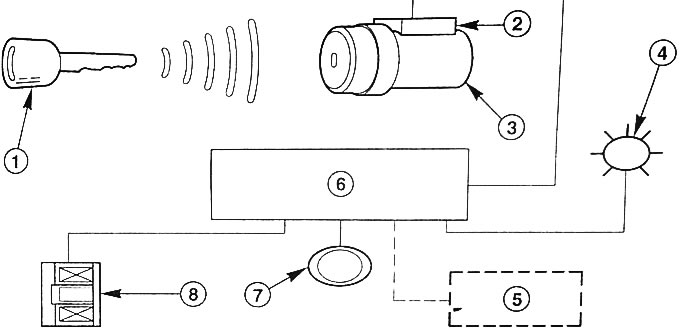
1 - ignition key with electronic code
2 - receiving and transmitting unit
3 - ignition switch
4 - indicator on the instrument panel
5 - PATS module (only for diesel engine)
6 - EEC-V module
7 - starter
8 - fuel shut-off electromagnetic valve
(The original can be found on this resource: www.FordBook.ru)