The turbocharged Endura engine has a function that prevents the system from being completely empty and therefore from running dry: as soon as the diesel fuel reserve drops below 2%, the PCM sets the injection pump to zero flow. The advantage: In the Focus, you only have to traditionally "bleed" the fuel system after replacing the injection pump, otherwise the starter, having delayed the starting process with the engine, will do it for you.
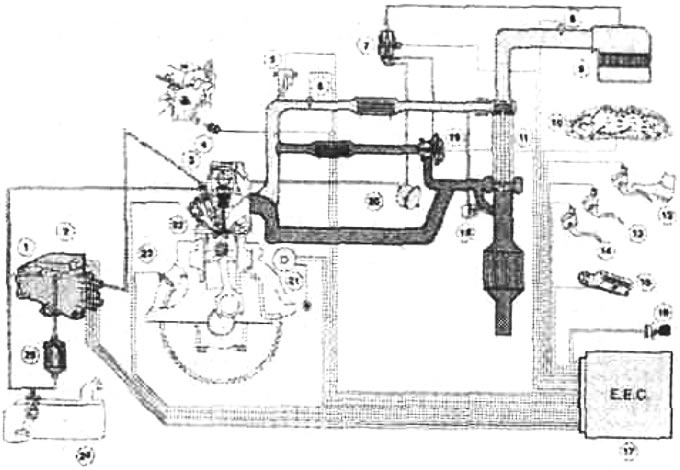
Engine regulation: 1 - Bosch VP-30 injection distribution pump; 2 - Pump control unit (PCU); 3 - 5-hole nozzle; 4 - cylinder head temperature sensor (CHT); 5 - absolute pressure sensor in the intake manifold (MAP); 6 - intake air temperature (IAT) sensor in the charge air cooler; 7 - EGR vacuum regulator; 8 - Intake air temperature (IAT) sensor before turbocharger; 9 - air filter; 10 - combination instrument; 11 - turbocharger Garett-GT15; 12 - accelerator pedal sensor (AP); 13 - Clutch pedal position sensor (CPP); 14 - brake light switch (BRS); 15 - Diagnostic connector (DLC); 16 - ignition switch; 17 - Transmission Control Module (PCM) EEC V with 104 terminals and integrated PATS; 18 - turbocharger flap valve; 19 - Exhaust gas recirculation (EGR) valve with EGR installation sensor; 20 - vacuum pump; 21 - Battery charging (Smart-Charging); 22 - pin glow plug; 23 - crankshaft position sensor (CPS); 24 - fuel tank; 25 - fuel filter.
In order to keep the fuel circulating in the system when the engine is running, diesel engines have a supply and return fuel line. They also have integrated injectors: they have a return nipple and are in contact with each other via a hose (fuel drain pipe). From the injector on the right in the direction of travel (cylinder 1), the fuel flows through the return fuel line back to the fuel tank. The recirculation hole of the injector of the fourth cylinder - this is due to the operating principle - is sealed with a plug.
[The original can be found on the specified resource: FORDBOOK.ru]