


Stages of work
Rotate each wheel completely once. Carefully remove stones and other foreign bodies from the tread. If a piece of glass or a nail is already lodged in the tire cover, the carcass may be damaged. Just in case, have the tire inspected by a specialist - even if it is not yet air-tight.
Pay attention to such defects as punctures, cuts, cracks and torn pieces of the profile. When the rubber is damaged, moisture easily penetrates into the tire, you will not be able to see it from the outside with the naked eye. For safety, let a specialist inspect the tire. This should also be done if there is noticeable wear on the tires.
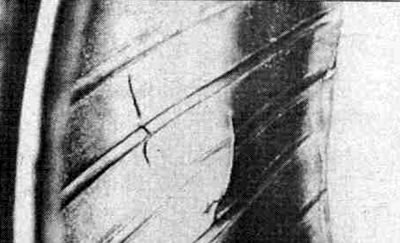
From the inside, a break in the frame is visible
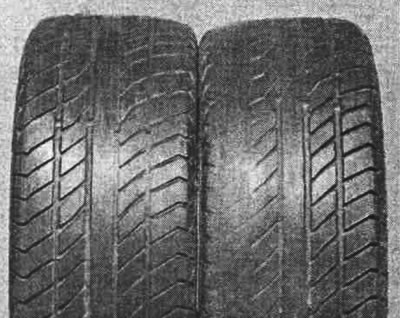
One-sided wear: consequences of distorted axle geometry
The tire profile across the entire tread should be at least 2 mm. You will see the thickness of the remaining profile on the tread in many places at once. Wherever the letters twi (tread wear indicator) are pressed into the sidewall of the tire, the profile grooves have crossbars running at a height of 1.6 mm. If the crossbars are at the same height as the tread, you should replace the tires immediately, since driving performance deteriorates as the profile wears out, especially on wet roads. Replace summer tires with new ones already at a residual profile depth of 2.5 mm. Winter tires lose grip at about 4.5 mm.
Check that the tires are worn evenly.
Look closely at the sidewalls of the tires; blisters are an indisputable sign of damage to the tire carcass.
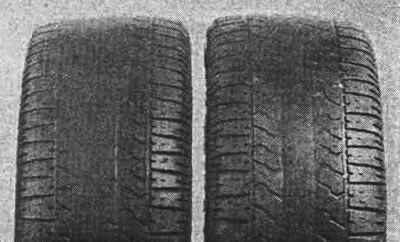
The middle of the profile is worn out: a consequence of frequent trips in the upper speed range and with too high air pressure in the tires