Features of the device
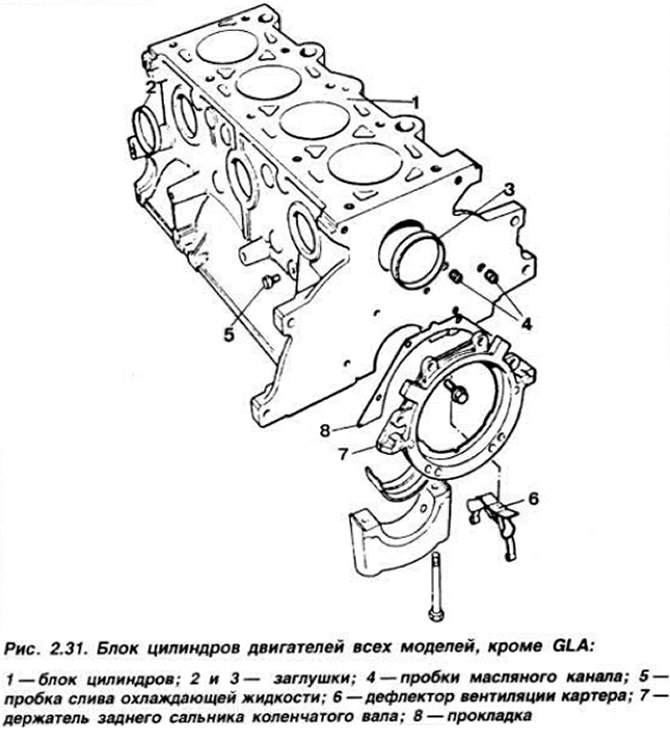
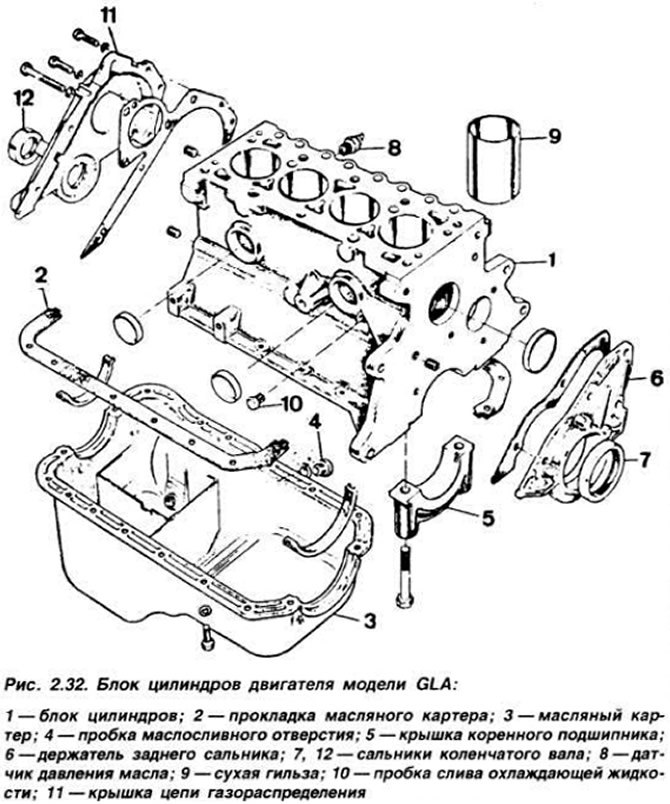
The engine cylinder block is cast from cast iron and is one piece with the cylinders (Fig. 2.31), except for the GLA engine, which has thin-walled dry liners (Fig. 2.32).
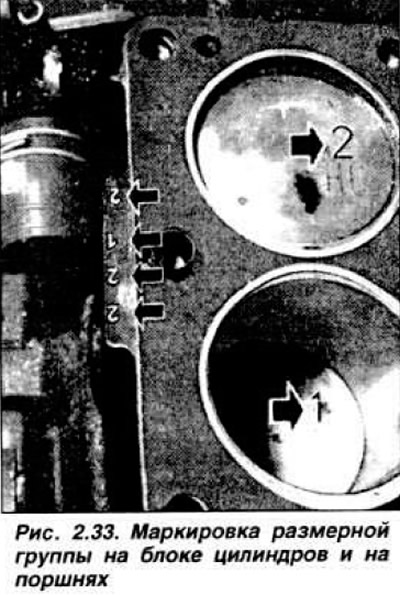
To ensure the required working clearance in the piston-cylinder connection, the nominal cylinder size is divided into four size groups with 0.01 mm intervals. The size groups are distinguished by the markings applied to the cylinder block boss (Fig. 2.33. See Table 2.1).
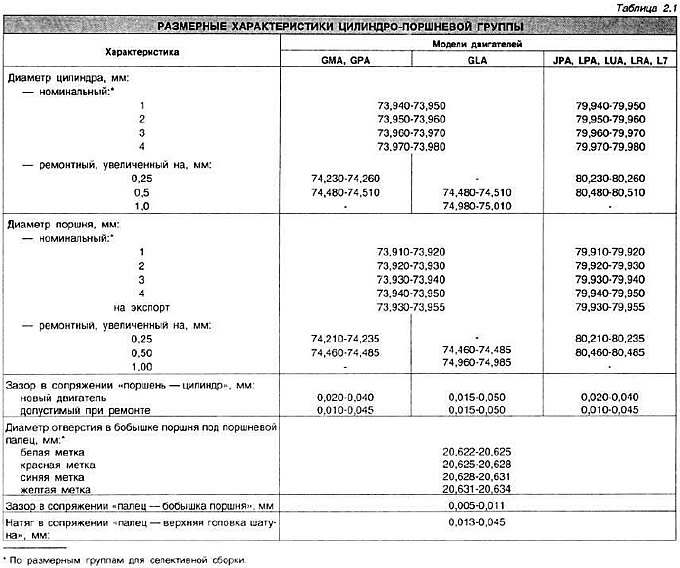
Diameter of the main bearing shell beds for all models except GLA: nominal 62.287-62.300 mm; repair with an increase of 0.400 - 62.687-62.700; gLA models: nominal - 60.623-60.636 mm; repair - 61.003-61.016 mm. Width of the middle support of the crankshaft; 28.825-28.875 mm. Diameter of holes for camshaft bushings of GLA engine: nominal — 42.888-42.918 mm; repair 43.396-43.420 mm.
Checking and repair
After washing, blowing and drying the cylinder block with compressed air, make sure there are no cracks. If cracks are present, replace the cylinder block. Check the plane of the cylinder block joint with the head using a ruler and a set of feeler gauges. The flatness tolerance is 0.1 mm. Measure the ovality and taper of the cylinders using a bore gauge. If the wear is more than 0.15 mm, bore and hone the cylinders so that when installing the selected repair piston, the gap between it and the cylinder is 0.010-0.045 mm.