Gasoline car engines Ford Escort 5

Technical specifications
HSC and Endura-E engines Cylinder head The maximum permissible non-flatness of the lower surface of the cylinder head is 0.15 mm Valve seat angle (inlet and outlet) -...
HSC and Endura-E engines Cylinder head The maximum permissible non-flatness of the lower surface of the cylinder head is 0.15 mm Valve seat angle (inlet and outlet) -...
Removing the engine together with the gearbox
This chapter contains operations for removing the engine together with the gearbox from the vehicle, and operations for carrying out major repairs of the cylinder head,...
This chapter contains operations for removing the engine together with the gearbox from the vehicle, and operations for carrying out major repairs of the cylinder head,...

Engine Removal and Installation (HCS and Endura-E Engines)
Please note: The following describes how to remove the engine without the gearbox. Removal On engines with fuel injection, depressurize the fuel system. Remove the...
Please note: The following describes how to remove the engine without the gearbox. Removal On engines with fuel injection, depressurize the fuel system. Remove the...

Removal and installation of CVH and RTE engines
Caution: This chapter describes the removal of the engine together with the gearbox Removal On engines with fuel injection, depressurize the fuel system. Remove the...
Caution: This chapter describes the removal of the engine together with the gearbox Removal On engines with fuel injection, depressurize the fuel system. Remove the...

Removal and installation of Zetec and Zetec-E engines
Attention: This section covers the removal and installation of the engine together with the gearbox. Removal Place the car on a flat horizontal surface and loosen the...
Attention: This section covers the removal and installation of the engine together with the gearbox. Removal Place the car on a flat horizontal surface and loosen the...
Engine repair
If possible, mount the engine on a stand. If not, mount it in such a way that the engine cannot be damaged when loosening tightly tightened nuts and bolts. When...
If possible, mount the engine on a stand. If not, mount it in such a way that the engine cannot be damaged when loosening tightly tightened nuts and bolts. When...

Removing the cylinder head
Remove the cylinder head as described in Part A, B or C of this chapter. Remove the intake and exhaust manifolds. Then follow the steps for your engine type. HCS and...
Remove the cylinder head as described in Part A, B or C of this chapter. Remove the intake and exhaust manifolds. Then follow the steps for your engine type. HCS and...

Cylinder head assembly
Before assembling the cylinder head, clean it thoroughly. Lubricate the valve stems and valve guides with clean engine oil. HCS and Endura-E engines Insert the valve...
Before assembling the cylinder head, clean it thoroughly. Lubricate the valve stems and valve guides with clean engine oil. HCS and Endura-E engines Insert the valve...

Camshaft and hydraulic tappets (HCS and Endura-E engines)
Removal Remove the cylinder head, camshaft chain sprocket and oil pan. Turn the engine over, placing it on the surface mating with the cylinder head. Turn the camshaft a...
Removal Remove the cylinder head, camshaft chain sprocket and oil pan. Turn the engine over, placing it on the surface mating with the cylinder head. Turn the camshaft a...

Pistons and connecting rods
Removal HCS and Endura-E engines Remove the cylinder head and oil pan. Remove the oil pickup pipe and strainer. Temporarily install the crankshaft pulley so that the...
Removal HCS and Endura-E engines Remove the cylinder head and oil pan. Remove the oil pickup pipe and strainer. Temporarily install the crankshaft pulley so that the...

Crankshaft
Removal Caution The crankshaft can only be removed from a removed engine It is assumed that the gearbox, flywheel or drive plate, chain, cylinder head, oil pan, oil pump...
Removal Caution The crankshaft can only be removed from a removed engine It is assumed that the gearbox, flywheel or drive plate, chain, cylinder head, oil pan, oil pump...

Engine cylinder block
Cleaning Before cleaning, remove all external components from the cylinder block and sensors. On HCS and Endura-E engines, ensure that the tappets and camshaft are...
Cleaning Before cleaning, remove all external components from the cylinder block and sensors. On HCS and Endura-E engines, ensure that the tappets and camshaft are...
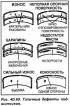
Main and connecting rod bearings
Even though the main and connecting rod bearings are subject to replacement during an engine overhaul, they should be carefully inspected as they can provide valuable...
Even though the main and connecting rod bearings are subject to replacement during an engine overhaul, they should be carefully inspected as they can provide valuable...
Engine assembly sequence
It is advisable to assemble the engine in the following order: install the ventilation system head (CVH and RTE engines) install the camshaft and lifters (HCS and...
It is advisable to assemble the engine in the following order: install the ventilation system head (CVH and RTE engines) install the camshaft and lifters (HCS and...

Piston rings
Before installing piston rings, check the gaps in the ring joints. To check the gap in the ring joint, remove the ring from the piston, insert it into the cylinder from...
Before installing piston rings, check the gaps in the ring joints. To check the gap in the ring joint, remove the ring from the piston, insert it into the cylinder from...

Crankshaft main bearings
Examination When checking, the cylinder block and crankshaft must be clean. Turn the engine over with the crankshaft facing up. Unscrew the main bearing cap mounting...
Examination When checking, the cylinder block and crankshaft must be clean. Turn the engine over with the crankshaft facing up. Unscrew the main bearing cap mounting...

Installing pistons and connecting rods
Caution: On HCS and Endura-E engines, new bolts must be used to secure the lower connecting rod cap. Wipe the half of the connecting rod at the cap and the lower part of...
Caution: On HCS and Endura-E engines, new bolts must be used to secure the lower connecting rod cap. Wipe the half of the connecting rod at the cap and the lower part of...
Starting the engine after major repairs
After installing the engine in the car, check the oil and coolant levels. Unscrew the spark plugs and turn off the ignition system. Turn the engine with the starter...
After installing the engine in the car, check the oil and coolant levels. Unscrew the spark plugs and turn off the ignition system. Turn the engine with the starter...
This section is available on russian, bulgarian, belarusian, ukrainian, serbian, croatian, romanian, polish, slovak, hungarian
See other similar sections for Ford cars:
• Power unit: Fuel injection (gasoline) Ford Focus Turnier 1 (1998-2004)
• Power unit: Fuel injection (gasoline) Ford Mondeo 1 (1993-1996)
• Power unit: Injection system (gasoline) Ford Scorpio 2 (1994-1998)
• Power unit: Fuel injection (gasoline) Ford Focus Turnier 1 (1998-2004)
• Power unit: Fuel injection (gasoline) Ford Mondeo 1 (1993-1996)
• Power unit: Injection system (gasoline) Ford Scorpio 2 (1994-1998)
Escort 5
Escort 4
Escort 3
- General information
- User manual
- Maintenance
- Engine
- HCS and Endura-E engines
- CVH and PTE engines
- Zetec and Zetec-E engines
- Gasoline engines
- Diesel engines
- Diesel engines (since 1992)
- Cooling and heating
- Carburetors
- CFI fuel injection
- EFI fuel injection
- SEFI fuel injection
- Exhaust system
- Charging and starting system
- Ignition system
- Transmission
- Clutch
- Mechanical gearbox
- Automatic gearbox
- Drive shafts
- Chassis
- Brake system
- Car suspension
- Steering
- Body
- Electrical equipment
- Light and appliances
- Schematic diagrams
Escort 4
- General information
- User manual
- Maintenance
- Gasoline engines
- OHV engine repair
- CVH engine repair
- Fuel system
- Weber 2V carburetor
- KE-Jetronic injection system
- CFI injection system
- Ignition system
- Diesel engines
- Engine repair
- Fuel system
- High pressure pump
- Cooling and lubrication system
- Transmission
- Clutch
- Mechanical gearbox
- Automatic gearbox
- Drive shafts
- Chassis
- Suspension and wheels
- Steering
- Brake system
- Body
- Body elements
- Doors, locks and windows
- Electrical equipment
- Equipment and devices
- Lighting system
- Electrical circuits
Escort 3
- General information
- Maintenance
- Characteristics
- Engine
- Disassembly and assembly
- Cooling system
- Lubrication system
- Supply system
- Fuel injection «K-Jetronic»
- Transmission
- Clutch
- Mechanical gearbox
- Hydromechanical box
- Drive shafts
- Chassis
- Front suspension
- Rear suspension
- Steering
- Brake system
- Electrical equipment
- Starting and charging system
- Ignition system
- Ignition «Escort RS 1600»
- Light and appliances
- Schematic diagrams