Car fuel system carburetors Ford Escort 5

Technical specifications
The fuel system consists of a rear-mounted fuel tank, a mechanical fuel pump and a Weber carburetor. Carburetor type hCS engines with a working volume of 1.3 dm³ - Weber...
The fuel system consists of a rear-mounted fuel tank, a mechanical fuel pump and a Weber carburetor. Carburetor type hCS engines with a working volume of 1.3 dm³ - Weber...
General information
The fuel system of carburetor models includes a rear-mounted fuel tank, a mechanical fuel pump, a carburetor and an air filter. The fuel tank is located under the rear...
The fuel system of carburetor models includes a rear-mounted fuel tank, a mechanical fuel pump, a carburetor and an air filter. The fuel tank is located under the rear...
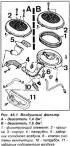
Air filter
Removal Remove the negative battery terminal. On CVH engines, remove the accelerator cable housing from the bracket on the air cleaner housing. Remove the 3 bolts and...
Removal Remove the negative battery terminal. On CVH engines, remove the accelerator cable housing from the bracket on the air cleaner housing. Remove the 3 bolts and...

Accelerator cable (manual transmissions)
Removal Remove the negative terminal from the battery. Working inside the vehicle, remove the accelerator cable from the pedal by lifting the pedal off the floor and...
Removal Remove the negative terminal from the battery. Working inside the vehicle, remove the accelerator cable from the pedal by lifting the pedal off the floor and...

Eccentric control cable on models with automatic transmission STX
Adjustment of the eccentric control cable should be made after installing the gearbox or replacing the cable. The cable is attached to the eccentric mounted on the...
Adjustment of the eccentric control cable should be made after installing the gearbox or replacing the cable. The cable is attached to the eccentric mounted on the...
Accelerator pedal
Removal Remove the negative terminal from the battery. Remove the decorative trim under the instrument panel on the driver's side. Disconnect the accelerator cable from...
Removal Remove the negative terminal from the battery. Remove the decorative trim under the instrument panel on the driver's side. Disconnect the accelerator cable from...

Air damper control cable
Removal Remove the negative terminal from the battery. Remove the air filter. Use a lever to remove the choke cable from the carburetor. Disconnect the cable housing...
Removal Remove the negative terminal from the battery. Remove the air filter. Use a lever to remove the choke cable from the carburetor. Disconnect the cable housing...
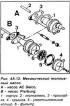
Fuel pump
Examination The fuel pump on HCS engines is most easily accessed from underneath the vehicle. The fuel pump can be checked by removing the fuel feed pipe from the...
Examination The fuel pump on HCS engines is most easily accessed from underneath the vehicle. The fuel pump can be checked by removing the fuel feed pipe from the...
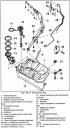
Fuel tank
The fuel tank is located under the rear seat. The fuel level sensor is inserted from above and can only be removed with the fuel tank removed. The wiring harness from...
The fuel tank is located under the rear seat. The fuel level sensor is inserted from above and can only be removed with the fuel tank removed. The wiring harness from...

Fuel level sensor
Removal Remove the fuel tank. Turn the fuel level sensor cover with a special or pipe wrench and remove the sensor from the fuel tank (see Fig. 4A.20). Installation...
Removal Remove the fuel tank. Turn the fuel level sensor cover with a special or pipe wrench and remove the sensor from the fuel tank (see Fig. 4A.20). Installation...

Check valve
Removal Remove the negative terminal from the battery. Raise the rear of the vehicle and secure it on stands. Remove the rear wheel from the filler neck side. Unscrew...
Removal Remove the negative terminal from the battery. Raise the rear of the vehicle and secure it on stands. Remove the rear wheel from the filler neck side. Unscrew...
Fuel tank filler pipe
Removal Remove the fuel tank. Unscrew the screw securing the check valve boot, the screws securing the fuel tank filler pipe and remove the pipe from under the car....
Removal Remove the fuel tank. Unscrew the screw securing the check valve boot, the screws securing the fuel tank filler pipe and remove the pipe from under the car....
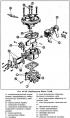
Weber TLDM Carburetor
Description The Venturi carburetor, two-chamber, has a main fuel system, an idle system, a mechanically driven accelerator pump and a vacuum-controlled economizer valve....
Description The Venturi carburetor, two-chamber, has a main fuel system, an idle system, a mechanically driven accelerator pump and a vacuum-controlled economizer valve....

Weber TLDM Carburetor Fast Idle Speed Adjustment
Caution: Before making any carburetor adjustments, check that spark plug gaps are correct and that all electrical connections and vacuum hoses are securely connected and...
Caution: Before making any carburetor adjustments, check that spark plug gaps are correct and that all electrical connections and vacuum hoses are securely connected and...

Weber TLDM Carburetor Needle Valve and Float
Removal Remove the negative terminal from the battery. Remove the air filter. Carefully clean all external dirt from the carburetor, disconnect the fuel supply and...
Removal Remove the negative terminal from the battery. Remove the air filter. Carefully clean all external dirt from the carburetor, disconnect the fuel supply and...

Weber TLDM Carburetor Choke Damper
Removal and installation Remove the negative terminal from the battery. Remove the air filter housing. Disconnect the vacuum hose from the throttle damper. Unscrew the 2...
Removal and installation Remove the negative terminal from the battery. Remove the air filter housing. Disconnect the vacuum hose from the throttle damper. Unscrew the 2...
Removing and installing the Weber TLDM carburetor
Removal Remove the negative terminal from the battery. Remove the air filter housing. Disconnect the accelerator cable from the carburetor. Disconnect the choke cable...
Removal Remove the negative terminal from the battery. Remove the air filter housing. Disconnect the accelerator cable from the carburetor. Disconnect the choke cable...
Weber TLDM carburetor repair
Disassembly Remove the carburetor from the engine and place it on a clean, flat surface. Clean the outside of the carburetor. Remove the 2 screws and carburetor cover....
Disassembly Remove the carburetor from the engine and place it on a clean, flat surface. Clean the outside of the carburetor. Remove the 2 screws and carburetor cover....

Weber TLD Carburetor
Description The Weber TLD carburetor is similar to the TLDM carburetor installed on the HCS engine with a working volume of 1.3 dm³. But it has the following...
Description The Weber TLD carburetor is similar to the TLDM carburetor installed on the HCS engine with a working volume of 1.3 dm³. But it has the following...

Adjusting the Fast Idle Speed on a Weber TLD Carburetor
Caution: Before making any carburetor adjustments, check that spark plug gaps are correct and that all electrical connections and vacuum hoses are securely connected and...
Caution: Before making any carburetor adjustments, check that spark plug gaps are correct and that all electrical connections and vacuum hoses are securely connected and...

Weber TLD Carburetor Needle Valve and Float
Removal and installation of the needle valve and float is carried out in the same way as on the Weber TLDM carburetor. The difference is that there is no need to remove...
Removal and installation of the needle valve and float is carried out in the same way as on the Weber TLDM carburetor. The difference is that there is no need to remove...

Adjusting the automatic choke of the Weber TLD carburetor
Remove the negative terminal from the battery. Remove the air filter housing. Disconnect the coolant supply hoses to the automatic air damper. Pay attention to the...
Remove the negative terminal from the battery. Remove the air filter housing. Disconnect the coolant supply hoses to the automatic air damper. Pay attention to the...

Removing and installing the automatic air damper of the Weber TLD carburetor
Removal Disconnect the negative terminal from the battery. Remove the air filter housing. To prevent coolant loss, pinch the coolant supply and return hoses to the...
Removal Disconnect the negative terminal from the battery. Remove the air filter housing. To prevent coolant loss, pinch the coolant supply and return hoses to the...

Removing and installing the Weber TLD carburetor
Removal Remove the negative terminal from the battery. Remove the air filter. Relieve the pressure in the cooling system, then disconnect the coolant supply hoses to the...
Removal Remove the negative terminal from the battery. Remove the air filter. Relieve the pressure in the cooling system, then disconnect the coolant supply hoses to the...

Disassembly and assembly of the Weber TLD carburetor
Disassembly and assembly are similar to disassembly and assembly of the Weber TLDM carburetor. When installing the mixture quality screw in its original place, it is...
Disassembly and assembly are similar to disassembly and assembly of the Weber TLDM carburetor. When installing the mixture quality screw in its original place, it is...
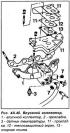
Removing and installing the intake manifold
Removal Drain the coolant from the cooling system. Remove the carburetor. Label and disconnect the coolant, vacuum and ventilation hoses from the manifold. Disconnect...
Removal Drain the coolant from the cooling system. Remove the carburetor. Label and disconnect the coolant, vacuum and ventilation hoses from the manifold. Disconnect...
This section is available on russian, bulgarian, belarusian, ukrainian, serbian, croatian, romanian, polish, slovak, hungarian
Escort 5
Escort 4
Escort 3
- General information
- User manual
- Maintenance
- Engine
- HCS and Endura-E engines
- CVH and PTE engines
- Zetec and Zetec-E engines
- Gasoline engines
- Diesel engines
- Diesel engines (since 1992)
- Cooling and heating
- Carburetors
- CFI fuel injection
- EFI fuel injection
- SEFI fuel injection
- Exhaust system
- Charging and starting system
- Ignition system
- Transmission
- Clutch
- Mechanical gearbox
- Automatic gearbox
- Drive shafts
- Chassis
- Brake system
- Car suspension
- Steering
- Body
- Electrical equipment
- Light and appliances
- Schematic diagrams
Escort 4
- General information
- User manual
- Maintenance
- Gasoline engines
- OHV engine repair
- CVH engine repair
- Fuel system
- Weber 2V carburetor
- KE-Jetronic injection system
- CFI injection system
- Ignition system
- Diesel engines
- Engine repair
- Fuel system
- High pressure pump
- Cooling and lubrication system
- Transmission
- Clutch
- Mechanical gearbox
- Automatic gearbox
- Drive shafts
- Chassis
- Suspension and wheels
- Steering
- Brake system
- Body
- Body elements
- Doors, locks and windows
- Electrical equipment
- Equipment and devices
- Lighting system
- Electrical circuits
Escort 3
- General information
- Maintenance
- Characteristics
- Engine
- Disassembly and assembly
- Cooling system
- Lubrication system
- Supply system
- Fuel injection «K-Jetronic»
- Transmission
- Clutch
- Mechanical gearbox
- Hydromechanical box
- Drive shafts
- Chassis
- Front suspension
- Rear suspension
- Steering
- Brake system
- Electrical equipment
- Starting and charging system
- Ignition system
- Ignition «Escort RS 1600»
- Light and appliances
- Schematic diagrams