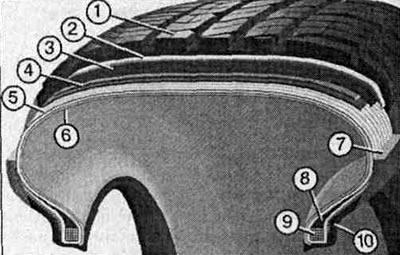
Multi-layer internal structure of passenger car tire: 1 - Tread: The profile and compound affect the properties of the tire; 2 - base: reduces rolling resistance; 3 - Wound nylon bandage: suitable for higher speeds; 4 - steel cord layer breaker: increases driving stability; 5 - carcass: support of the shape and strength of the tire; 6 - Inner lining: the inner airtight layer replaces the camera; 7 - side part: protects the frame from damage; 8 - Core Profile: Maintains precision control and movement; 9 - Core: Provides a secure fit on the rim; 10 - side reinforcement: for precise steering and high driving stability.
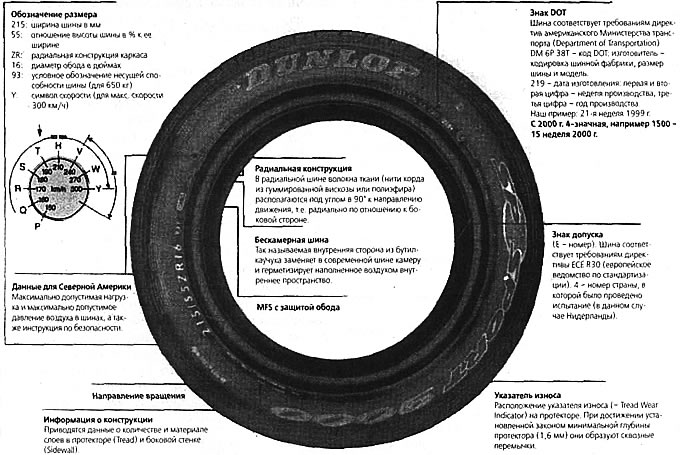
Synonym for maximum speed - capital letter after the last digit
The large letter after the last digit on the sidewall of the tire indicates the maximum speed permitted for the tire. A 175/70 R14 tire with the letter S is designed for a maximum speed of up to 180 km/h, with the letter T - up to 190 km/h. A tire designed for a maximum speed of 210 km/h is equipped with the letter H. Traditional M+S tires with the letter Q have a speed rating of up to 160 km/h.
The DOT number tells you how old the tire is
The actual date of manufacture of the tyre is indicated by the DOT number on the sidewall of the tyre: since 1990, there is no triangle behind this number. For example, if the DOT number is 1500, the tyre was manufactured in the 15th week of 2000. New tyres with a production date from 1 October 1998 must have an ECE test number on the sidewall. This test number guarantees that the tyre is a component of the approved type that complies with the quality standard of the Economic Commission for Europe (ECE-R 30). If your vehicle is required to be fitted with tyres with a DOT number higher than 408, but without an ECE test number, you are driving without a General Operating Permit.
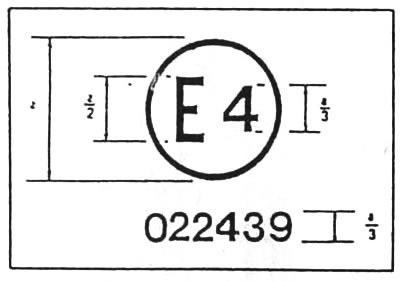
The test verification number is recognized by the capital letter E and the number of the country of origin, for example: 1 - Germany, 4 - Netherlands.
The original article is available on the website: www.fordbook.ru