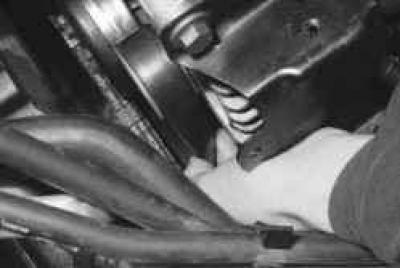
1. Check if the alternator drive belt is broken. If it is broken, replace the belt (see "Replacing the accessory drive belt").
2. If the belt is intact, check its tension. Replace the belt if necessary (see "Replacing the accessory drive belt").
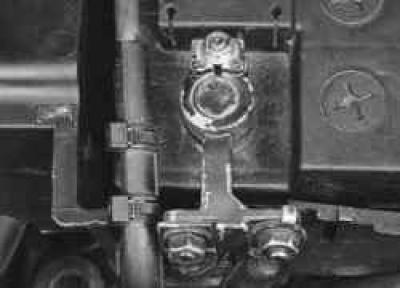
3. If the warning light still lights up after tightening the belt, check the wires connected to the positive terminal of the battery…
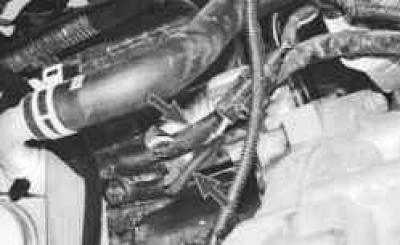
4. …to the starter…
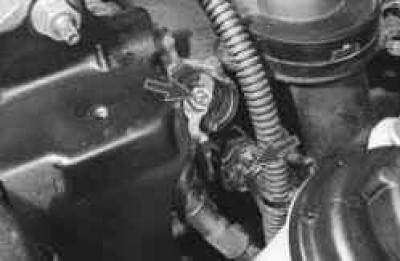
5. …and to the generator. The wires may be torn, broken inside the insulation, or have oxidized or unreliable contacts. Fix the problem and start the engine. If charging current appears, you can continue driving.
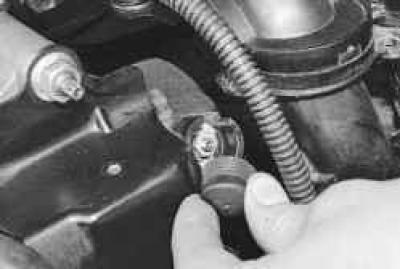
NOTE: For clarity, the power cable terminal cap has been removed.
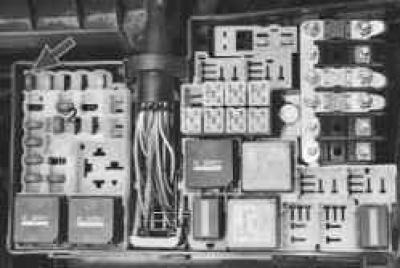
6. If the belt is properly tensioned, check whether the fuse (shown by the arrow) in the fuse and relay box installed in the engine compartment has blown. If the fuse has blown, replace it, start the engine and check whether the battery discharge lamp has gone out. If the lamp has gone out, you can continue driving.
WARNING: Do not install fuses with a higher current rating. This may cause damage to electrical equipment or even fire.
If after the measures taken the discharge lamp continues to light with the engine running, then the possible cause of the malfunction lies in the generator itself. There may be several reasons, it is better to eliminate them in a car service or garage, and you can only hope that the energy reserve in the battery is enough to get to them.
USEFUL TIP: To reduce current consumption when driving a car with a faulty generator, if possible, turn off the radio, unnecessary lighting devices, heater fan, rear window heating, etc.