


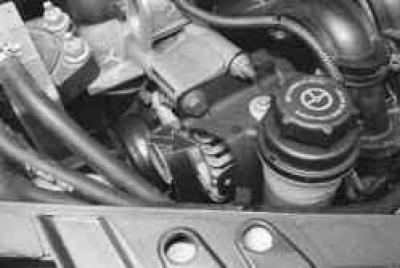
Ford Focus II cars are equipped with three-phase alternating current generators with electromagnetic excitation, with a built-in rectifier unit and electronic voltage regulator. The fan impeller and drive pulley are located on the generator shaft. The shaft is mounted on sealed bearings that do not require additional lubrication throughout the entire service life. The shaft is driven from the crankshaft pulley by a poly V-belt.
In addition to the electronic regulator built into the generator, the electronic engine unit additionally controls the generator operating modes. It automatically increases the generator output voltage at low ambient temperatures for more efficient recharging of the battery, switches off the generator when starting the engine and increases the engine crankshaft speed at idle with a high electrical load on the generator. If any malfunctions occur in the power supply system and when the ignition is turned on with the engine not running, the engine control unit turns on the battery discharge warning lamp.
NOTE: Codes of the occurring faults of the electrical supply system are stored in the memory of the electronic engine control unit. They can be read using a scanner at the service.
USEFUL TIP: Recently, many companies have appeared that specialize in repairing imported generators and starters. There, you can diagnose a faulty unit, purchase spare parts for any generator (starter) model, and get qualified advice. If you are not sure that you can repair a generator (starter) yourself, it makes sense to contact a company that will repair these units quickly, efficiently, and, as a rule, at an affordable price. However, on cars with high mileage, it is often more profitable to replace the unit as a whole with a new one than to replace the failed parts.