WARNING: Airbags do not replace seat belts. Moreover, when the vehicle is moving, the driver and front passenger must be fastened with seat belts, since in the event of a traffic accident, an airbag that has deployed itself can cause serious injury to a person not wearing a seat belt.
The SRS system includes:
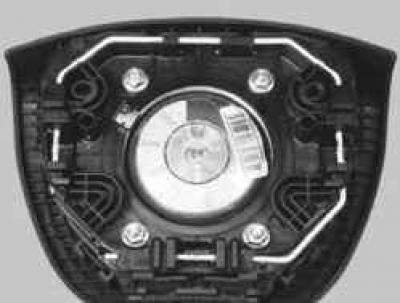
- driver airbag module, located in the steering wheel hub and consisting of a folded airbag shell and a gas generator;
- front passenger airbag module (installed depending on the vehicle configuration), located in the instrument panel on the passenger side and consisting of a folded airbag shell and a gas generator;
– driver and front passenger side airbag modules (installed depending on vehicle configuration), located in the outer side parts of the front seat backs and consisting of a folded airbag shell and a gas generator;
– window airbag modules (installed to order), located above the front and rear door windows, under the ceiling trim and consisting of a folded airbag shell and a gas generator;
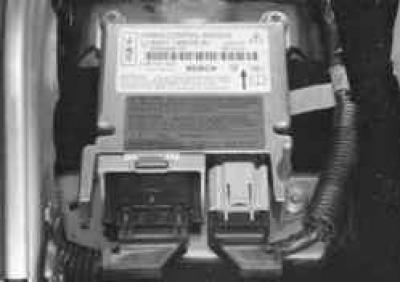
- an electronic control unit installed under the floor tunnel lining and controlling the system;
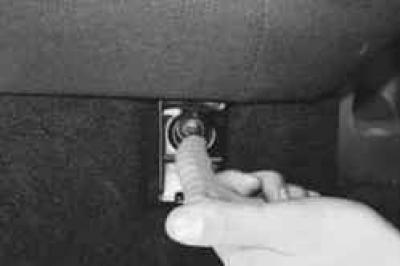
- seat belts;
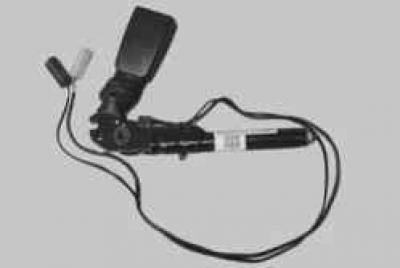
– front seat belt pretensioners (built into the front seat belt buckles).
The force and direction of impact during a traffic accident is determined by the electronic control unit (ECU) of the passive safety system using electronic accelerometers. Based on the accelerometer signal, the control unit activates the airbags.
In the event of a frontal impact of a certain force, the ECU receives a signal from the accelerometers and, by issuing a command to the pyrotechnic elements of the pretensioners, increases the tension of the belts before activating the airbags. The pretensioners provide a timely response to emergency deceleration of the car, pulling the driver and passengers to the backs of the seats, and also prevent their further movement forward by inertia and injury from the deployed airbag.
NOTE: The seat belt pretensioner mechanism always deploys before the air bag.
Additional elements of the passive safety system also include head restraints installed on the backs of the driver and front passenger seats of all vehicle trim levels and on the back of the rear seat (two head restraints for side passengers in the Ambiente, Comfort and Trend trim levels, three head restraints for all passengers in the Ghia trim level). The head restraints prevent damage to the cervical vertebrae of people sitting in the vehicle in the event of a strong impact from behind and when the airbags are deployed.
The following describes the removal and installation of the driver's airbag, seat belts and the safety system control unit, since the driver's airbag must be removed for work related to the repair of the steering system. Side and window airbags should only be removed at service stations with specially trained personnel. Adjusting the position of the headrests and their removal are described in Section 1 "Vehicle structure" (see "Adjusting the Front Seats").