When the key is turned in the Start direction, terminal 50 in the ignition switch supplies electrical energy to the electromagnetic switch at the top of the starter.
The starting fork shifts the starter pinion on the vertical thread of the armature shaft into the toothed ring on the engine flywheel (reciprocating path).
At the end of the forward movement, the starter pinion is located directly in front of the flywheel ring gear. Now the electromagnetic switch releases the full current of the battery (terminal 30) via the main contacts. The pinion screws further into the ring gear and creates a force closure (screw path) - the starter turns the engine.
As soon as the engine starts and you release the ignition key, the electromagnetic field in the electromagnetic switch holding coil disappears. The return spring now pulls the starter fork to the resting position. The starter pinion leaves the flywheel, and the current supply to the starter is interrupted.
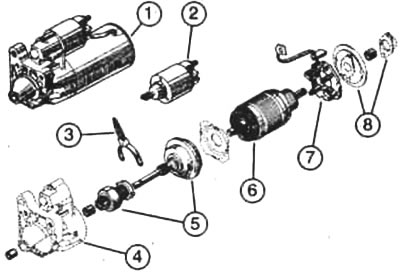
Structural elements of the starter: 1 - starter assembly; 2 - electromagnetic switch; 3 - starting fork; 4 - Leading bearing shield; 5 - freewheeling gear drive; 6 - anchor with collector; 7 - brush holder; 8 - collector bearing shield with small parts for setting the axial clearance of the bearing.