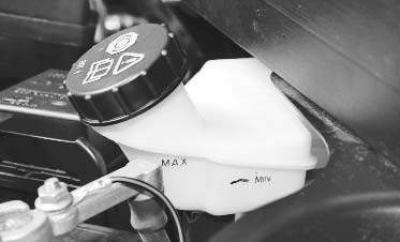
Attention! Regularly check the brake fluid level in the master cylinder reservoir. The brake fluid level should be near the "MAX" mark on the reservoir body.
A drop in the fluid level indicates either a leak in the brake fluid system or excessive wear of the brake pads. If the low brake fluid light comes on on the instrument panel, do not rush to top it up immediately, first check the thickness of the brake pad linings: maybe it's time to replace the pads?
Vehicle manufacturers recommend replacing all brake fluid in the system after 40,000 km or 2 years (whichever comes first).
Some drivers ignore this advice because the fluid in the reservoir seems clean enough to them, and this is completely in vain. The fact is that brake fluid is very hygroscopic (absorbs moisture from the air), and this moisture over time not only destroys the surfaces of the brake cylinders, pipes and, as a result, leads to premature failure of the brake system units, but also significantly reduces the boiling point of the brake fluid. The normal boiling point of DOT-4 brake fluids is 210–260°C. With frequent intensive braking, disc brakes heat up a lot, with a high water content, the brake fluid can boil, which, as a rule, leads to brake failure.
Note: In order to avoid unexpected expenses in the future for repairs not only of the brake system, but of the entire car, it is better to replace the fluid in the brake system in a timely manner.
Note: We recommend replacing the brake fluid after 1 year.
Note: If you experience problems with your brakes, bleed the brake system (see "Checking the tightness of the hydraulic brake drive").