Contents: Unscrewing rusty threaded connections ↳ Unscrewing damaged nuts ↳ Hexagon socket or hexagon head bolts ↳ Removal self-tapping screws with… ↳ Turning out and screwing in studs ↳ Drilling out a broken bolt ↳ Thread cutting ↳
Almost all car repair operations involve loosening nuts, bolts and screws. Over time, threaded connections rust, become corroded, bolt and nut faces become damaged, screw splines become stripped and loosening becomes a problem. Below are tips to help you get the job done.
Unscrewing rusty threaded connections
Before installing the wrench on a heavily rusted nut, clean the exposed threads from dirt and corrosion.
1. Clean the threads with a wire brush and apply a penetrating compound to the threaded part.
2. When using a fast-acting compound, begin to loosen the nut immediately after applying it.
3. When using a slow-acting compound, begin disassembling the unit after the penetration period has elapsed.
Unscrewing damaged nuts
If the edges of the nut are damaged, use special tools:
- tighten the nut with an adjustable collet wrench. This may be enough to loosen it;
- chop off the nut with a sharp chisel;
- if the nut is easily accessible, you can saw it along the axis; this method does not damage the bolt thread;
- carefully, without damaging the threads, use a special device for splitting nuts.
Note: Self-locking nuts with a Teflon insert are very often used in threaded connections. After unscrewing such a nut, replace it with a new one, since the locking function of the old nut is lost after unscrewing.
Hexagon socket or hexagon head bolts
To remove these bolts, clean the inside hole in the head and use a suitable wrench. A set of Allen keys or multi-tooth wrenches are best for this purpose. Before removing the bolt, carefully tap the head with a hammer so as not to damage it - this may make it easier to remove the bolt.
Removal self-tapping screws with straight and Phillips slots
Sometimes, heavily rusted connections cannot be unscrewed with a screwdriver. After several unsuccessful attempts, the slot is crushed and it becomes impossible to unscrew the screw in the usual way.
1. If you are unable to remove the screw, take a suitable screwdriver and try to remove it by hitting the screwdriver handle with a hammer.
2. If the screw breaks, drill out the remaining part.
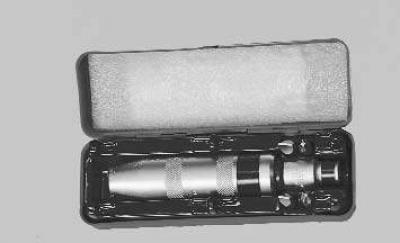
3. If you cannot remove the screw by hand, use an impact screwdriver.
Turning out and screwing in studs
The pin has no surface for the key to catch on, so follow these steps to remove the pin.
1. Screw two nuts onto the free threaded part and lock them by turning them towards each other.
2. Having secured the nuts in this way, unscrew the stud.
Drilling out a broken bolt
The threaded hole in which part of the bolt remains can be left undamaged if you do the following.
1. Punch the bolt fragment exactly in the center. To make punching easier, file the fracture if possible.
2. Drill out the bolt fragment. The drill diameter should be 0.8 of the thread diameter. For example, for an M6 threaded connection, the drill diameter should be 4.8 mm.
3. To drill out large bolts, use a small diameter drill bit first.
4. Remove the remaining parts of the bolt after drilling and "run" the thread with a tap.
Thread cutting
Very often during the repair process there is a need to restore damaged threads or cut new ones.
Threads are cut quite easily in light alloy metals, since their hardness is not high, unlike steel. If it is impossible to cut a thread of the appropriate size, cut a larger thread.
Restoring a crushed, damaged thread or cutting a new one takes place in three stages, the thread is cut sequentially with three taps: first with a tap with the first number (it has one annular groove on the shank), then with a tap with the second number (with two annular grooves on the shank) and, finally, with a tap with the third number (with three annular grooves or without grooves). Before screwing in, the taps must be lubricated with oil.
To prevent the tap from breaking when cutting threads, screw it in periodically and turn it back to clear away any chips that form.