1. Disconnect the wire from the negative terminal of the battery.
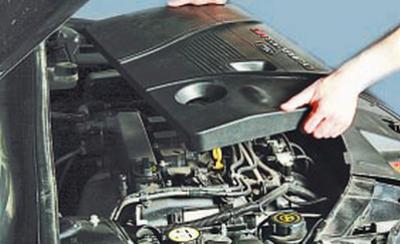
2. Remove the decorative engine cover (see Removing and installing the decorative engine cover).
3. Remove the air filter (see Removing and installing the air filter and intake silencer).
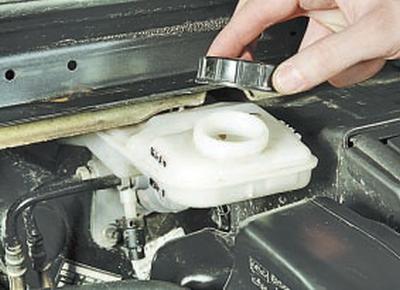
4. Remove the reservoir cap and pump out the brake fluid from the reservoir, for example, using a large medical syringe.
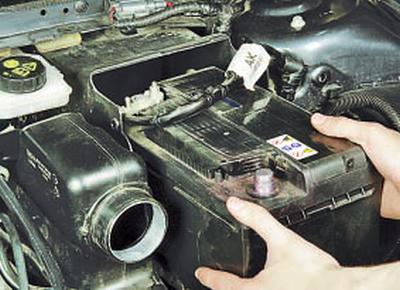
5. Remove the battery (see Removing and installing the battery)…
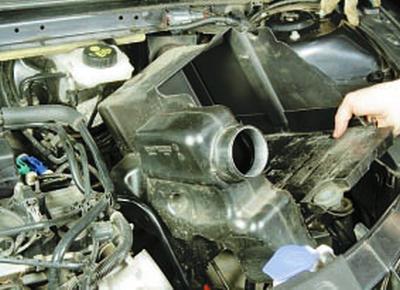
6….and its mounting shelf together with the intake noise muffler (see Removing and installing the battery mounting shelf).
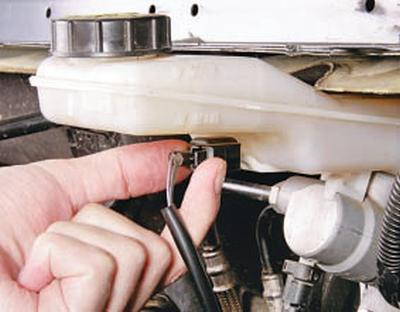
7. Press the brake fluid level sensor wiring harness connector lock…
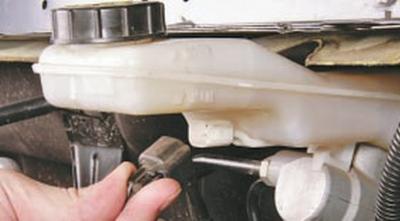
8….and disconnect the connector from the sensor.
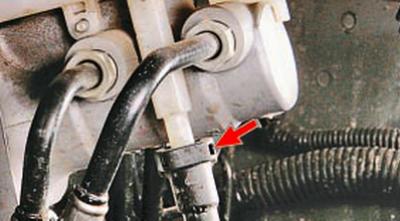
9. On a vehicle with a manual transmission, squeeze the clamps of the hose end (shown in the photo by the arrow) to the clutch master cylinder and disconnect the hose from the brake master cylinder reservoir.
HELPFUL TIP: Immediately after disconnecting the hose from the reservoir, plug its opening without lowering the hose down. There will be some working fluid left in the hose, so after installing the reservoir and connecting the hose to it, there is no need to bleed air from the clutch release hydraulic drive.
Install a cap on the tank to prevent dirt from getting into it.
NOTE: On vehicles with automatic transmission, the master cylinder reservoir nipple has a spring-loaded plug instead of a hose tip. It does not need to be removed unless necessary.
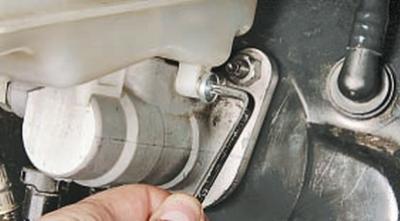
10. Remove the screw securing the reservoir to the master brake cylinder.
11. Remove the tank by extracting its pipes from the connecting bushings.
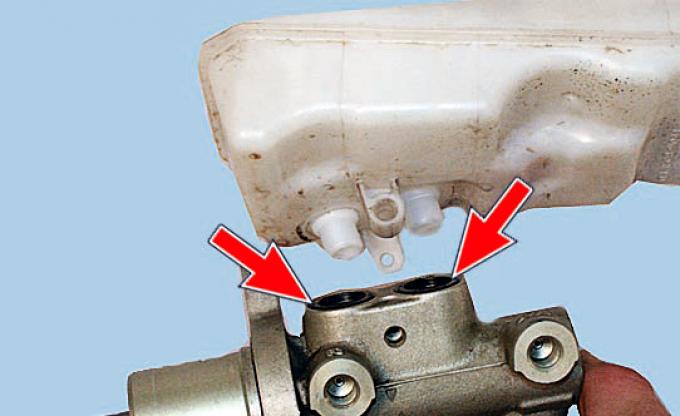
12. If during operation a leak of brake fluid was observed through the connecting bushings, remove the bushings from the holes in the cylinder body.
NOTE: Shown with master cylinder removed for clarity.
WARNING: Do not reuse coupling bushings, replace with new ones.
13. Before installing the reservoir, insert the connecting sleeves into the holes of the master brake cylinder. Then install the reservoir by inserting its pipes into the connecting sleeves with hand force until they stop, and secure with a screw (see item 10).
HELPFUL TIP: To make it easier to install the connecting sleeves into the cylinder and the reservoir pipes into the sleeves, wet them with fresh brake fluid.
14. Fill the brake fluid and remove air from the hydraulic drive (see Bleeding the hydraulic brake system).