Fuel and exhaust systems of the car Ford Mondeo 1 and 2

Technical requirements and tightening torques
General information System type With sequential fuel injection and electronic control Recommended fuel (minimum octane rating) 95 RON Idle speed: 4-cylinder engines:...
General information System type With sequential fuel injection and electronic control Recommended fuel (minimum octane rating) 95 RON Idle speed: 4-cylinder engines:...
General information and precautions
The fuel system consists of a plastic tank (mounted under the floor behind the rear seats), fuel lines made of metal and plastic, an electric fuel pump installed in the...
The fuel system consists of a plastic tank (mounted under the floor behind the rear seats), fuel lines made of metal and plastic, an electric fuel pump installed in the...

Relieving pressure in the fuel system
Warning: Before you begin, read the warning in paragraph 1 this chapter. 1. The fuel system presented in this chapter is defined as a system that consists of a fuel tank...
Warning: Before you begin, read the warning in paragraph 1 this chapter. 1. The fuel system presented in this chapter is defined as a system that consists of a fuel tank...

Fuel lines and connections — general information
Warning: Before you begin, read the warning in paragraph 1 this chapter. Removal and installation of quick-release couplings 1. Quick-release couplings are installed on...
Warning: Before you begin, read the warning in paragraph 1 this chapter. Removal and installation of quick-release couplings 1. Quick-release couplings are installed on...

Air Cleaner Assembly and Intake Duct Components
Air Cleaner Assembly - 4 Cylinder Engines Removal 1. Disconnect the negative battery cable (Chapter 5, paragraph 1). 2. Remove the air flow meter from the air cleaner...
Air Cleaner Assembly - 4 Cylinder Engines Removal 1. Disconnect the negative battery cable (Chapter 5, paragraph 1). 2. Remove the air flow meter from the air cleaner...

Removing, installing and adjusting the accelerator cable
Models with 4-cylinder engines without traction control Removal 1. Disconnect the negative battery cable (Chapter 5, paragraph 1). 2. Remove the camera (section 4). 3....
Models with 4-cylinder engines without traction control Removal 1. Disconnect the negative battery cable (Chapter 5, paragraph 1). 2. Remove the camera (section 4). 3....

Removing and installing the gas pedal
Removal 1. In the driver's footwell, disconnect the cable from the pedal. Pull the end and bushing out of the pedal. Then, pull the cable out of the pedal slot. 2....
Removal 1. In the driver's footwell, disconnect the cable from the pedal. Pull the end and bushing out of the pedal. Then, pull the cable out of the pedal slot. 2....

Checking the fuel pump/fuel pressure
Warning: Before you begin, read the warning in paragraph 1 this chapter. Checking the fuel pump 1. Turn on the ignition and listen to the fuel pump (the noise of the...
Warning: Before you begin, read the warning in paragraph 1 this chapter. Checking the fuel pump 1. Turn on the ignition and listen to the fuel pump (the noise of the...

Fuel Pump/Fuel Gauge Sensor
Warning: Before you begin, read the warning in paragraph 1 this chapter. Removal Note: This operation requires Tool 23-038, a large socket wrench with protruding teeth...
Warning: Before you begin, read the warning in paragraph 1 this chapter. Removal Note: This operation requires Tool 23-038, a large socket wrench with protruding teeth...

Removal, inspection and installation of the fuel tank
Warning: Before you begin, read the warning in paragraph 1 this chapter. Removal 1. The fuel tank does not have a drain plug. Therefore, it is best to remove it when it...
Warning: Before you begin, read the warning in paragraph 1 this chapter. Removal 1. The fuel tank does not have a drain plug. Therefore, it is best to remove it when it...
Removing and installing the tilt valves
Warning: Before you begin, read the warning in paragraph 1 this chapter. Removal 1. Remove the fuel tank ( paragraph 9 ). 2. Remove the two tilt valves from the tank and...
Warning: Before you begin, read the warning in paragraph 1 this chapter. Removal 1. Remove the fuel tank ( paragraph 9 ). 2. Remove the two tilt valves from the tank and...

Removing and installing the fuel cut-off switch
Removal 1. Disconnect the negative battery cable (Chapter 5, paragraph 1). 2. Remove the trim panel from the left footwell. 3. Bend the sound-insulating material away...
Removal 1. Disconnect the negative battery cable (Chapter 5, paragraph 1). 2. Remove the trim panel from the left footwell. 3. Bend the sound-insulating material away...

Fuel injection system information
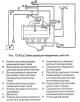
1. The vehicle is equipped with a sequential fuel injection system with electronic control. The system consists of three main subsystems: the fuel system, the air intake...
1. The vehicle is equipped with a sequential fuel injection system with electronic control. The system consists of three main subsystems: the fuel system, the air intake...
Checking and diagnosing the fuel injection system
Warning: Before you begin, read the warning in paragraph 1 this chapter. Note: This is an initial check of the fuel and air supply subsystems that are part of the engine...
Warning: Before you begin, read the warning in paragraph 1 this chapter. Note: This is an initial check of the fuel and air supply subsystems that are part of the engine...

Removal and installation of fuel injection system components
Warning: Before you begin, read the warning in paragraph 1 of this chapter. Electronic control unit Warning: The ECU is a fragile device. It must not be dropped, shaken...
Warning: Before you begin, read the warning in paragraph 1 of this chapter. Electronic control unit Warning: The ECU is a fragile device. It must not be dropped, shaken...

General information and replacement of exhaust system components
Warning: Exhaust system components should only be inspected and repaired after sufficient time has passed since the vehicle was driven, so that the components have...
Warning: Exhaust system components should only be inspected and repaired after sufficient time has passed since the vehicle was driven, so that the components have...
This section is available on russian, bulgarian, belarusian, ukrainian, serbian, croatian, romanian, polish, slovak, hungarian
See other similar sections for Ford cars:
• Power unit: Supply system Ford Focus 2 (2004-2010)
• Gasoline engines: Fuel system Ford Escort 4 (1986-1990)
• Power unit: Supply system Ford Fiesta 4 (1996-1999)
• Engine: Fuel/exhaust systems Ford Taurus 1 and 2 (1986-1994)
• Diesel engines: Fuel system Ford Sierra (1982-1993)
• Power unit: Fuel and exhaust system Ford Transit 2 (1986-2000, diesel)
• Power unit: Supply system Ford Focus 2 (2004-2010)
• Gasoline engines: Fuel system Ford Escort 4 (1986-1990)
• Power unit: Supply system Ford Fiesta 4 (1996-1999)
• Engine: Fuel/exhaust systems Ford Taurus 1 and 2 (1986-1994)
• Diesel engines: Fuel system Ford Sierra (1982-1993)
• Power unit: Fuel and exhaust system Ford Transit 2 (1986-2000, diesel)
Mondeo 4
Mondeo 3
Mondeo 2
Mondeo 1 and 2
Mondeo 1
- General information
- User guide
- Power unit
- Engine repair
- Lubrication system
- Cooling system
- Exhaust system
- Supply system
- Fuel vapor recovery
- Transmission
- Clutch
- Car gearbox
- Wheel drives
- Chassis
- Front suspension
- Rear suspension
- Steering
- Brake system
- Body
- Exterior
- Interior
- Doors, locks and windows
- Heating and ventilation
- Security systems
- Electrical equipment
- Electrical appliances
- Headlights and lighting
- Battery and alternator
Mondeo 3
- General information
- Introduction to the guide
- Workplace equipment
- Car care
- Help with malfunctions
- Power unit
- Engine repair
- Lubrication system
- Cooling system
- Fuel injection system
- Ignition system
- Fuel system
- Transmission
- Chassis
- Chassis
- Brake system
- Body
- Interior
- Exterior
- Electrical equipment
- Light and appliances
- Battery and alternator
- Schematic diagrams
Mondeo 2
- General information
- User guide
- Maintenance and care
- Wheels and rims
- Power unit
- V16 engine
- Duratec VE
- Lubrication system
- Cooling system
- Power systems
- Ignition system
- Exhaust system
- Transmission
- Clutch
- Mechanical gearbox
- Automatic gearbox
- Wheel drives
- Chassis
- Front suspension
- Rear suspension (sedan)
- Rear suspension
- Steering
- Brake system
- Brake service
- Electrical equipment
- Battery and alternator
- Light and appliances
Mondeo 1 and 2
- General information
- User guide
- Vehicle data
- Repair on the road
- Weekly checks
- Periodic maintenance
- Troubleshooting
- Engine
- 4 cylinder engines
- 6 cylinder engines
- Removal and repair
- Cooling system
- Fuel/exhaust systems
- Emission management
- Starting and charging systems
- Ignition system
- Transmission
- Clutch
- Mechanical gearbox
- Automatic gearbox
- Drive shafts
- Chassis
- Brake system
- Suspension
- Steering
- Body
- Exterior
- Interior
- Electrical equipment
Mondeo 1
- General information
- Car care
- Maintenance
- Troubleshooting
- Power unit
- Engine repair
- Cooling and lubrication system
- Ignition system
- Fuel/exhaust systems
- Fuel injection (gasoline)
- Fuel injection (diesel)
- Transmission
- Clutch and drive shafts
- Car gearbox
- Chassis
- Suspension
- Steering
- Brake system
- Wheels and tires
- Body
- Exterior
- Interior
- Doors, locks and windows
- Heating system
- Electrical equipment
- Equipment and devices
- Power devices
- Lighting and signaling
- Windshield wipers and washers
- Electrical circuits