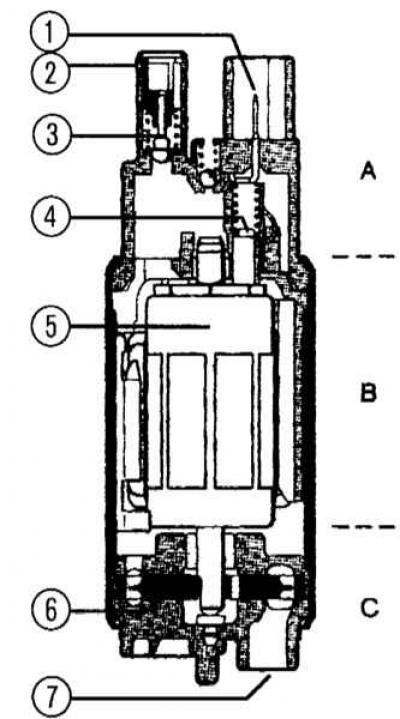
One relay supplies the electric fuel pump with voltage. Starting from the start-up period, the pump supplies fresh fuel to the injectors. The second relay only comes into operation when the engine stops with the ignition on (the control unit no longer receives speed pulses). The relay then interrupts the current supply in the PCM via a safety circuit. Thanks to this, for example, there is no fuel leakage after an accident. Previously, checking the fuel pump was the prerogative of a workshop. When troubleshooting, it is better to limit yourself to the following points.


|
ORDER OF EXECUTION |
- Disconnect the battery cables and...
- ...disconnect the pressure line from the distribution pipe. Prepare rags for the leaking gasoline.
- Since the fuel system is under pressure, gasoline will leak out even when the engine is stopped.
- If the connection remains dry, turn on the ignition briefly without using the starter.
- If the pump does not work, check the fuse or safety relay.
- If the connection continues to be dry, check the pump relay.
- The fuel pump should now start working.
- Otherwise, remove the trim under the rear seat and "treat" the pump body with careful blows from a small hammer – sometimes this helps.
Almost silent: 12 Volt electric pump: |
- At the same time, also check whether the connecting terminals are firmly seated on the contacts.
- If this does not work, check for voltage using a diode tester (a regular test lamp can damage the control unit). Do not forget to turn on the ignition first.
- If there is voltage, there is a defect in the pump or a break in the connecting wire. Your chances of eliminating defects in the fuel pump are naturally small, so it is best to install a new pump.
- If the pump is working, but there is no fuel in the pressure line, then the fuel filter or fuel line is dirty or "only" broken.
|
|
[The material was copied from an information website: FordBook]