|
ORDER OF EXECUTION |
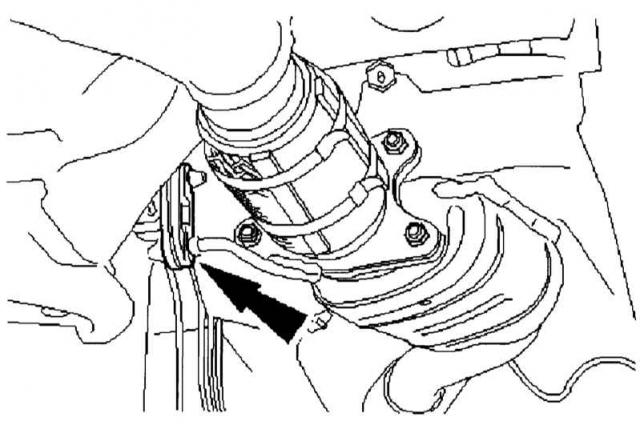
- Raise the vehicle, position it horizontally and secure it so that it does not wobble.
- If you cannot free the rusted screw connections, try to tighten the nuts - most often the screws can be torn off after this. For installation, use only new screws, spring rings, nuts and gaskets.
- For safety reasons, also replace all mounting rubber.
- If the exhaust system has previously undergone partial repair, it is best to disconnect the pipe end connections when they are hot. In workshops, a welding torch is used for this purpose – as a rule, a good tool for home work. In this case, be sure to protect your hands and eyes with work gloves and glasses. Also, keep a fire extinguisher nearby.
- Practical advice: before turning on the burner, try your luck with rust dissolving agents first.
- Separate the tubes and flanges further with strong rotational movements, supporting them with light hammer blows.
- If this does not help, chop off or cut off the joint about 10 centimeters from the joint. Then saw off the rest of the pipe to the split in the longitudinal direction and lift it up with a strong screwdriver.
- Subsequently, the exhaust system screw connections will be easier to release if the threads are lubricated with heat-resistant copper grease before installation. This remark also applies to overlapping pipe connections.
|
|
Don't trust small hanging loops - keep an eye on them when checking the exhaust system
On the engine side, the exhaust system is firmly screwed to the exhaust manifold. Under the bottom of the car, it is freely suspended using rubber loops. If your exhaust system starts to "buzz and ring" or even touch the ground, do not trust the welds, mufflers and suspension loops anymore. Check for "rusty" spots, and do not be afraid to use a hammer for this.


|
ORDER OF EXECUTION |
- Check the rubber loops for breaks, cracks or other damage and replace if necessary. To check, shake the exhaust end tube vigorously back and forth.
- Check all connections on the manifold flanges for tightness.
- Start the engine and insert a rag into the end pipe. After a while, the engine should stop. If you hear hissing sounds or the engine continues to run, the system is not sealed.
- Loud combustion noises and popping sounds in idle mode are unmistakable signs of defects in the exhaust system.
- Tap lightly with a hammer over the entire surface of the mufflers and pipes. Don't forget the front walls of the mufflers - do not hit them so timidly. If the metal sheet is "healthy", your blows will sound "dry and clear", you will recognize rotten metal by muffled sounds.
It is better to replace completely: Rubber loops (indicated by arrow) after completing work with the exhaust system. |
|
|
(The text of the article was copied from the website FordBook)