


- A car pit or a hydraulic repair jack with stands.
- Special tool for unscrewing the oil filter (oil filter pliers, strap wrench or Hazet 2172 tool).
- A spanner attachment for unscrewing the oil drain plug, as well as a container that can hold at least 5 liters of oil (if the oil is not sucked out).
The following spare parts are required:
- If oil is not sucked out: aluminum or copper sealing ring for the drain plug screw (sometimes supplied with the oil filter).
- Oil filter cartridge.
Caution! For petrol engines with automatic transmission, use only the EFL-106 oil filter. The standard EFL-2 filter may be damaged by the drive shaft.
Engine oil capacity is 4.5 liters. Use only approved engine oil for FORD, see p. 2.
Amount of oil to be replaced: for 4-cylinder petrol engine: 4.25 l; for diesel engine: 4.5 l.
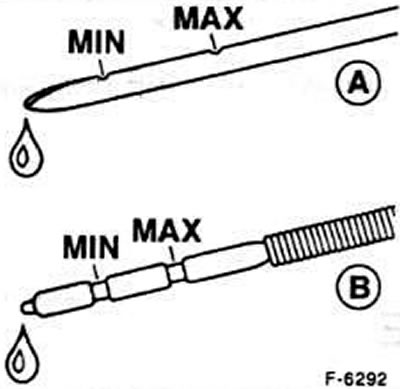
The difference in the amount of oil between the MIN and MAX marks on the oil level indicator is, depending on the engine type, from 0.5 l to 1 l.
Oil in a petrol engine is changed every 15,000 km, and in a diesel engine - every 10,000 km. If the car is used little, then it is enough to change the engine oil once a year. At the same time, the filter cartridge is replaced.
Under severe operating conditions, such as driving on short distances, frequent cold starts and dusty roads, the engine oil and filter cartridge must be changed more frequently. The engine oil is also sucked out with a probe (at the filling station) through the level indicator tube. However, then you have to buy new oil.
Attention! Hand over old oil, oil filter and rags soaked with motor oil to a special collection point for old motor oil. Never throw old oil and oil filter in a landfill or trash bin. Otherwise, the environment and groundwater may be polluted.
Draining engine oil
Bring the engine to operating temperature (60°C engine oil), to do this you need to drive about 10 km.
Place the vehicle horizontally on stands.
Remove the oil filler cap from the top of the engine.
Diesel engine: Unscrew the lower engine cover and remove.
Place a container under the oil pan to collect the old oil.
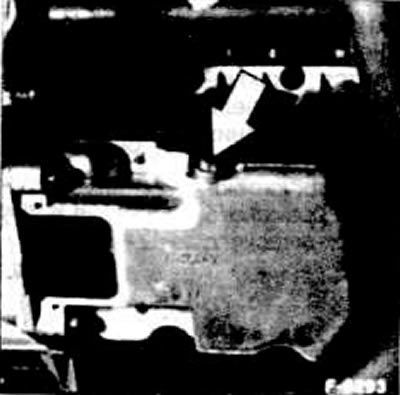
Remove the drain plug on the side of the oil pan and drain all the old oil.
Attention! If there is a large amount of metal shavings and abrasion products in the engine oil, this is a sign of wear due to scoring, for example, of the crankshaft, or damage to the connecting rod bearing. After repairing the engine, clean the oil channels and oil hoses.
Replacing the oil filter
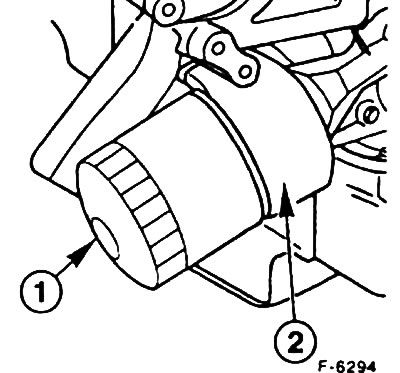
Unscrew the oil filter "1" from the flange "2". The oil filter is located on the rear side of the engine on top of the oil pan, near the V-belt mechanism. There are special tools for unscrewing the oil filter, such as the HAZET 2172 or a belt tensioner key. You can also insert a sharp screwdriver into the side of the oil filter, although this may cause oil to spill out - place a container underneath.
Wipe the area where the oil filter meets the engine block with a rag. If necessary, remove the sealing gasket that remains there.
Lightly lubricate the rubber seal with engine oil, following the instructions for the oil filter.
Tighten the oil filter by hand only. When the filter sealing gasket is flush with the engine block, tighten the filter at least another 1/2 turn.
Refilling engine oil
Screw in the screw plug with a new sealing ring and tighten it firmly, but not too tightly. Tightening torque: 25 Nm.
Depending on the model, pour the prescribed amount of new oil through the cylinder head cover pipe. Screw the cover on.
Start the engine and run it at high speed (approximately 2500/min) until the oil control lamp goes out (after approximately 5 seconds). Stop the engine.
After a 5-minute pause, check the oil level with the indicator.
After a test drive, check the drain plug and oil filter for leaks and tighten carefully if necessary.
Stop the engine warmed up to operating temperature and check the oil level again after 2 minutes, adjust if necessary.
To better control the engine operating mode, use the same type and brand of oil whenever possible when changing the oil. For this purpose, it is advisable to attach a plate to the engine with the brand and viscosity of the oil each time you change the oil.
Alternating use of different types of oil is unfavorable. If possible, do not mix motor oils of the same type but different brands. Motor oils of the same type and brand but different viscosity can be added if necessary in the off-season.
[For more information, please visit the specified website: fordbook.ru]