


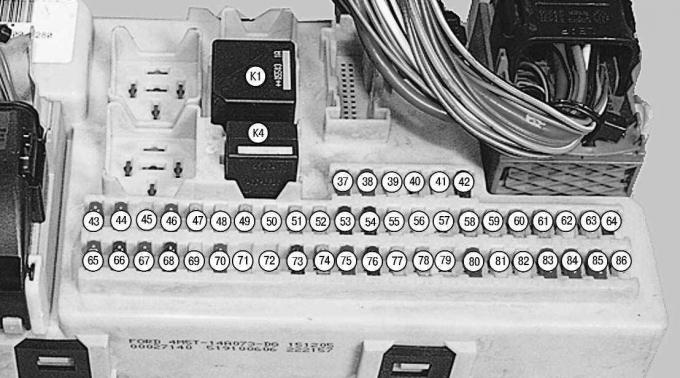
Fig. 10.1. Fuses and relay numbers in the fuse box located in the passenger compartment
Most fuses are installed in the fuse and relay mounting block in the passenger compartment (Fig. 10.1), located under the instrument panel on the right side. The purpose of the fuses and relays (their numbers are indicated on the block and in the figure) is shown in Table 10.1.
Table 10.1 Purpose of fuses and relays installed in the fuse box in the passenger compartment
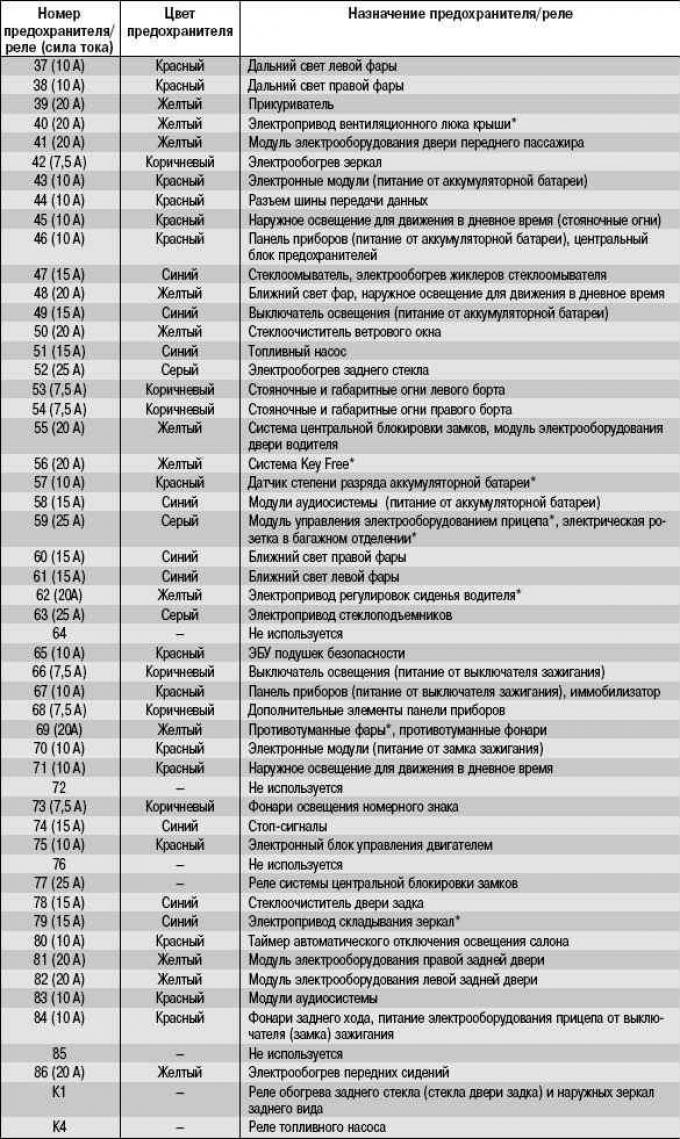
*If available.
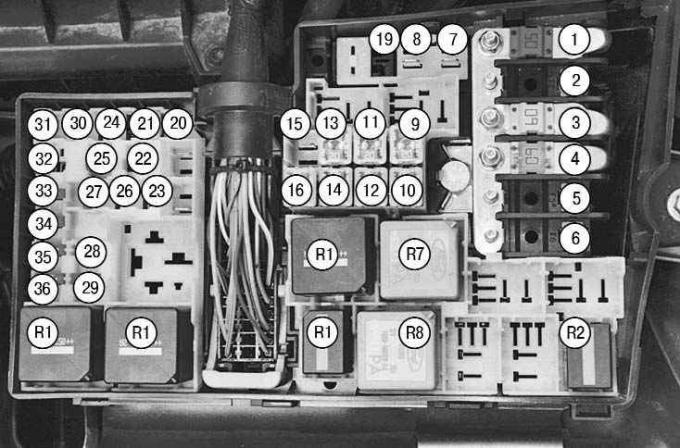
Fig. 10.2. Fuses, fuse links and relay numbers in the mounting block located in the engine compartment
In addition, fuses, relays and fusible links are located in the mounting block installed in the engine compartment (Fig. 10.2, mounting block cover removed). Table 10.2 shows the purpose of these fuses, fusible links and relays, but on a specific car model, some circuits indicated in the table may be missing.
Table 10.2 Purpose of fuses and relays installed in the mounting block in the underhood space
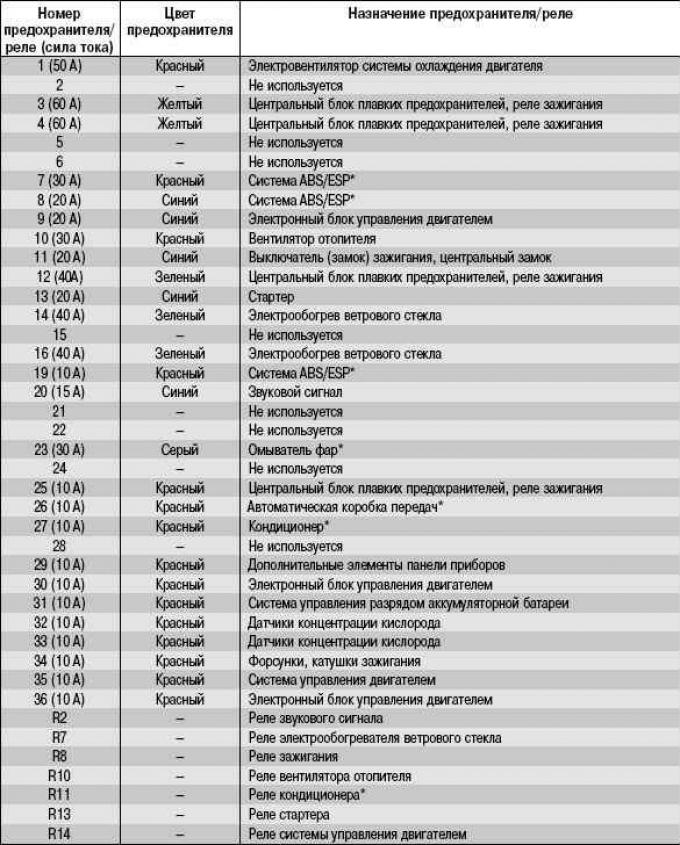
* If available.
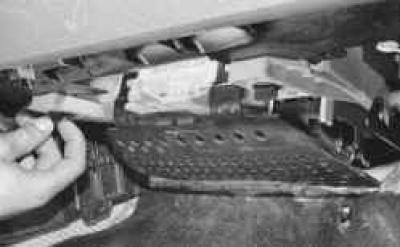
1. To gain access to the fuses and relays of the fuse box located in the passenger compartment, unscrew the two mounting screws under the instrument panel on the right…
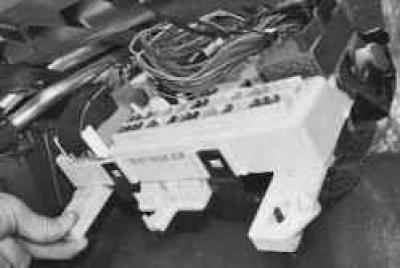
2. …and lower the mounting block down.
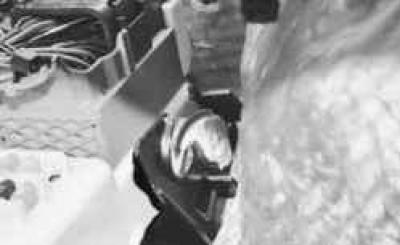
3. For ease of use of the unit, its housing can be pulled out by rearranging the housing protrusions in the grooves of the supporting brackets.
4. Before replacing a blown fuse, find out the reason for its blown fuse and eliminate it. When searching for a fault, look at the circuits specified in Table 10.1 that this fuse protects.
WARNING: Do not replace fuses with jumpers or fuses rated for a different amperage, or with homemade jumpers - this may cause damage to electrical equipment and even fire.
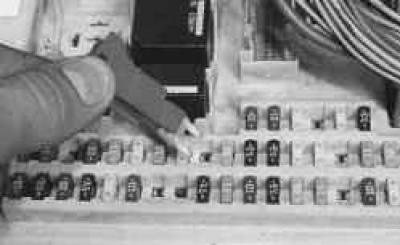
5. Using special plastic tweezers, remove the replacement fuse.
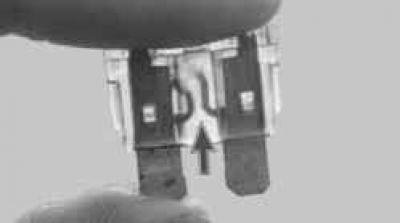
6. This is what a blown fuse looks like (the jumper inside the holder, shown by the arrow, has blown and opened). To replace the fuse, use a spare fuse of the same rating (and color).
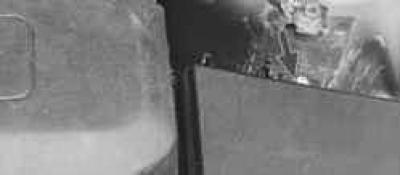
7. To access the fuses and relays in the fuse box located in the engine compartment, pull the lever on the rear of the box and lift the cover.
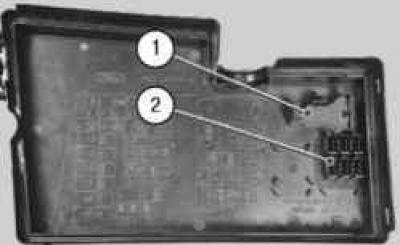
NOTE: The relay and fuse layout diagram is shown on the inside of the cover of the relay and fuse box in the engine compartment. Tweezers 1 for removing fuses from the fuse boxes are also attached there, and slots 2 for attaching spare fuses are provided next to it.
8. If replacement is necessary, remove the fuse (relay) by rocking it from side to side.
9. Install the parts in the reverse order of removal.
[The full article is on the online resource: Fordbook.ru]