When inspecting the steering, pay special attention to the condition of the protective covers and threaded connections. Torn, cracked or elastic rubber covers must be replaced, otherwise water, dust and dirt that gets into the units will quickly put them out of order.
On vehicles equipped with power steering, check the condition of the hoses and lines connecting the pump, reservoir and steering gear.
Check the position of the steering wheel spokes, which should be symmetrical relative to the vertical axis when the front wheels are straight. Otherwise, determine the cause of the malfunction and eliminate it.
Turn the steering wheel from lock to lock, check visually and by ear:
- reliability of fastening of the steering gear and steering wheel;
- no clearance in the tie rod bushings and ball joints of the tie rod ends;
- reliability of tightening and locking of the bolts fastening the rods to the rack and the nuts of the ball joint pins;
- absence of jamming and interference that prevents the steering wheel from turning.
If you find knocking and binding, disconnect the steering rods from the telescopic strut pivot arms and repeat the check. If the knocking and binding do not stop, remove the steering gear from the vehicle and repair it.
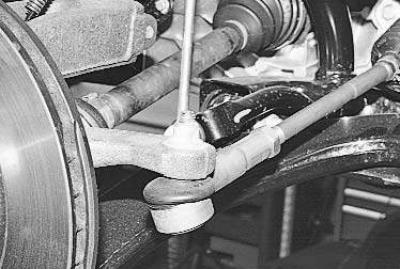
1. Check the condition of the tie rod end protective boots. Replace any torn, cracked or loose boots.
2. By sharply turning the steering wheel in both directions (this should be done by an assistant), check the steering mechanism fastening visually and by ear. Movement of the mechanism and knocking are not allowed.
3. Check for play in the ball joints of the steering rod ends. Replace the ends whose joints have noticeable play. Also check the tightness of the nuts of the ball joint pins of the steering rod ends.
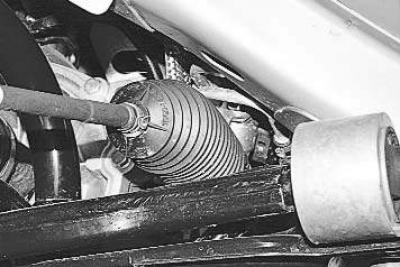
4. Check the condition of the steering rod protective covers. Replace damaged covers.
The original article is available on the website: FordBook