If you suspect a fault with the alternator, take the following measurements before removing it:
1) Check the charging current wire:
- disconnect the negative cable from the battery and disconnect the connector from the back of the generator or unscrew the cable;
- reconnect the wire to the battery and turn on the ignition;
- connect the voltmeter to the ground and any terminal of the multi-pin plug connector; when connected to all terminals, the voltmeter should show a value approximately equal to the battery voltage; otherwise, the generator or voltage regulator is faulty;
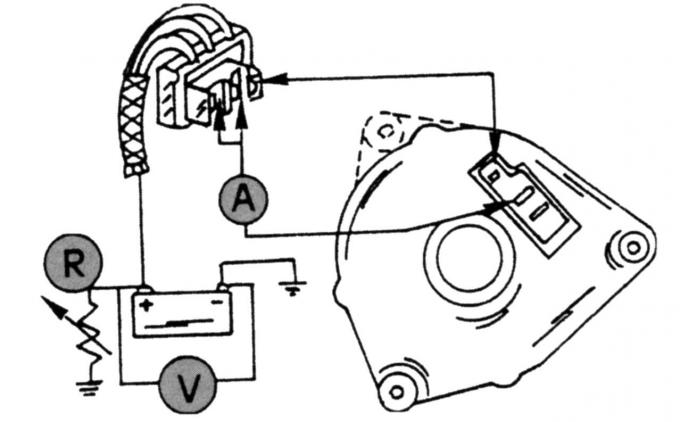
Fig. 286. Checking the generator's current output
2) current output (to check the 30 A adjustment resistor, in addition to the ammeter, you must also have a voltmeter; they are necessary to create the electrical circuit shown in Fig. 286):
- turn on the headlights and the heater motor;
- set the engine speed to 3000 min⁻¹ and change the resistance to increase the current flow;
- the nominal current of the three-phase generator (70A) must be reached, and the voltage must not fall below 13 V;
- turn off the ignition and consumers and disconnect the measuring instruments;
3) checking the voltage drop in the "positive" part of the charging current circuit:
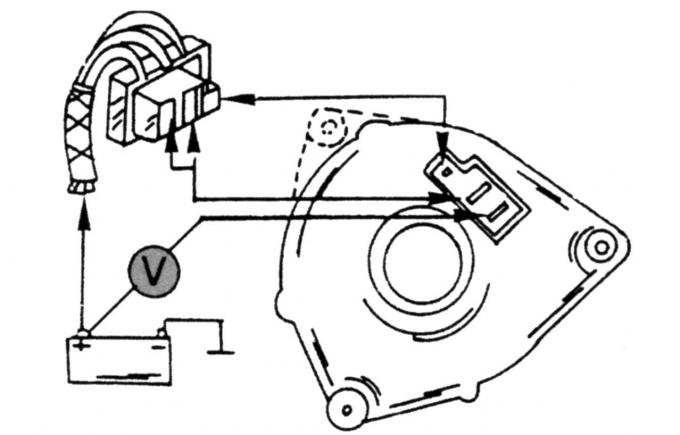
Fig. 287. Checking the voltage drop in the "positive" part of the charging current circuit
- create an electrical circuit as shown in Fig. 287;
- turn on the headlights, start the engine and measure the voltage drop;
- bring the engine speed to 3000 min⁻¹ and read the voltmeter. If the measured voltage exceeds 0.5 V, then there is high resistance in the "positive" part of the generator, which should be eliminated;
- turn off the ignition and headlights;
4) checking the voltage drop in the "minus" part of the charging current circuit:
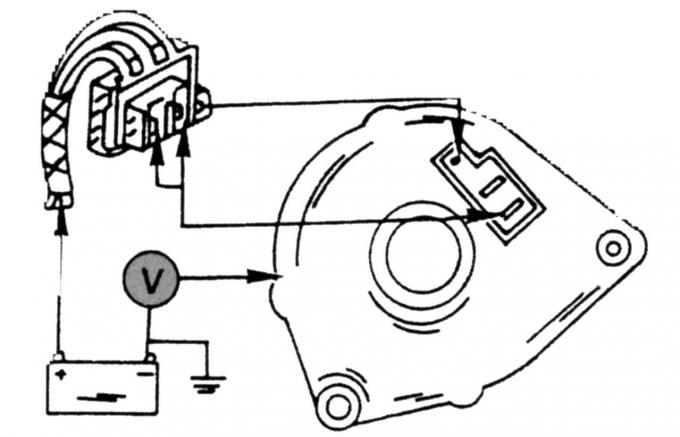
Fig. 288. Checking the voltage drop in the "minus" part of the charging current circuit
- create an electrical circuit as shown in Fig. 288, start the engine, turn on the headlights and measure the voltage drop;
- bring the engine speed to 3000 min⁻¹ and read the voltmeter. If the measured voltage exceeds 0.25 V, then there is high resistance in the "minus" part of the generator, which should be eliminated;
- turn off the ignition and headlights, disconnect the control wires and voltmeter;
5) checking the regulator based on the regulation voltage:
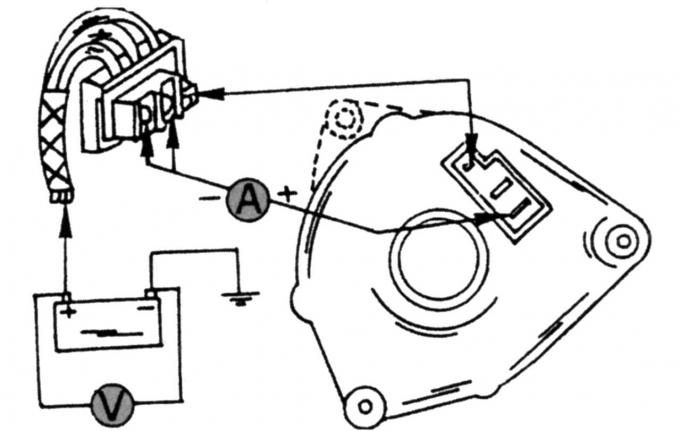
Fig. 289. Checking the regulator based on the regulation voltage
- connect the voltmeter and ammeter according to Fig. 289;
- start the engine and measure the control voltage;
- bring the engine speed to 3000 min⁻¹ and watch the ammeter. As soon as the value shown by the ammeter drops to a value within 3-5 V, take a reading on the voltmeter, the voltage shown should be in the range of 13.7-14.6 V. If the value on the voltmeter is outside the specified range, the voltage regulator is faulty.
Content was created using data from this website [Fordbook.ru]