Contents: Inspection ↳ Replacement ↳
Inspection
1. The rear hub bearings are non-adjustable and are supplied with the hub. It is not possible to replace them separately from the hub.
2. To check the bearings for wear, lift the rear and place it on supports. Release the parking brake completely.
3. Grasp the rear wheel from above and below and try to rock it. Excessive play or uneven movement or vibration when turning the wheel indicates wear of the hub bearings.
Replacement
4. Remove the rear wheel.
5. On models with drum brakes, remove the rear brake drum (chapter 9).
6. On models with disc brakes, remove the rear brake disc (chapter 9).
7. Turn the hub so that the holes in the flange are opposite the heads of the bolts securing the hub assembly to the rear axle support. Remove the bolts (see Fig. 17.7).
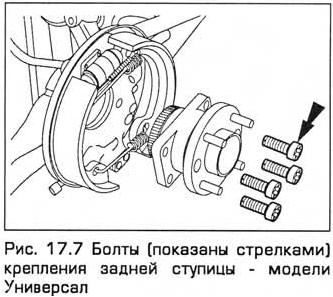
8. Remove the hub assembly with bearings. Install the two hub mounting bolts to hold the rear shield/mudguard in place.
9. If necessary, the hub axle can be removed from it to inspect the bearings. To do this, unscrew the drive shaft/hub nut. This nut is special, and after unscrewing it can be reused no more than five times. It makes sense to put a mark on the nut after unscrewing it. If necessary, buy a new nut. Tighten the nut during assembly.
10. Installation - in the reverse order of removal. Tighten all nuts and bolts to the required torque.
(The original article is available on the website: fordbook)