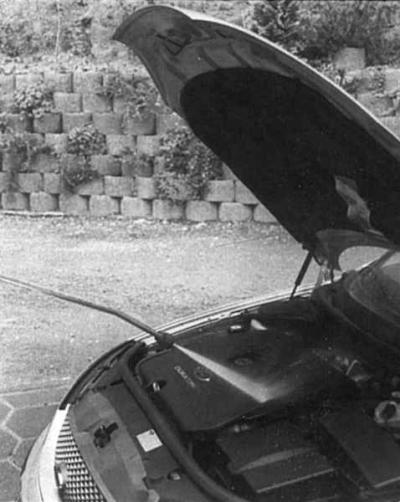
Over time, oil, dust and insects that have penetrated the engine compartment of your Mondeo combine to form an unsightly film of dirt that covers not only the engine and other components, but also the radiator. So, washing the engine is not only an aesthetic problem, but also a technical one: a closed cooling system can lead to the engine "boiling" and thus to major damage. And besides: the onset of winter with its rich road salt and other crap does not pass by the engine compartment and its insides. So make it a habit - start your spring cleaning with a thorough engine wash.
Acceleration of corrosion – from salt crusts
Road salt is not only a means of successfully combating snow and ice on the roads, but also the insides of your car. Through cracks and shafts, salt penetrates deep into the engine compartment and settles on the radiator, edges and body edges, as well as in cable harnesses, electric drives and plug connectors. Salt crusts bind moisture and thus contribute to the formation of corrosion. Naturally, engine washing should only be done where the waste water is "disinfected" by an oil separator. This procedure is best carried out either at an automatic car wash station, or at a washing place directly at the factory, or transfer this work to a specialized workshop.
After washing the engine, check whether all the parts and units under the hood (gas pedal rod, clutch release rod, adjusting motors, rotary lever, etc.) operate in a "dry state". Wherever the oil film "disappeared" on moving parts, it is necessary to completely restore it after washing using a hand oiler or a small amount of plate grease.


|
ORDER OF EXECUTION |
The engine must be as cold as possible, otherwise the engine cleaner may evaporate before it can do its job. Stop the engine and switch off the ignition. Protect sensitive parts such as the ignition system, generator and fuel system with rags or plastic bags. Otherwise, problems may arise with the ignition system or on-board electrics. First, take hold of the inside of the engine compartment hood. Rinse it with plenty of water, then work with a sponge and shampoo and rinse again. Do not forget about the edges and double profiles, dirt can always nest in them. Rinse the radiator grille with plenty of water from the direction "engine compartment - out". Pre-remove insect residues with a protein remover (e.g. dishwashing liquid) and then rinse from the direction of the engine compartment. Caution: do not treat the radiator grille with a hard brush and high-pressure water - this can lead to deformation of the radiator segments and thereby reduce the cooling capacity. Thoroughly wash all folds, holders and unprotected areas with a "shower". Wash heavily soiled engine and engine compartment parts with a cold cleaner. After a short time of action, you can wash away the dissolved dirt with a strong stream of water. Carefully dry the engine compartment, engine and all auxiliary units. At car washes or authorized washing stations, you can most often find a compressed air supply network. You can also borrow an air gun here.
Gently to the target: Direct the high-pressure water jet at as "obtuse" an angle as possible towards large surfaces. |
|
|
|
PRACTICAL ADVICE |
Surface sealing - engine protection varnish
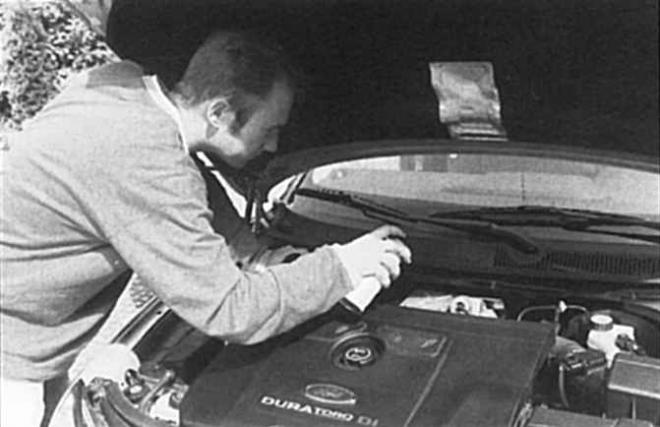
After this wash, think about the next wash and therefore seal the engine – together with the technical periphery – with a particularly heat-resistant protective motor varnish. Then we can say with confidence that the next dirt film will stick less intensely than the one just removed. In engine compartments where "plastic sarcophagi" dominate for visual design, it is quite sufficient to use a canned aerosol or canned wax. |
|
|
(For more information, please visit the website: Fordbook.ru)