|
TECHNICAL DICTIONARY |
Care products for external washing
Car shampoo: cleans polished surfaces and removes oil residues.
Washing mastic: has the same properties as car shampoo, but after drying it protects the paintwork from environmental influences and increases the time interval until the next polishing.
Disk Cleaner: removes stuck brake dust and road dirt.
Artificial detergent: in addition to cleaning agents, it also contains coloring agents. Refreshes faded plastic bumpers. Apply with a clean sponge and distribute evenly. After a short period of action, wipe off excess liquid with a damp cloth. |
|


|
ORDER OF EXECUTION |
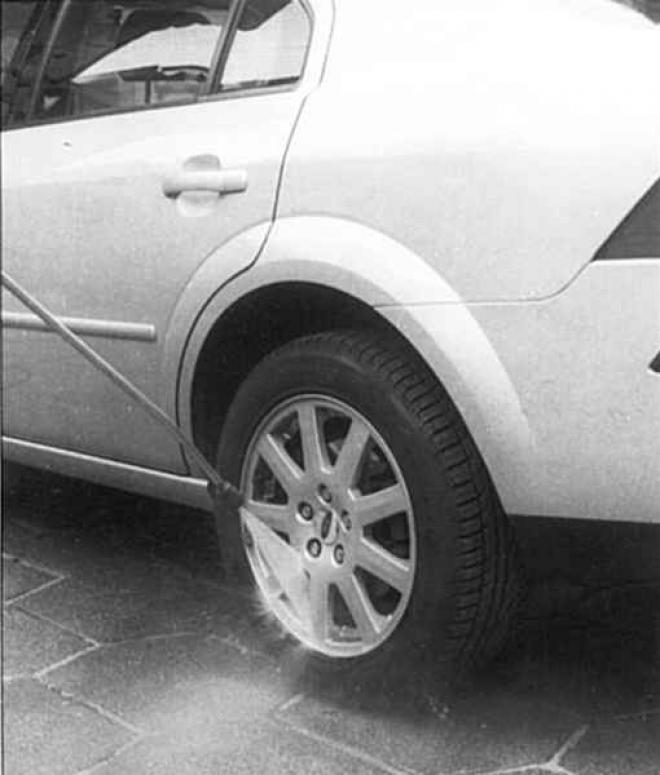
Close all doors and windows. Wet upholstery is no fun later. First, clean the wheel arches, rims and door sills. The benefit: any residual dirt can then only be washed off. If necessary, clean the underbody with a steam jet or a water hose with a spray nozzle. In winter, the underbody of your Mondeo should be cleaned after every car wash. You can lift your car once or twice a year (in a workshop or at a petrol station) to visually check the condition of the protective underbody trim. The front discs get significantly dirtier. Since dirt actively contributes to brake wear during each braking process, the front wheels should be looked after more often with a disc cleaner. Be sure to pay attention to environmentally hazardous products and follow the manufacturer's instructions. After cleaning, always wash with a strong water jet. For decorative discs made of light metals, it is best to use a high-pressure cleaner. Be careful when using disc cleaners that have a corrosive effect: discs made of light metals react very sensitively to this.
With patience or high pressure: filigree aluminum wheels can be cleaned most quickly with a pneumatic cleaner. For steel wheels with wheel caps, an old sponge soaked in cold cleaner is quite suitable. Artificial wheel trim will usually sparkle after washing with a shampoo solution. |
If you don't have a high-pressure cleaner, the most effective way to clean corners and edges is with a toothbrush. To enjoy the results for a long time, follow up with a clear spray wax. Brake abrasion particles and dirt will settle on the wax layer.
 |
Caution: Do not spray wax onto brake discs or brake pads. Wet the road dirt well! |
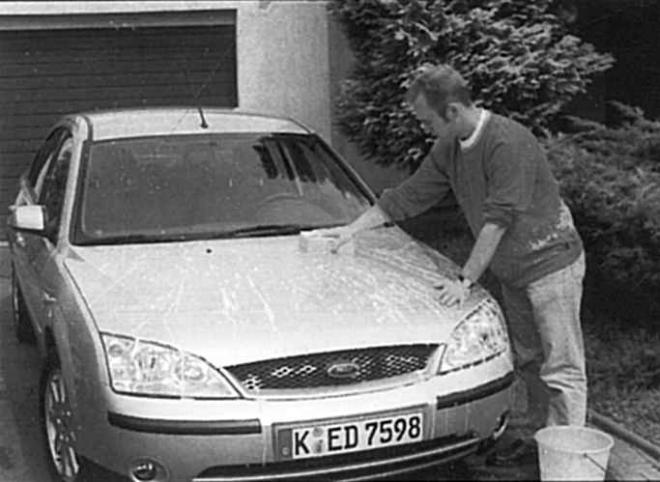
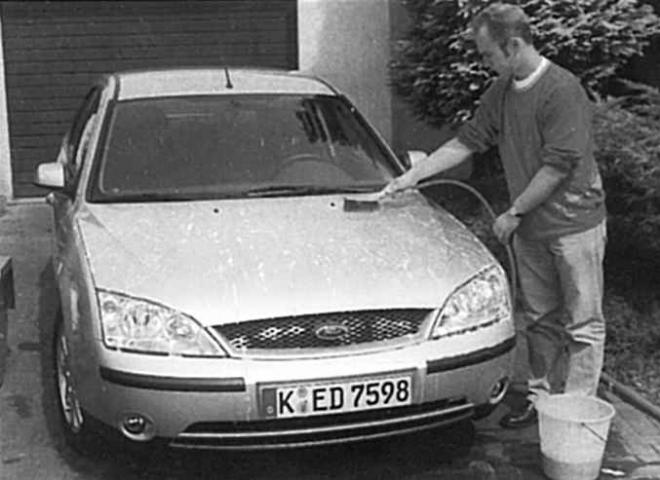
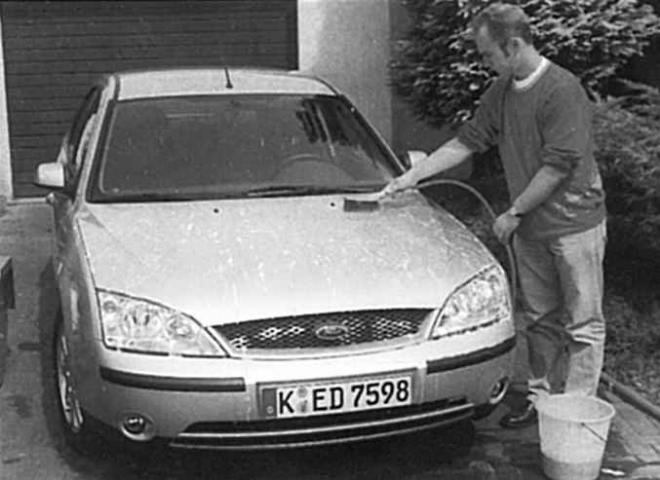
Wet the car thoroughly with a soft stream of water. In automatic car washes with a high-pressure cleaner, select the "Wash" program. When "manually" washing, always wash all surfaces, start from the roof and move downwards.
Less is often better: be sure to read the instructions for use of cleaning products and keep the cleaning sponge wet on the polished surface at all times. |
Especially convenient for washing: car wash with a set of washing brushes. You can get "clean" washing brushes at well-equipped washing stations. |
Washing foam is distributed over the surface with circular movements and little effort. The foam should have its effect for some time. The mud broth is washed off with a water hose. At car washes, this is the "Wash" mode. And lastly, the wheels are washed with a brush and a hose. After washing, the car should be immediately wiped dry with a suede or flannel cloth. In the air, dried water droplets leave behind a gray limescale film, which can have a harmful effect on the polish. Before use, rinse the leather well in clean water. Then squeeze out, straighten, put on the body, and then move.
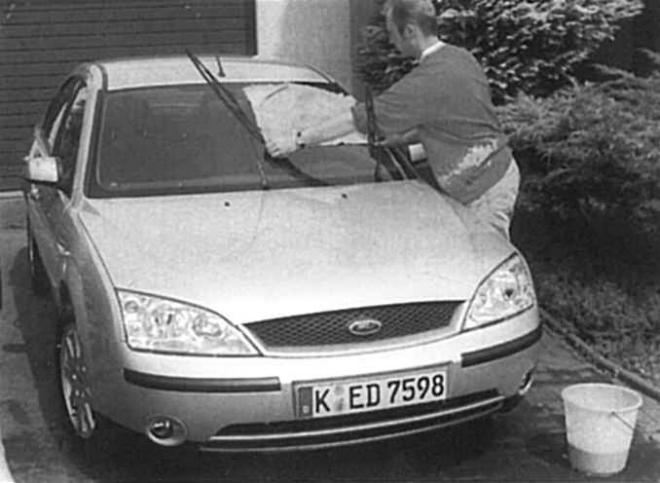
Quickly and diligently "kills" water droplets: chamois for wiping glass. Well-moistened and clean flannel does not leave any traces of scratches on polished surfaces. |
Always rinse the flannel before wringing. Take care of good flannel. Residual dirt quickly destroys it. Therefore, hard-to-reach nooks and crannies (e.g. wheel arches) should be cleaned with a satin cloth or old dry flannel. And finally, the outer surfaces of the glass. Follow the relevant instructions for washing the inner surfaces of the glass. At the same time, check the windshield for scratches, cracks and defects from stone impacts. Clean the windshield wipers with a sponge or dry flannel. Check the rubber seals for damage and elasticity - replace hardened rubber if necessary. After washing, check the paintwork, headlight lenses and front bumper for "ingrained" dirt: insect residue, bird droppings, pollen residue and bitumen resin have an aggressive effect and therefore must be removed with special cleaners. Do not use resin remover on new or recently painted surfaces - the solvent contained in it can damage the polish. |
|
|
PRACTICAL ADVICE |
Good lighting only comes with clean headlights
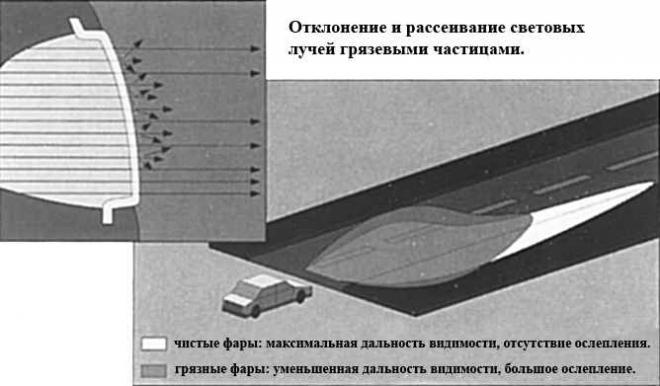
Headlights should be washed more often than the car body. Polluting particles on the cover glass prevent the passage of light rays and deflect them in the wrong direction. And as a result: uncontrolled scattering, low visibility, strong blinding, especially in fog. After half an hour of driving on a wet road, the car's headlights will be more than 60% dirty. Hence the dim light and low light output - accordingly, an increased level of danger for yourself and other road users.
Deflection and scattering of light rays by dirt particles. |
|
|
[The original version can be found on the website FORDBOOK.RU]