For a thorough internal cleaning we recommend you:
rags (soft) for wet and dry cleaning, brushes for cleaning clothes and upholstery, a vacuum cleaner with a carpet and upholstery attachment, a brush with a handle and a dustpan, chamois leather for wiping glass.

|
ORDER OF EXECUTION |
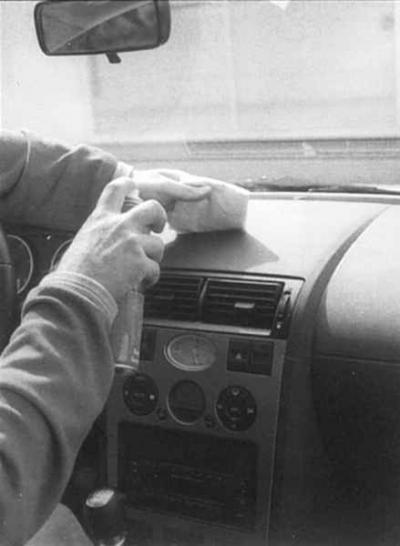
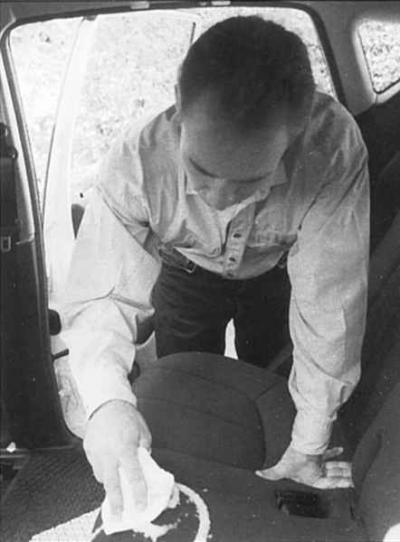
Before you start working, clear the interior of any junk. Empty the ashtray immediately and wash it. Collect the foot mats and take them outside. Knock the dirt out by hitting them against the wall or clean them. Wash the rubber mats and lay them outside the car to dry. Over time, damp mats cause bad odors, mold, and damp stains on the textile upholstery. Remove heavy dirt in the interior with a vacuum cleaner. For soft textile upholstery, use fixed attachments; clean hard plastic surfaces with brush attachments. A damp cloth is often sufficient for smooth rubber surfaces. Clean the seat upholstery with a brush or vacuum cleaner. Use a suitable brush to "drive" dust out of inaccessible corners and bends. Dry clean the seat belts with a brush; if there is old dirt, you can use a mild soap solution. Wash the plastic parts and the instrument panel bracket with damp leather. Never use petrol or other solvents that corrode the surface – and as a result, ugly stains. It is better to use a plastic cleaner. Neutralize wetted surfaces – depending on the time of action – with clean water and wipe dry with a soft cloth. Always clean large areas – the inner surface of the roof Never clean only dirty areas, this provokes the appearance of ugly stains with dark streaks.
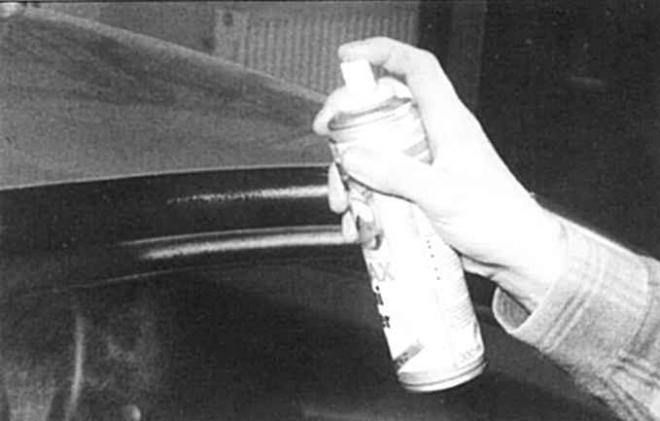
Better to be gentle: handle plastic care products with care. Spray the product onto the surface from a distance of about 15 centimeters and then spread it evenly with a damp cloth using circular motions. Remove "fog" on the glass, steering wheel and instrument glass with plenty of water, plastic or glass cleaner. |
Only if the roof surface has "darkened", should it be refreshed with a textile cleaner. A sponge and towel will do you good for the second wipe. If possible, repeat the treatment on heavily "yellowed" surfaces. Treat the seat upholstery and textile elements on the sides, as well as the interior trim, with a foam upholstery cleaner. Clean the upholstery thoroughly - as long as it remains damp, dirt is removed better this way. Leather seats are best treated only with special products - high-quality products provide elasticity to the leather and flexibility to the seams.
Seat cosmetics: upholstery cleaner not only removes fine dirt, dust and fresh stains, it also acts as a cosmetic on the upholstery material. Spray the cleaning foam onto the upholstery and spread it evenly with a damp sponge. Be sure to pay attention to the dosage specified in the Instructions for Use. In addition, it may not necessarily be "upholstery foam": as a rule, you can get by with cheaper foam for carpet coverings. |
Door seals can be sprayed in spring and winter with a silicone-containing rubber care product or rubbed into the rubber parts. The inside of the glass is first cleaned with a damp window chamois, then glass cleaner is sprayed in. The glass is then polished clean with dry newspaper or kitchen paper. A smoker's car is often still irritated by the presence of schlieren and grey deposits even after cleaning. In this case, you can often expect miracles from lacquer polish. Naturally, the polish should not get on open plastic surfaces, as this can cause unsightly and long-lasting stains.
Prevention is better than cure: regularly supply the sealing rubber with a silicone-containing rubber care product in the spring and winter. This not only extends its service life, but also prevents the rubber from freezing to the body at sub-zero temperatures. The same applies to door lock cylinders: door keys fit better in silicone locks, and water condensation will no longer be able to "have a tooth" against the lock mechanism. |
|
|
Not everywhere is there permission to wash a car in front of the front door
In many cities and communities, it is no longer allowed to wash cars on the street. And there is a good reason for this: along with contaminated water, oil residues and other environmentally harmful substances end up in the sewer. Washing your car at an automatic car wash station is environmentally friendly. The volumes of water used here are usually significant, so this type of car wash is environmentally friendly. An oil separator and water treatment units protect the environment. And modern car wash systems also offer the option of setting an individual washing and care program.
After the washing installation, don't forget about clean cleaning
In addition, after the car wash, your car needs some additional cleaning. Wash brushes are often careless about wheel arches and door sills. Door frames and body folds also sometimes need appropriate manual finishing with a sponge or rag. And in winter, when moisture mixed with road salt can cause damage to painted surfaces, inner fender surfaces and the underbody, you need to visit the car wash more often. And although the car will soon become unkempt again, rust is less likely to settle in its cozy corners.
|
PRACTICAL ADVICE |
After washing – driving with dry brakes
After each car wash, perform a simple check of the brake system. This will evaporate any moisture that got onto the brake discs or brake drums during the wash. After a long drive in the rain or driving on winter roads sprinkled with salt, before parking the car for a few days, you should dry the brake system. To do this, it is enough to lightly press the brake pedal in the last few hundred meters of movement. Thanks to this "exercise", the formation of wet dirt on the brake discs and brake drums is prevented, which in cases of real danger worsens the response time of the brakes. |
|
An alternative proposal is a washing area or an automatic car wash
If you like to wash your Mondeo yourself, then ask at your petrol station about the possibility of having a place for washing. If you decide to go to an automatic car wash, then here you have more options: service centers will also offer you auxiliary equipment, from a pneumatic cleaner to a vacuum cleaner, which will make this work easier for you. However, before starting work, check the washing brushes at the car wash. Sometimes your predecessor, after driving through the mud and cleaning the bottom and wheel arches of his car, left it on the brushes and, as a result, annoying scratches on the polish. Never wash your car in the sun. This is harmful to the polish: small drops of water act like burning glasses - under them on the polished surface, particles of dust and lime like to burn.
|
PRACTICAL ADVICE |
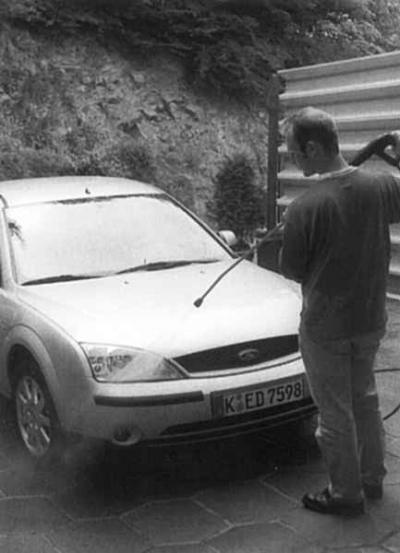
Be careful when using pneumatic cleaners The maximum water temperature should be 60°. Too hot water affects the rubber and the protective coating of the underbody. The pressure regulator should be set to a maximum of 30 bar. The distance from the car should be 60 to 80 centimeters. At a shorter distance and high pressure, the polish of your Mondeo may "lift". After washing the engine with such a cleaner, water can sometimes penetrate into the engine electronics or air filter. After this, the electronics may fail, and the air filter may soon lead to major engine defects. Never wash tires with a round jet nozzle - the sidewalls of the tires may be offended. Even with a relatively large injection distance and a short exposure time, defects may already appear - defects that are not even noticeable at first glance.
Keep an eye on the distance: there should be at least 75 centimeters between the polishing surface and the spray nozzle. |
|
|
Doing your own car wash is the only way to get things going
Using a lot of water is not a mistake, because washing a car with too little water ruins the polish. Small particles of dust or sand remain on the washing sponge and can then leave microscopic, spiderweb-thin scratches on the surface. A garden hose, if possible, with a spray dosing nozzle. If there is no running water, you will need at least two buckets of water for the main wash. A hose brush, with which dirt is removed as the water runs off. Washing gloves or a sponge. Keep the spray nozzle as close to the washing surface as possible, so that dirt particles are removed reliably. After the second or third pass, dip the washing gloves or sponge in a full bucket of water and then squeeze it out. This way, dirt will not remain on them. Washing brushes with a long handle are especially convenient for rims and tires. A large-pored viscose sponge is ideal for large surfaces. Fly agaric helps in the fight against harmful insects. Chamois for wiping window glass – will polish the glass and dry the polished surface. A bucket of water – practically for washing with car shampoo and cleaning with a sponge, washing glove or chamois.