Contents: Removing the vacuum hose ↳ Installation ↳
Check the operation of the brake booster if too much force must be applied to the brake pedal to achieve sufficient braking efficiency.
Press the brake pedal firmly at least five times with the engine off, keep the pedal pressed and start the engine. The brake pedal should noticeably drop.
If not, disconnect the vacuum hose from the booster and start the engine. Close the end of the hose with your finger and check for vacuum with the engine running.
If there is no vacuum: Check the vacuum hose for leaks and damage, replace if necessary. Tighten all clamps well.
Diesel engine: Disconnect the vacuum hose from the vacuum pump and check with your finger, with the engine running, for vacuum at the hose connection.
If there is a vacuum: Measure the vacuum value, replace the vacuum booster if necessary (service station operation).
Caution! Replace the check valve in the vacuum hose, as fuel vapors that have penetrated (through a faulty check valve) can damage the vacuum booster membrane.
Removing the vacuum hose
Disconnect the negative (-) cable from the battery.
Warning! This will erase data in electronic memory devices, such as the engine fault memory device or the radio code. Please read the section carefully "Removing and installing the battery", before disconnecting it.
Press the brake pedal with great force 3-4 times to remove the vacuum in the vacuum booster.
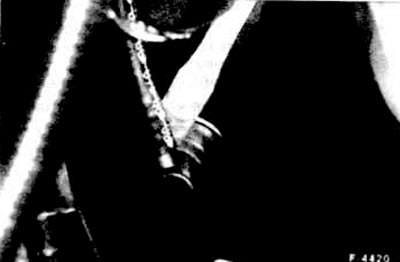
Disconnect the vacuum hose from the brake booster, using a large screwdriver if necessary.
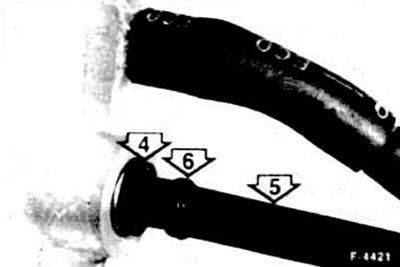
Gasoline engine: Disconnect the vacuum hose from the intake manifold. To do this, press the clamp "4" with your fingernail and slowly and evenly pull the hose off.
Diesel engine: Loosen the union nut and disconnect the vacuum hose from the vacuum pump.
Installation
Caution! Always replace the connecting hose together with the check valve.
Petrol engine: Insert the hose into the intake manifold up to ring "6". Check the strength of the hose lock by lightly pulling.
Diesel engine: Connect the hose to the vacuum pump and secure with the union nut.
Connect the hose with the elbow to the vacuum booster.
Connect the negative (-) terminal to the battery.
Set the time on the clock and set the radio anti-theft code.
The original article can be viewed on the portal FORDBOOK