2. However, this does not mean that an inexperienced mechanic at home cannot restore the transmission. To do this, you need to have a set of special tools and work slowly, step by step, so as not to miss anything important.
3. Tools and fixtures required for repair include: pliers for removing and installing inner and outer snap rings, a bearing puller, an impact puller, a set of drifts, a dial indicator, and possibly a hydraulic press. A large, sturdy workbench with a vice or a transmission mounting stand is also required.
4. As you disassemble the transmission, take careful notes on how each part comes off, where it fits relative to other parts, and how it is held in place (see Fig. 9.4, a-d).
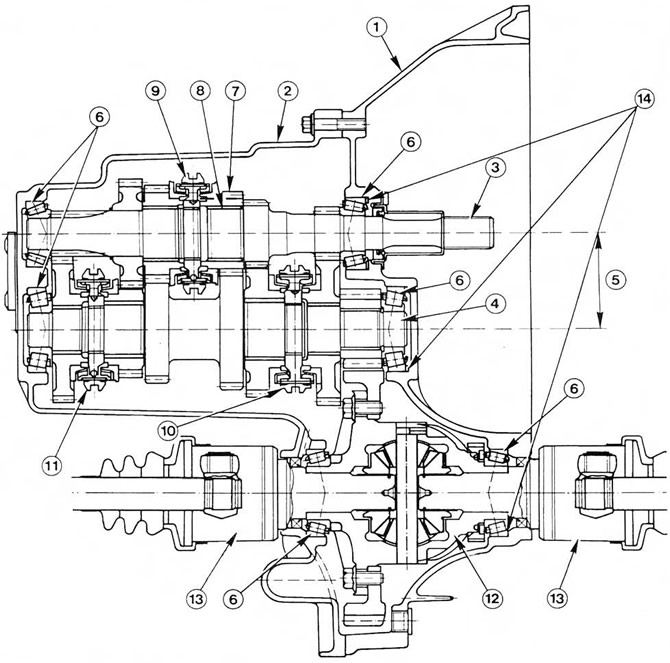 Fig. 9.4,a. Longitudinal section of transmission.
1. Clutch housing
2. Transmission housing
3. Input shaft
4. Output shaft
5. Center distance - 75 mm
6. Tapered roller bearings
7. Fourth gear pinion
8. Needle bearing
9. Synchronizer 3/4 gears
10. Synchronizer 1/3 gears
11. 5th gear/reverse synchronizer
12. Differential
13. Drive shafts
14. Adjusting washers
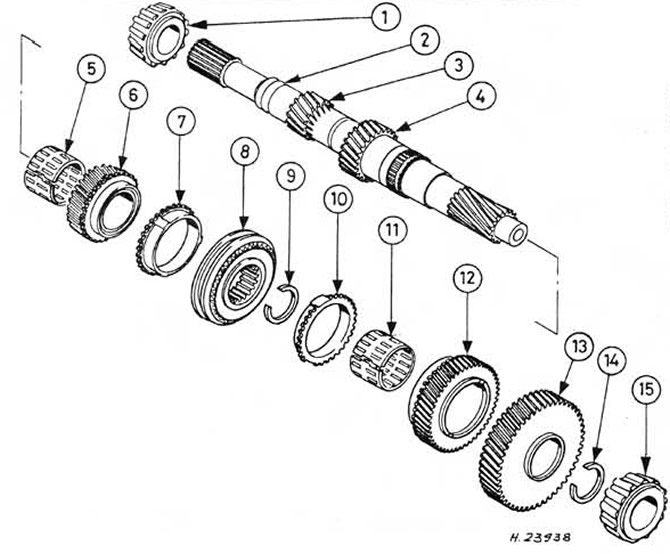 Fig. 9.4,6. Components of the transmission input shaft.
1. Tapered roller bearing
2. Input shaft
3. First gear pinion
4. Second gear pinion
5. Needle bearing
6. Third gear pinion
7. Synchronizer ring 3/4 gears
8. 3/4 gear synchronizer hub
9. Elastic ring
10. Synchronizer ring 4/5 gears
11. Needle bearing
12. Fourth gear pinion
13. Fifth gear
14. Elastic ring
15. Tapered roller bearing
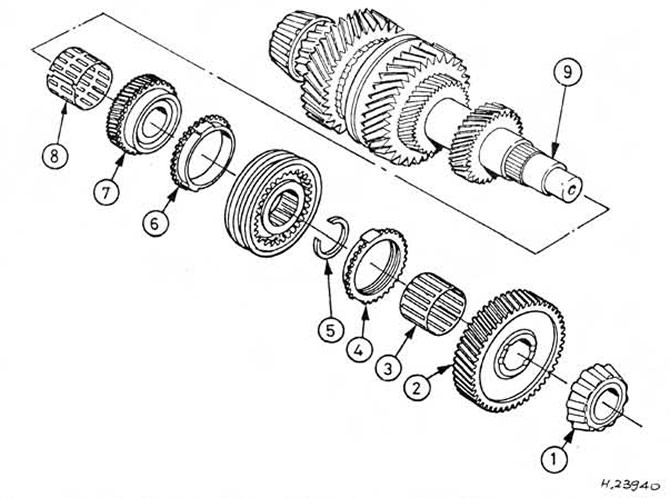 Fig. 9.4,c. Components of fifth gear and reverse gear.
1. Tapered roller bearing
2. Reverse gear
3. Needle bearing
4. Reverse gear synchronizer ring
5. Elastic ring
6. Fifth gear/reverse synchronizer ring
7. Fifth gear
8. Needle bearing
9. Output shaft
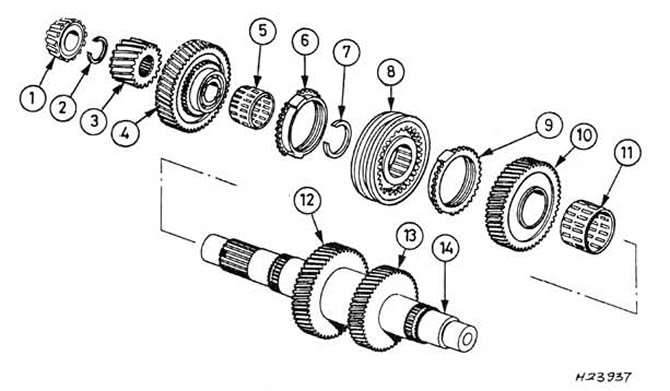 Fig. 9.4,c. Components of fifth gear and reverse gear.
1. Tapered roller bearing
2. Reverse gear
3. Needle bearing
4. Reverse gear synchronizer ring
5. Elastic ring
6. Fifth gear/reverse synchronizer ring
7. Fifth gear
8. Needle bearing
9. Output shaft
5. Before removing the transmission for repair, it is a good idea to have some idea of where in the transmission the problem is located. Some problems may be associated with specific components of the transmission, making it easier to check and replace parts. Information on possible causes of failures is provided in the Troubleshooting section at the end of this book.
The text was obtained in its entirety from the specified website: FordBook.ru