Contents: Handbrake ↳ Foot brake ↳ Steering wheel and steering column ↳ Windshield and mirrors ↳ Seat belts and seats ↳ Doors ↳
Handbrake
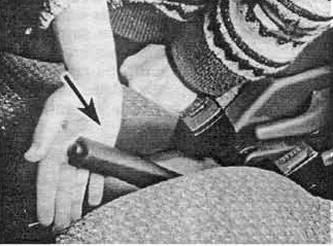
Check the operation of the handbrake. Excessive movement (too many clicks) indicates a faulty brake or improper cable adjustment.
Make sure that the handbrake does not release when the lever is pressed from the side. Check that the lever is securely fastened.
Foot brake
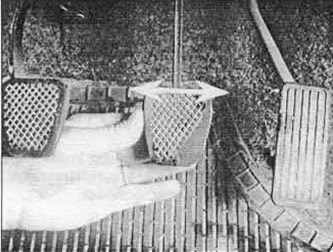
Press the brake pedal and make sure it does not go all the way to the floor, which would indicate a faulty master cylinder. Release the pedal, wait a few seconds, then press it again. If the brake pedal almost goes to the floor, this indicates the need for brake adjustment or reconditioning. If the pedal feels springy when you press it, this indicates air in the hydraulic system, which must be removed by bleeding.
Check that the brake pedal is securely fastened and in good condition. Also check for leaks around the pedal on the floor or carpets, which would indicate a faulty seal in the brake master cylinder.
Check the brake booster unit (if equipped) by pressing the brake pedal several times, then, without releasing the pedal, start the engine. After the engine starts, the pedal should sink slightly. If this does not happen, then the vacuum hose or booster may be faulty.
Steering wheel and steering column
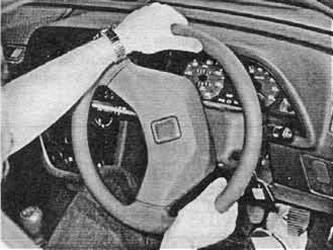
Check the steering wheel for cracks or loose fittings.
Rock the steering wheel from side to side and then up and down. Make sure the steering wheel does not wobble on the column, which would indicate wear or a loose nut. Continue rocking the steering wheel as before, but turn it slightly left and right.
Make sure that there is no "shaking" of the steering wheel on the column and that there is no excessive play, which would indicate wear of the couplings or bearings of the steering column.
Windshield and mirrors
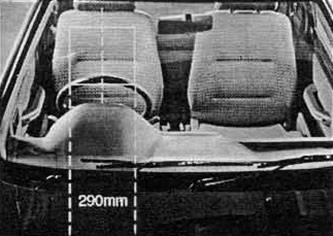
The windshield must not have cracks or other significant damage that would obstruct the driver's view. (Small marks from stones are acceptable). The rear-view mirrors must be securely fastened and easily adjustable. They must not be damaged.
Seat belts and seats

Note: The following checks apply to both front and rear seat belts.
Inspect the belts (including the rear ones, if installed) for tears and significant abrasions. Fasten and unfasten each belt to check the operation of the buckles. Check the operation of the tensioning mechanism (if equipped). Check the reliability of the fastening of the belt supports.
The front seats must be securely fixed in the selected position, the seat backs must be fixed in the upright position.
Doors
Both front doors must open and close from both the outside and inside and be securely latched in the closed position.