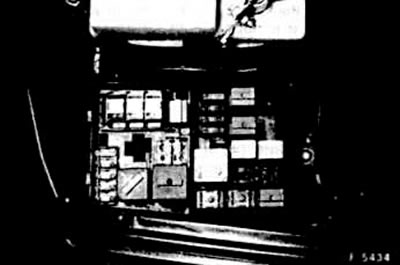
Fuses are usually located in a single fuse and relay box, which is located on the left side of the engine compartment next to the battery.
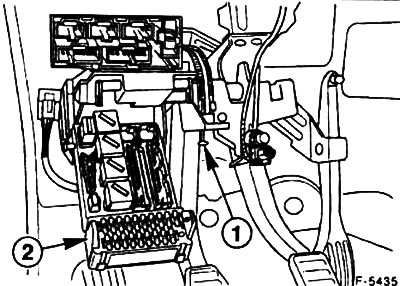
The second fuse box "2" is located in the footwell on the left under the dashboard. To open the box cover, pull out the button "1". To close, fold the fuse box up and lock it.
Before replacing a fuse, always switch off the corresponding power consumer first.
Remove the fuse box cover.
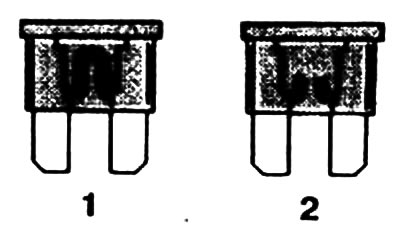
1 - The fuse is OK; 2 - The fuse has blown
A blown fuse can be identified by a melted metal strip.
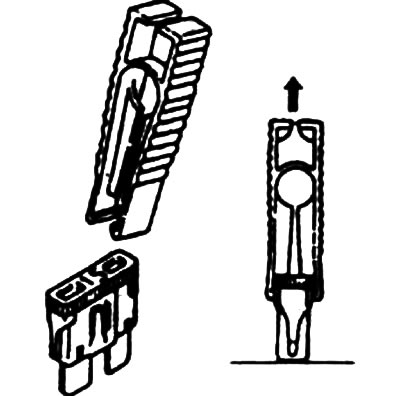
Remove the faulty fuse. There are plastic tweezers in the cover or in the box itself to remove fuses.
Install a new fuse with the same amperage. The fuse's rated current is stamped on the back of the holder. The holder also has an identification color that allows you to identify the corresponding rated current.
| Nominal current in amperes | Identification color |
| 3 | purple |
| 7,5 | brown |
| 10 | red |
| 15 | blue |
| 20 | yellow |
| 30 | green |
Place the protective cover back on the fuse box or fold the box up.
If a newly installed fuse blows soon after, check the associated electrical circuit.
Never replace a fuse with wire or any other means, as this may result in serious damage to the electrical equipment.
It is recommended to always have several spare fuses in the car. There are appropriate holders for storing them in the fuse box located in the engine compartment.
Note! The location of the fuses depends on the equipment and year of manufacture of the vehicle, it is shown on the cover of the fuse box and in the operating instructions.