Inspect all connectors, wire harnesses and clamps. Make sure the contacts and fasteners are secure, and look for any abrasions or other damage.
1. If any of the side lights, headlights or brake lights do not light, it most likely means that the bulb has burned out and needs to be replaced. Refer to Chapter 12 for details.
If both brake lights are not on, it most likely means that the brake light switch located above the brake pedal needs adjustment. This operation is described in Chapter 9.
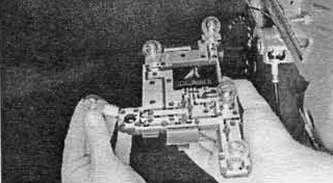
2. If both side light or tail light bulbs do not light, this most likely means that the fuse is blown or the corresponding circuit is faulty.
The main fuse box is located under the dash on the passenger side. The auxiliary fuse box is located next to the battery. To access the fuses, unfasten the fasteners and remove the cover.
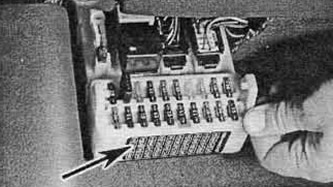
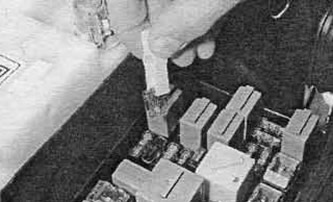
3. To replace a blown fuse, remove it. Insert a new fuse (available from an auto parts store) with the same rating (see Chapter 12).
It is important to find the reason that caused it to burn out.
Advice
To check the brake lights, back the car up to a wall or garage door and press the brake pedal. The reflected light will show that they are working properly.