Preparation
Place chocks under the wheel on the other side of the vehicle, located diagonally to the one being replaced.
Engage first or reverse gear.
On models with automatic transmission, place the selector lever in the "Park" position.
Make sure the vehicle is parked on a firm, level surface.
Wheel replacement procedure
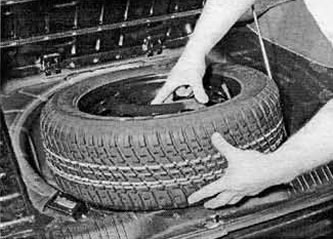
1. To change a wheel, remove the spare wheel and jack
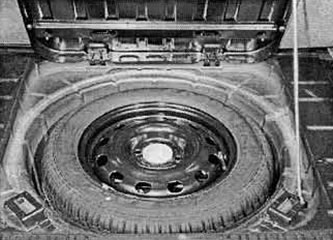
2. Unscrew the retainer and remove the wheel.
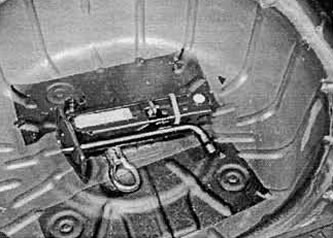
3. Unscrew the lock and remove the jack and wheel wrench from the niche. The niche also has a screw-in eye for towing.
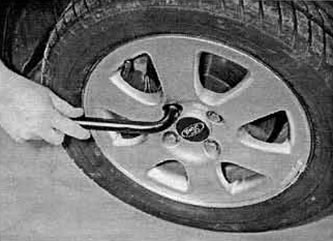
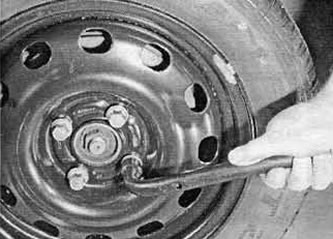
4. Using the flat end of a wheel wrench, carefully remove the cap. Then loosen the wheel nuts (see fig.).
5. Place the jack head in the place intended for lifting the vehicle, closest to the wheel being replaced, so that the slot in the head matches the flange of the body (see Fig.). Then turn the jack handle to lift the vehicle.
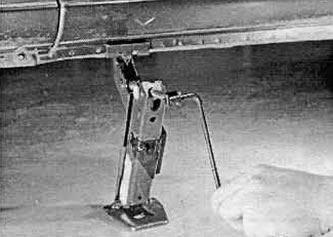
6. When the wheel comes off the ground, unscrew the nuts and remove it.
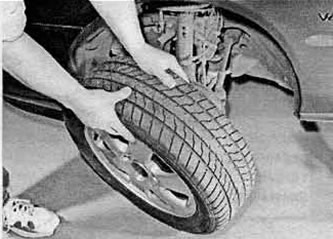
7. Install the spare tire and tighten the nuts slightly. Lower the car to the ground, tighten the nuts completely and install the hubcap.
In conclusion
Remove the chocks from under the wheels.
Hide the jack and tools in their place in the trunk.
Check the pressure in the newly installed tire. If the pressure is lower than the recommended level, or if you do not have a pressure gauge with you, drive slowly to the nearest garage or repair shop and restore the tire to the correct pressure.
Tighten the wheel nuts as soon as possible to the torque specified in the Technical Data.
Repair the damaged tire as soon as possible.
[The original text is provided on an online resource fordbook]