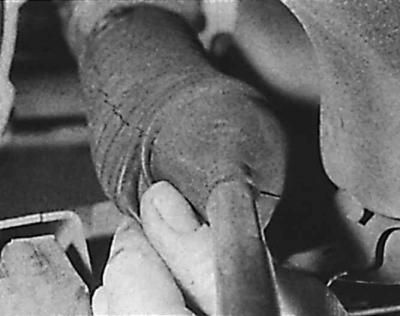
2. Visually inspect ball joint dust covers and rack and pinion steering gear protectors for cracks, abrasions and aging. Any wear on these boots will result in loss of lubricant and ingress of water and dirt, resulting in rapid wear of the ball joints or steering gear.
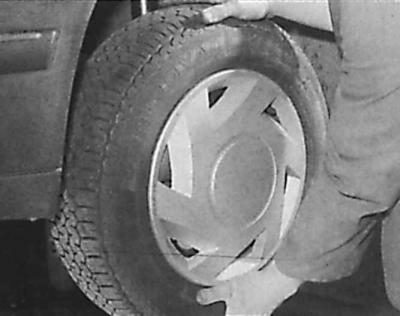
3. Raise the car with a jack, take the wheel with your hands at the 6 and 12 o'clock positions and try to shake it in a vertical plane.
4. Very little wheel play is acceptable, but if the play is large enough, further testing is needed to establish the source.
5. Continue pumping the wheel, at the same time, the assistant should apply the foot brake.
6. If the play is eliminated or significantly reduced, it is likely that the hub bearings are damaged.
7. If the play is still significant with the brake applied, it means that there is wear in the connection and suspension mount.
8. Now take the wheel to the 9 and 3 o'clock position and try to shake it in a horizontal plane. The presence of play in the horizontal plane can be caused by wear of the hub bearing or tie rod ball joints. If the outer or inner ball joint is worn, play will be evident.
Visitor comments