In 1st gear and in reverse: 100% via torque converter; in 2nd gear: 38% hydraulically and 62% mechanically; in III gear: 7% hydraulically and 93% mechanically. This significantly reduces power losses due to torque converter slippage. and the transmission efficiency increases. The selector lever has six positions: P — parking; R — reverse; N — neutral; D — automatic engagement of I, II and III gears. 2 — automatic engagement of I and II gears, 1 — engagement of I gear.
To set the selector lever to the "R" and "P" positions, it is necessary to press the lever. Do not move the selector lever to the "P" position while the vehicle is moving, and to the "D", "2" and "1" positions while reversing, as well as to the "2" and "1" positions at a speed of over 100 km/h. Automatic gear shifting is determined by the throttle position and the vehicle speed. When the accelerator pedal is pressed all the way down, the forced reverse gear shifting system ("kick-down") is activated for maximum acceleration of the vehicle. The starter lock does not allow it to be turned on if any gear is engaged. In the "P" position, the driven gear of the main gear is locked by the parking brake pawl, which simultaneously goes behind the toothed sector riveted to the differential box.
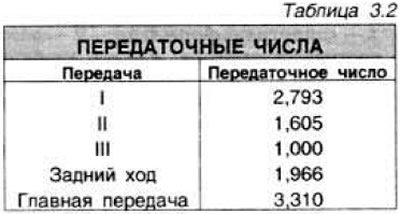
Thickness of retaining rings: 2nd gear clutch: 1.24-1.34; 1,51—1,61; 1.78-1.88 mm; clutch III gear 1.26-1.36; 1,58—1,68; 1.90—2.00 mm; reverse clutch: 1.89-1.99 mm.
The thickness of the rings supplied for adjusting the preload of the differential bearings, installed between the bearing cover and its outer ring: 0.30-1.30 mm in 0.05 mm increments.
The torque converter transformation ratio is 2.35.
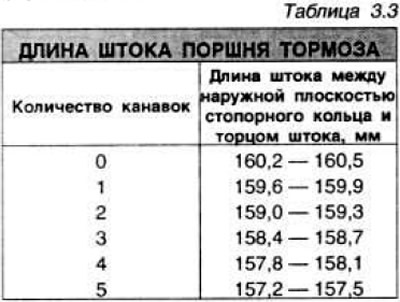
Oil used: SOM 2C 9010 (CJ oil), not compatible with other oils. Total capacity of gearbox, torque converter and oil cooler is 7.9 l.
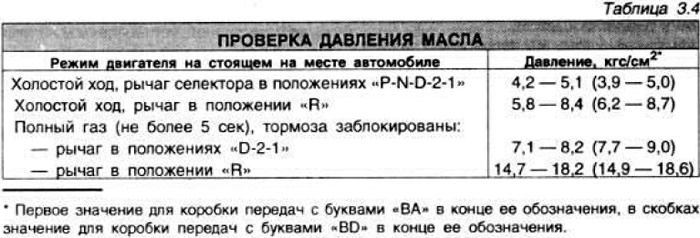
Towing a car
A car with a hydromechanical gearbox can be towed at a speed of 30-40 km/h for a distance of no more than 20 km. For longer distances, lift the front of the car.