OHV engine cooling system
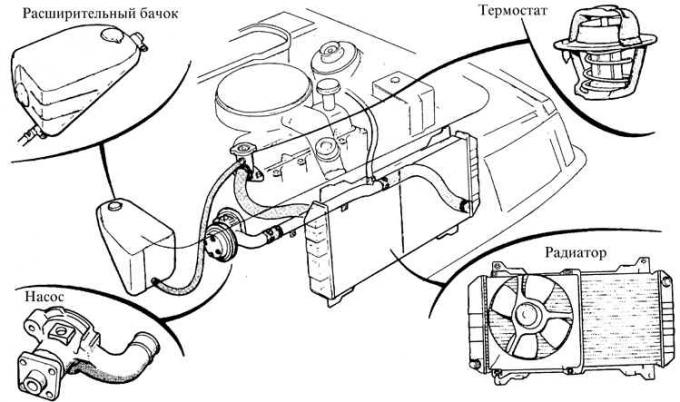
Cooling system of CVH engines with engine displacement of 1.3, 1.4 and 1.6 dm³
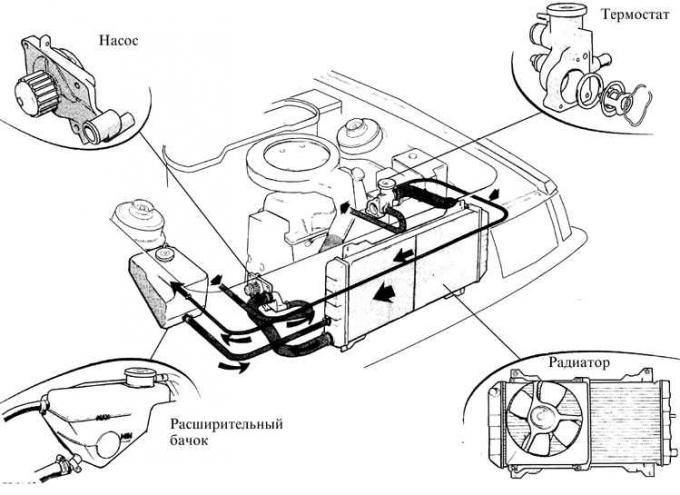
It is recommended to replace the coolant on a cold engine. If it is necessary to perform this work on a hot engine, unscrew the cap on the expansion tank slowly and carefully to relieve pressure in the system.
Drain plug on the cylinder block of the OHV engine
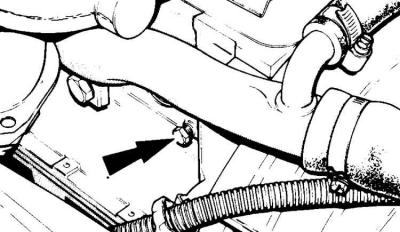
The drain plug is shown by the arrow.
Drain plug on the cylinder block of the CVH engine
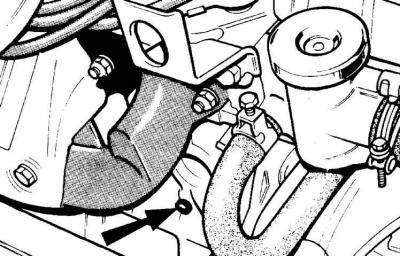
The drain plug is shown by the arrow.
Drain plug on the cylinder block of a diesel engine
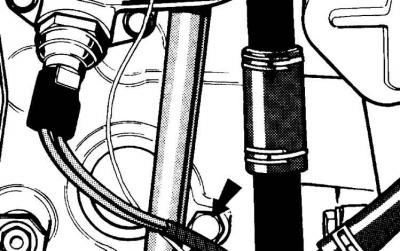
The drain plug is shown by the arrow.
1. Open the heater valve, setting the heater handle to the maximum temperature position.
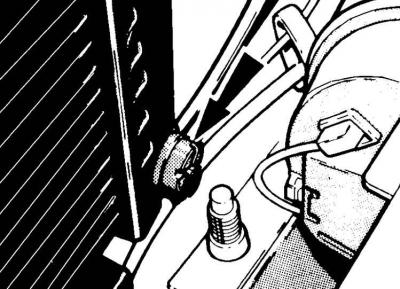
2. Place a suitable container under the radiator and unscrew the drain plug on the radiator (indicated by the arrow). On the CVH engine, remove the lower hose from the radiator to drain the fluid.
3. Place a container under the engine, unscrew the drain plug on the engine cylinder block and drain the remaining coolant.
4. If the drained liquid has changed its original color or there is sediment in the liquid, it is necessary to flush the cooling system with cold water from a hose inserted into the thermostat housing until clean water flows out.
5. Screw in the drain plugs and add fresh coolant. On an OHV engine, the coolant is poured through the filler neck of the expansion tank or radiator to the "MAX" mark. On a CVH engine, the coolant is poured through the filler neck on the thermostat housing to the upper edge, and the coolant must be added until air bubbles stop escaping, then close the thermostat housing and add coolant through the filler neck of the expansion tank to the "MAX" mark.
6. Start the engine and let it idle. This will remove air from the cooling system.
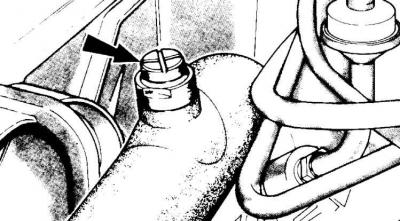
7. In a diesel engine, when filling the fluid, unscrew the air bleed plug (indicated by the arrow) on the upper hose. Pour fresh coolant through the filler neck of the expansion tank until the fluid comes out through the hole for the air bleed plug and screw the plug back on. Add fluid through the filler neck of the expansion tank up to the "MAX" mark.
8. Close the cooling system.
9. Check the cooling system for leaks.