Contents: Examination ↳ Adjustment ↳
OHV Engine Alternator Belt Tension
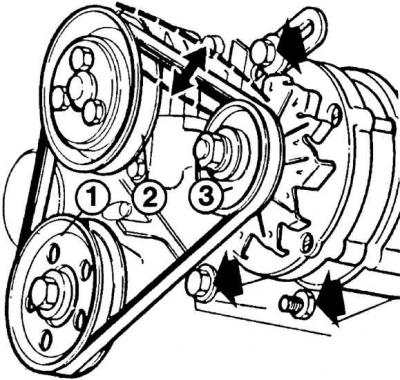
1 – crankshaft pulley; 2 – water pump pulley; 3 – generator pulley
CVH Engine Generator Belt Tension
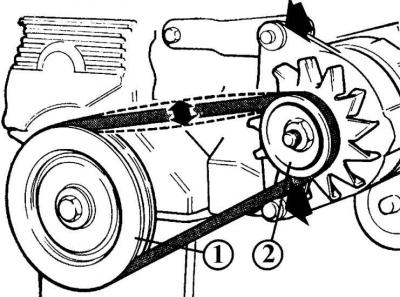
1 – crankshaft pulley; 2 – generator pulley
Diesel Engine Generator Belt Tension
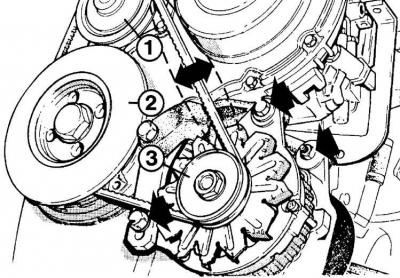
1 – crankshaft pulley; 2 – water pump pulley; 3 – generator pulley
The tension of the V-belt is measured using a special measuring device on a cold engine.
A belt is considered used if it has been in use for at least 10 minutes.
Examination
If you do not have a measuring device, you can check the belt tension by pressing your thumb on the longest branch of the belt. The correct tension corresponds to a belt deflection of about 10 mm. A V-belt with worn edges, tears, cracks and traces of burns must be replaced.
Adjustment
1. Loosen the two bolts securing the generator to the engine.
2. Loosen the tension bolt and move the alternator toward the engine if the belt tension is greater than required, or away from the engine if the tension is insufficient.
3. Tighten the tension bolt and then the generator-to-engine mounting bolts.
| Tensioning the new belt: | |
| – OHV engine | 400±150 N |
| - CVH engine | 300±150 N |
| Used belt tension: | |
| – OHV engine | 450±150 N |
| - CVH engine | 350±150 N |