


FORD VV carburetor with variable diffuser section
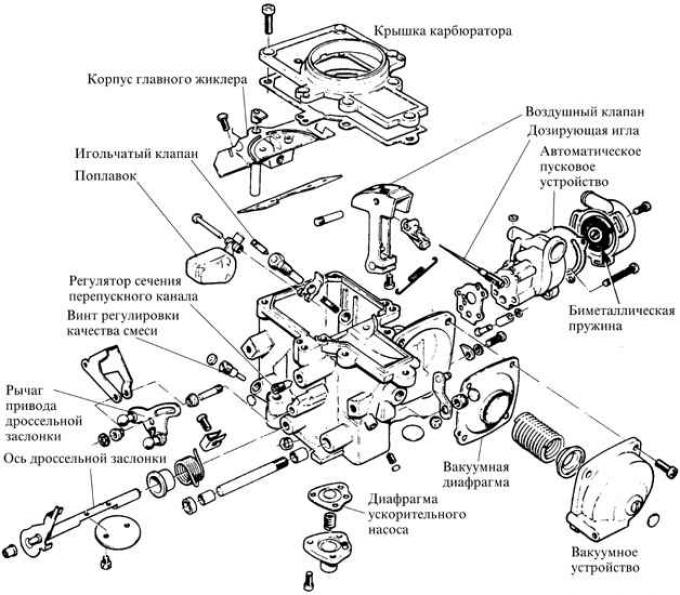
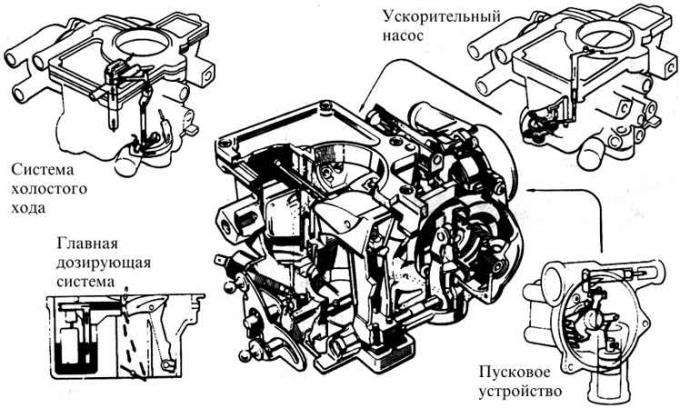
Basic carburetor systems
View of the carburetor with the cover removed
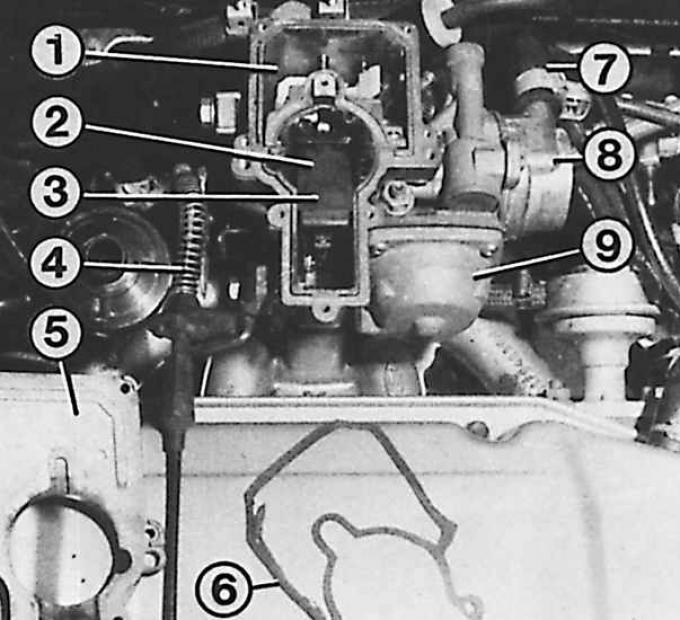
1 – float chamber; 2 – dosing needle; 3 – air valve; 4 – accelerator cable; 5 – carburetor cover; 6 – gasket; 7 – coolant supply hose to the starting device; 8 – starting device; 9 – vacuum air valve control device
Upgraded accelerator pump
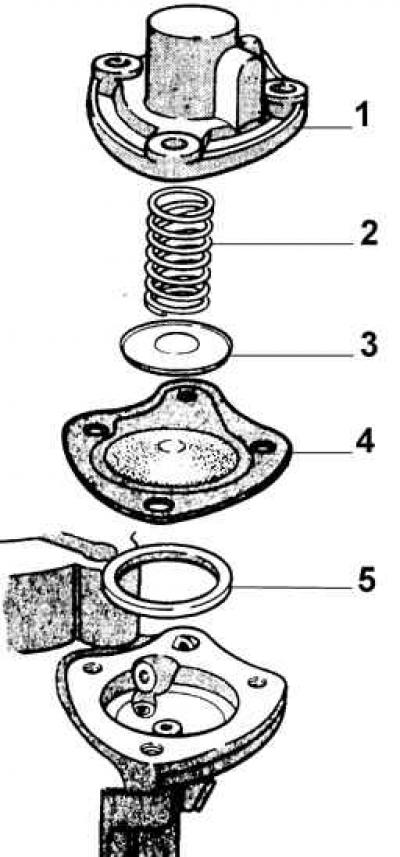
1 – lid; 2 – spring; 3 – plate; 4 – diaphragm; 5 – sealing ring
The FORD VV (Variable Venturi) carburetor with a variable diffuser section replaced the previously used carburetor with a fixed jet. Thanks to the new carburetor, engine power increased and fuel consumption decreased; since it supplies a leaner working mixture to the combustion chambers, the percentage of carbon monoxide in the exhaust gases is also reduced.
The variable cross-section diffuser consists of a valve controlled by a vacuum diaphragm and equipped with a needle rigidly connected to it, which opens the main jet as the valve provides a greater air flow.
The carburetor is also equipped with an idle system, a diaphragm accelerator pump and an automatic starting device with a bimetallic plate.
The fuel supply is regulated by a needle valve and a float in the float chamber. No additional adjustments are required.
The main metering system of the carburetor consists of an emulsion tube, the main and auxiliary fuel jets and a conical metering needle. The fuel flow is determined by the vacuum in the carburetor diffuser.
[The original article is available on the website: FordBook]