Warning: When performing battery inspection and maintenance procedures, certain precautions must be taken. Hydrogen gas, which is a highly flammable gas, is always present in battery cells. Therefore, do not approach the battery being serviced with a lit cigarette or open flame. The battery electrolyte contained in its cans is a solution of sulfuric acid, which is dangerous if it comes into contact with exposed skin or eyes. In addition, the acid has a destructive effect on clothing and painted surfaces. When disconnecting the battery, always disconnect the negative cable first and reconnect it last.
General part
1. Only regular battery maintenance procedures can ensure fast and reliable engine starts.
2. There are also a number of precautions that must be observed when servicing the battery. Before servicing the battery, be sure to turn off the engine and all associated components, then disconnect the negative battery cable. Read the section "Radio lock system - warnings" at the beginning of this guide before disconnecting the battery cables.
3. Charge the battery in a well-ventilated area.
4. Battery electrolyte is a solution of sulfuric acid, which is dangerous if it comes into contact with clothing, skin or eyes.
Never swallow electrolyte! Wear protective goggles when handling the battery and keep children away from the battery!
5. Pay attention to the external condition of the battery. If the positive terminal and its clamp are covered with a plastic cap or rubber boot, make sure they are not damaged and completely cover the terminal. Also inspect all terminals and connections for corrosion or loss of contact, and the housing and support clips for cracks. Also check the entire length of the power wires for cracks and damaged insulation.
6. Obvious corrosion (white "fluffy" deposits), especially around the battery terminals, should be cleaned off. Loosen the wire clamp nuts with a wrench and disconnect the negative wire (ground) first, then the positive wire (see Figure 8.6). Loosen the support clamp or strap and remove the battery from the engine compartment.
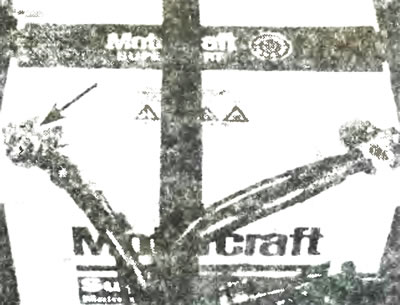
Figure 8.6. Location of the negative (indicated by the arrow) and positive (visible on the right) battery poles.
7. Strip the ends of the wires using a soft wire brush and a solution of baking soda and warm water. Wash the terminals and battery cover with the same solution, being careful not to let any solution get inside. When cleaning the battery, wear safety glasses and rubber gloves, avoiding any contact of the solution with your skin and eyes. Wear old clothes, as splashes of sulfuric acid, even highly diluted, will burn them. If the terminals are very heavily corroded, clean them with terminal cleaner. Rinse all cleaned surfaces with clean water.
8. Make sure the battery tray is in good condition and the support clamps are secure. If the battery was removed from the tray, make sure that no parts or tools are left on the tray before reinstalling it.
9. Information on removing and installing the battery is provided in Chapter 5.
The procedure for jump starting a battery is described at the beginning of this manual.
Cleaning
10. Corrosion on the battery case, supporting components and surrounding surfaces can be removed with a solution of baking soda and water. Rinse all cleaned surfaces with clean water.
11. Any metal parts of the car that are subject to corrosion should be covered with zinc primer and then painted.
Charger
Warning: The battery charging process produces hydrogen gas, which is flammable and explosive. Do not approach a charging or freshly charged battery with a lit cigarette or open flame. Wear safety glasses when working with the battery. Make sure that the charger is disconnected when connecting the battery to it.
12. Slow charging is the best way to restore a battery that is dead and won't start the engine. It's also a good way to recharge your battery before a long trip. Maintaining battery charge is especially important in winter when starting the engine requires more energy and electrical equipment is used more frequently.
13. It's best to use one- or two-amp chargers, sometimes called "trickle chargers." They're the safest and least damaging to the battery. Besides, they are the cheapest. For faster charging, you can use a higher-amperage charger, but its power must be at least 10 times less than the battery capacity (which is usually 5A). Force charging, which restores the battery's charge in one to two hours, is the most destructive to the battery and can damage it if it was in poor condition. This type of charging should only be used in emergency situations.
14. The time required to charge the battery is indicated in the instructions for the charger. Typically, a trickle charger will charge the battery in 12-16 hours.
The original article is available on the website: Fordbook.ru