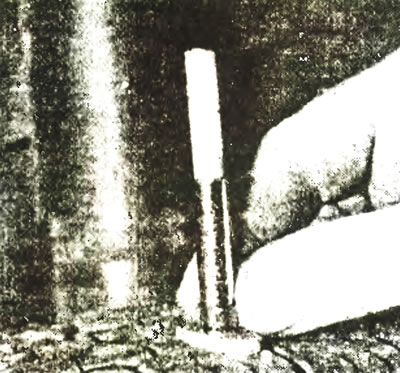
Figure 4.2. Checking the tread depth with an inexpensive indicator.
2. Ford tires are originally equipped with tread wear indicator (TWI) stripes that appear on the surface when the tread depth reaches approximately 1.6 mm. Most tires have marks evenly spaced around the tire's perimeter that indicate the location of the TWI stripe; such marks may include an arrow, a tire manufacturer's symbol, or the inscription "TWI." Tread wear can also be determined using a simple, inexpensive device known as a tread depth indicator (see figure 4.2).
3. Tire pressure should be checked regularly and maintained at the proper level (see Specifications). The check should be performed on cold tires, some time after the vehicle has been in operation. Pressure measured on hot tires is always overestimated due to thermal expansion. Never attempt to reduce the pressure in hot tires to the values specified in the Specification for cold tires, as this will inevitably lead to insufficient pressure in the tire. You can regularly use the pressure line that combines the pump and pressure gauge to check and regulate tire pressure, but be aware that it may lose accuracy due to general misuse and abuse. Therefore, periodically check the tire pressure with a good quality pressure gauge (see figure 4.3).
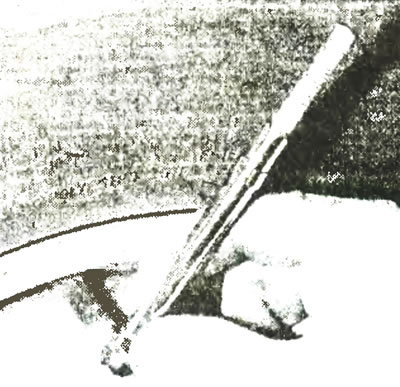
Figure 4.3. Using a portable tire pressure gauge to check tires.
Types of uneven tread wear
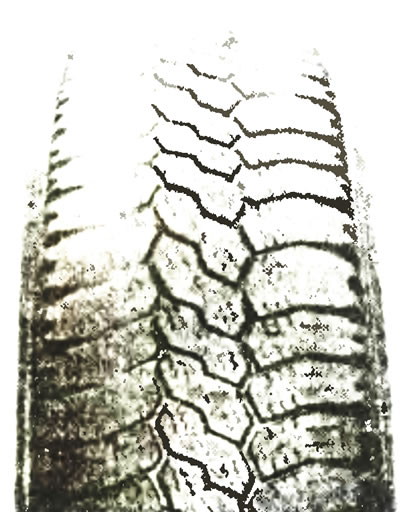
Figure 4.4. Lateral tread wear
Possible cause
- Insufficient tire pressure (wear on both sides).
- Incorrect wheel alignment (wear on one side).
- Making too sharp turns.
Method of correction
- Measure and adjust tire pressure.
- Repair or replace faulty suspension parts.
- Reduce speed when turning corners.
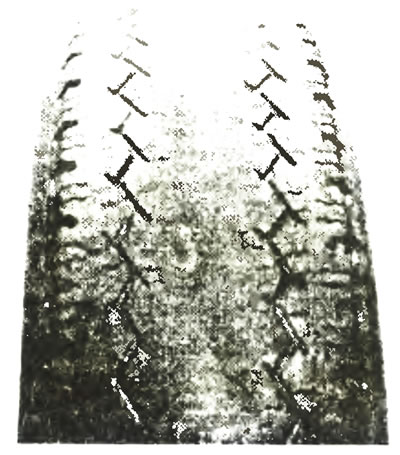
Figure 4.4. Central wear
Possible cause
- Tire pressure is too high.
Method of correction
- Measure and adjust tire pressure
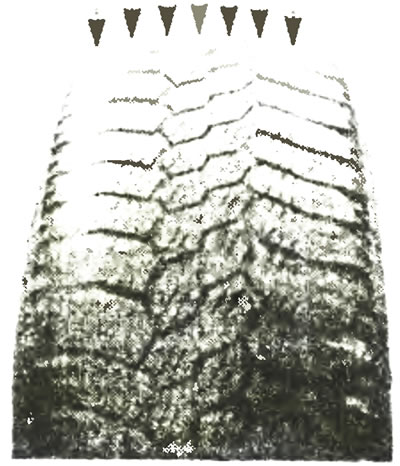
Figure 4.4. Toe wear. Wedge-shaped tread pattern
Possible cause
- Incorrect front wheel alignment.
Method of correction
- Adjust the front wheel alignment.
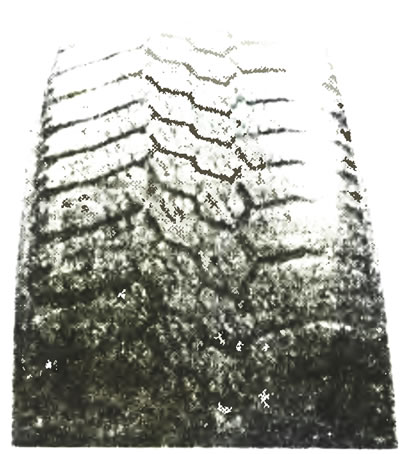
Figure 4.4. Uneven wear
Possible cause
- Incorrect camber or caster angle of the wheel pivot axes.
- Suspension malfunction.
- Wheel imbalance.
- Ovalization of the brake drum or disc.
Method of correction
- Repair or replace faulty suspension parts.
- Repair or replace faulty suspension parts.
4. Look for any abnormal tread wear (see figure 4.4). Uneven tread wear such as wedge-shaped treads, bald spots, or wear on one side are signs of improper balancing and/or toe-in/camber of the front wheels. If you notice one of these signs, you need to find and fix the problem as soon as possible.
5. Insufficient tire pressure leads to tire overheating due to excessive deflection of the tire core. This causes the tread to sit incorrectly on the road surface, which leads to slippage and, as a consequence, excessive wear, not to mention the risk of a sudden puncture of the tire due to excessive overheating.
6. Excessive pressure causes rapid wear of the central part of the tread, loss of traction, difficulty in steering and the risk of damage to the tire core.
7. Check regularly for nicks or gouges, especially on the sidewalls. Remove nails and stones that have lodged themselves in the tread promptly before they cause a puncture. If you remove the nail and discover that the tire is punctured, replace the nail to mark the puncture point. Then immediately replace the wheel and take the tire to the dealer for retreading. Don't drive on a flat tire. If you have any doubts about the condition of your tyre, please contact your local tyre manufacturer dealer for advice.
8. Driving style has a significant impact on overall tire wear: sharp braking and acceleration, high-speed turns cause accelerated tire wear. Rotating tires results in more even wear, but requires replacing all tires at once, which is unaffordable for many owners.
9. Uneven wear of the front wheels may be caused by their misalignment. The front wheels must always be properly aligned according to the vehicle's specifications.
10. Don't forget to also check the condition and pressure of the spare tire.