


Contents: Features of the device ↳ Ignition coil ↳ Switch ↳ Spark plugs ↳ Vacuum Regulator Control Device ↳
Features of the device
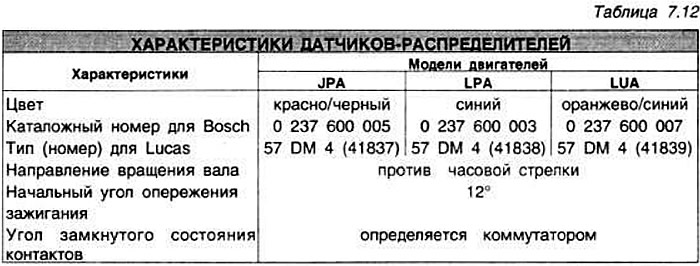
The system consists of electrical energy sources, a sensor-distributor, a high-energy ignition coil, a commutator, spark plugs, wires and an ignition switch. The firing order is 1-3-4-2.
The Bosch or Lucas margin distributor sensor (Fig. 7.38) is a four-spark, unshielded one with vacuum and centrifugal ignition advance regulators, with a built-in microelectronic control pulse sensor.
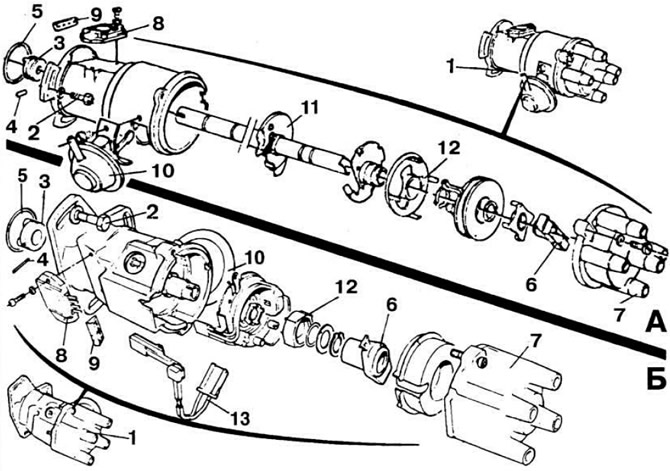 Fig. 7.38. Distributor sensor for JPA, LPA and LUA engines.
A - Bosch brand; B — Lucas.
1 - distributor assembly; 2 — mounting bolt; 3 — drive clutch; 4 — pin; 5 and 9 - gaskets; 6 — rotor; 7 — distributor cap; 8 — switch; 10 - vacuum regulator; 11 — shaft with leading plate of centrifugal regulator; 12 — rotor; 13 — generator sensor.
The centrifugal and vacuum regulators automatically change the ignition timing angle depending on the crankshaft speed and engine load (Fig. 7.39-7.44).
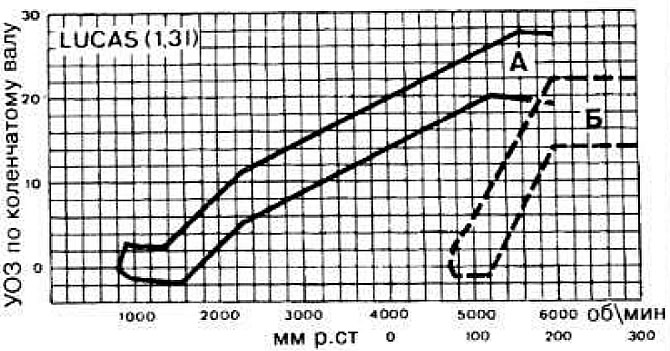 Fig. 7.39. Characteristics of automatic ignition advance of the Lucas distributor sensor installed on JPA engines.
A - characteristic of a centrifugal regulator; B - characteristic of the vacuum regulator.
When testing on a bench, reduce the values indicated on the graph by half. When testing on a car, add the initial ignition advance angle to the indicated values.
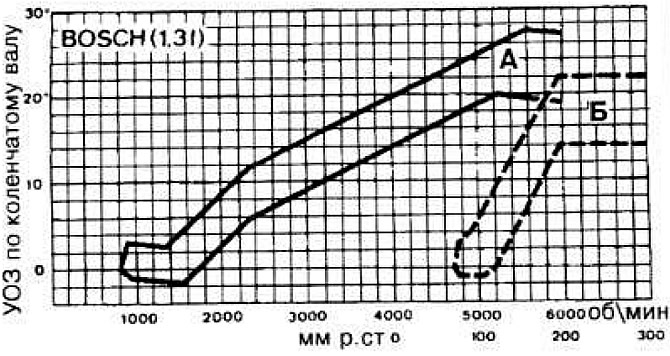 Fig. 7.40. Characteristics of automatic ignition advance of the Bosch distributor sensor installed on JPA model engines.
A - characteristic of a centrifugal regulator; B - characteristic of the vacuum regulator.
When testing on a bench, reduce the values indicated on the graph by half. When testing on a car, add the initial ignition advance angle to the indicated values.
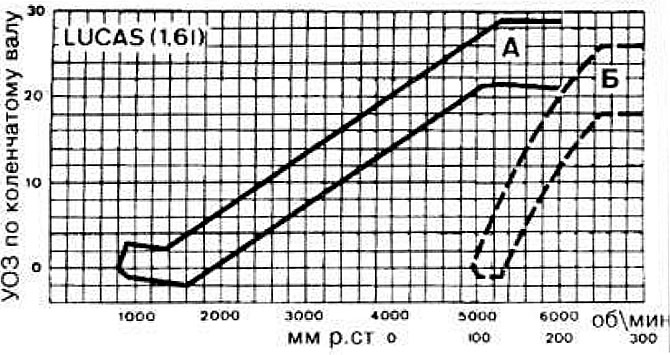 Fig. 7.41. Characteristics of automatic ignition advance of the Lucas distributor sensor installed on LPA model engines.
A - characteristic of a centrifugal regulator; B - characteristic of the vacuum regulator.
When testing on a bench, reduce the values indicated on the graph by half. When testing on a car, add the initial ignition advance angle to the indicated values.
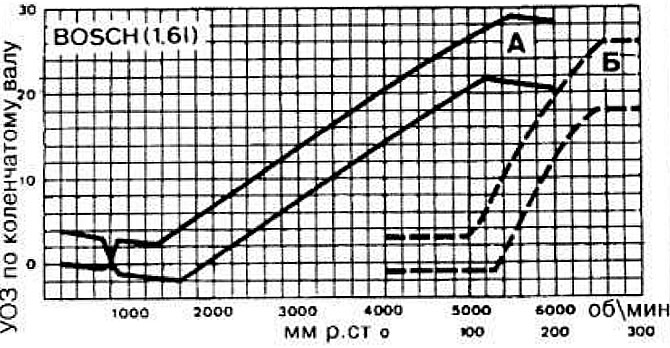 Fig. 7.42. Characteristics of automatic ignition advance of the Lucas distributor sensor installed on JPA model engines.
A - characteristic of a centrifugal regulator; B - characteristic of the vacuum regulator.
When testing on a stand, reduce the values indicated on the graph by half. When testing on a car, add the initial ignition advance angle to the indicated values
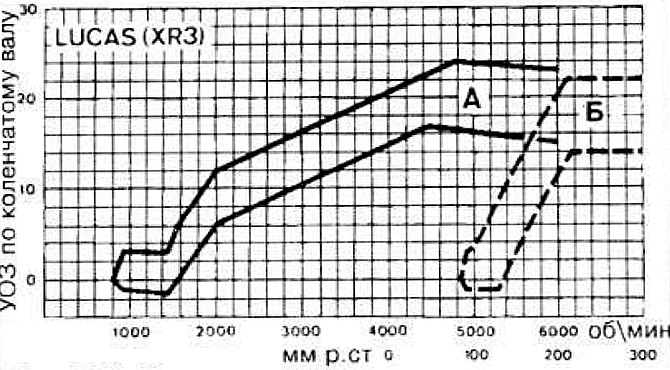 Fig. 7.43. Characteristics of automatic ignition advance of the Lucas distributor sensor installed on LUA model engines.
A - characteristic of a centrifugal regulator; B - characteristic of the vacuum regulator.
When testing on a bench, reduce the values indicated on the graph by half. When testing on a car, add the initial ignition advance angle to the indicated values.
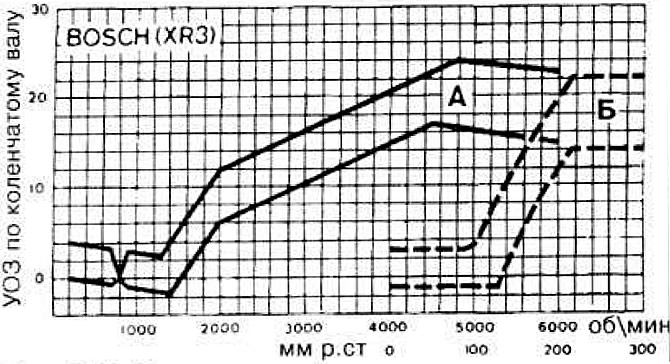 Fig. 7.44. Characteristics of automatic ignition advance of the Bosch distributor sensor installed on LUA model engines.
A - characteristic of a centrifugal regulator; B - characteristic of the vacuum regulator.
When testing on a bench, reduce the values indicated on the graph by half. When testing on a car, add the initial ignition advance angle to the indicated values.
The ignition system of the Escort XR3i has a switch built into the rotor of the distributor sensor and automatically turns off the ignition when the crankshaft speed reaches 6500 rpm.
Ignition coil
The ignition coil of the Bosch brand (catalog number 0 221 122 030) or Lucas has a primary winding resistance of 0.72-0.88 Ohm, secondary winding resistance of 4.5-7.0 kOhm. The voltage of the secondary winding is not less than 30,000 V.
Switch
The switch (Fig. 7.45) converts the sensor current pulses into current pulses in the primary winding of the ignition coil. The switch is fixed to the body of the sensor-distributor (Fig. 7.46).
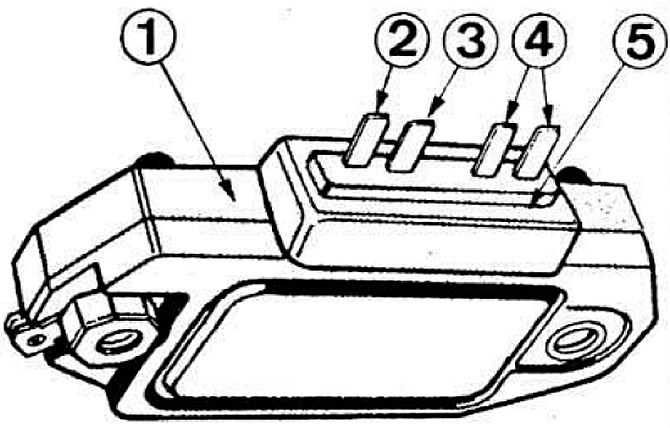 Fig. 7.45. Ignition system switch.
1 — body; 2 - low voltage "-" terminal from the coil; 3 - low voltage "+" terminal to the coil; 4 — terminals for connecting to the control pulse sensor; 5 — connector.
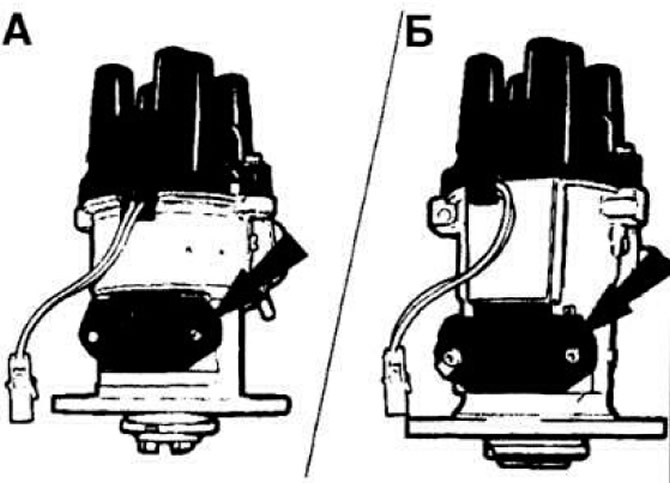 Fig. 7.46. The arrows indicate the mounting location of the factory plate of the distributor sensor and switch.
Spark plugs
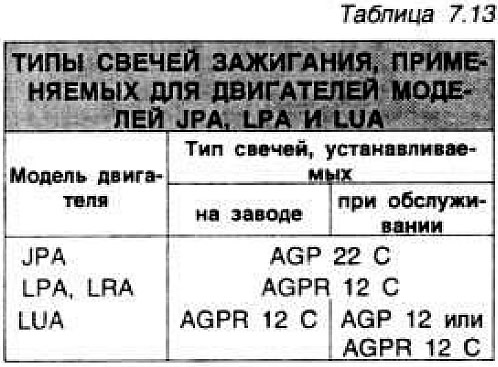
Motorcraft Super spark plugs. The gap between the electrodes is 0.75 mm for LRA engine spark plugs, for other spark plugs - 0.6 mm. The spark plug types are listed in Table 7.13.
Vacuum Regulator Control Device
The vacuum regulator control device of the contactless ignition system of the LUA engine model, in addition to delaying the change in vacuum, increases the vacuum value thanks to a special valve. The delay time for creating a vacuum of 200 mm. r. st from 8 to 16 sec. The catalog number of the delay valve is D 5 VE - 12 A 208-AA - AB, the color of the valve is green and white.
On Escort and Orion vehicles with automatic transmission, the vacuum regulator has one diaphragm that works to reduce the ignition timing angle, and one diaphragm that works to increase this angle (Fig. 7.47), and the vacuum regulator control device differs from the device installed on vehicles with manual transmission.
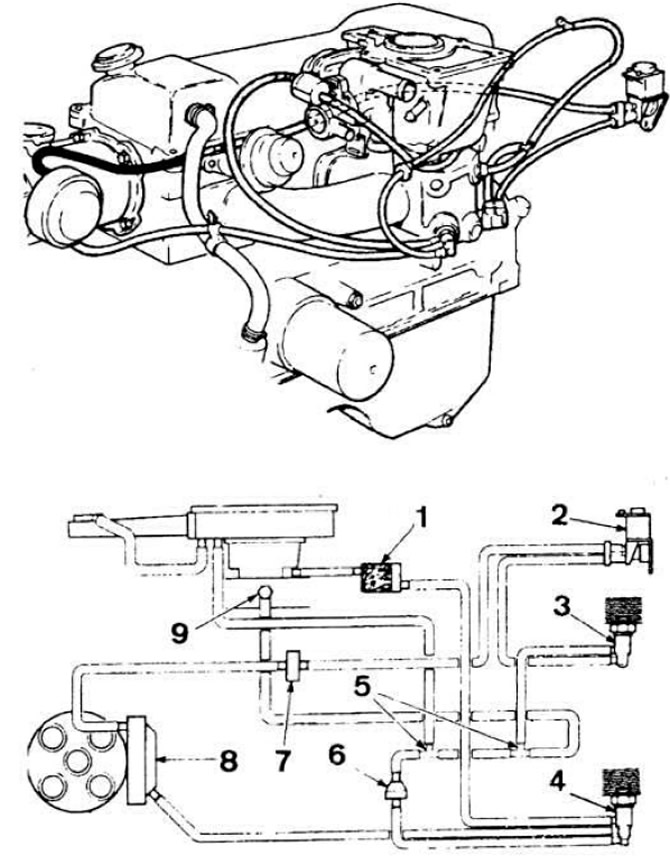 Fig. 7.47. Control device for the vacuum regulator of the ignition system on vehicles with automatic transmission.
1 — fuel accumulator; 2 - electromagnetic two-way valve; 3 - thermostatic valve blue; 4 - thermostatic valve green; 5 - tees; 6 - check valve; 7 - calibrated section; 8 - vacuum regulator with two diaphragms; 9 — branch pipe on the inlet manifold.
Therefore, the characteristics of automatic ignition advance differ from the characteristics of other distributor sensors (Fig. 7.48).
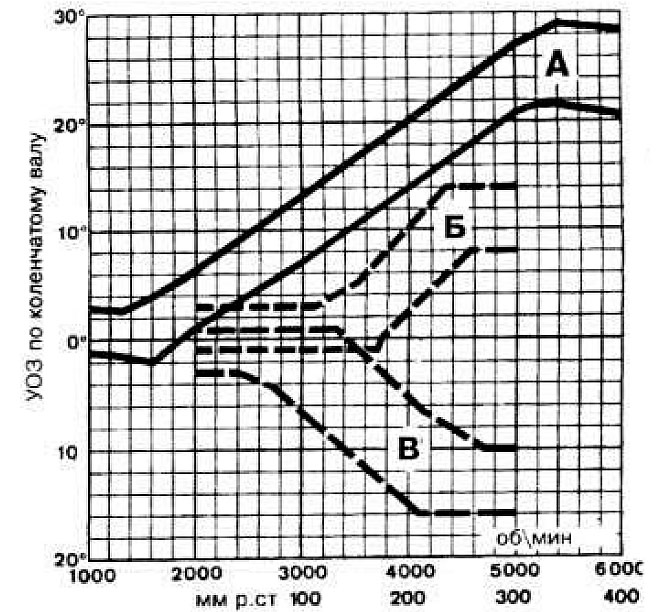 Fig. 7.48. Characteristics of automatic ignition advance of the distributor sensor installed on vehicles with automatic transmission.
A - characteristic of a centrifugal regulator; B - characteristic of the vacuum regulator in case of increase in U03; B is the characteristic of the centrifugal regulator in case of a decrease in ignition timing.
The used sensor-distributor is Bosch type 81 SF-1210 - ANA, blue-brown color.
Content was created using data from this website: fordbook.ru