Description
1. Since 1992, the fuel delivery and emission control systems on turbocharged engines have been controlled by the Lucas EPI engine management system (see Figure 26.1).
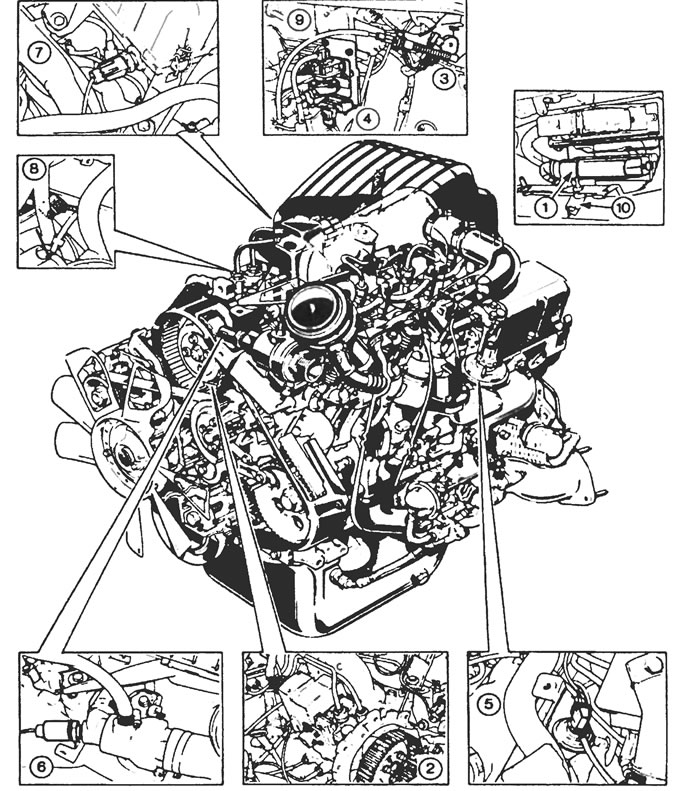
Figure 26.1. Lucas EPIC control system component locations on the engine: 1. Control unit, 2. High-pressure fuel pump, 3. Accelerator pedal position sensor, 4. Manifold air pressure sensor, 5. EGR valve, 6. Coolant temperature sensor, 7. Air temperature sensor, 8. Crankshaft position and speed sensor, 9. EGR vacuum controller, 10. Self-diagnosis plug.
2. The system carries out programmed electronic control of the high-pressure fuel pump and the exhaust gas recirculation system via the electronic control unit (ECU).
3. To assess the fuel system requirements under all operating conditions, the ECU receives information from sensors, including accelerator pedal position, manifold pressure, crankshaft speed and position, coolant temperature and air temperature. The EGR valve action is also controlled by the ECU, in conjunction with the vacuum flow regulator.
4. A unique feature of this system is electronic fuel supply control. Instead of the accelerator cable being linked to the high pressure fuel pump as in a conventional mechanical system, the cable is linked to the accelerator pedal position sensor. This sensor sends pedal position signals to the ECU, which in turn electronically controls the fuel pump.
Precautions:
- a) Always disconnect the negative battery cable before removing any electronic control system components;
- b) When installing the battery, be especially careful not to confuse the positive and negative poles of the battery;
- c) Do not drop system components (especially ECU) and do not subject them to impacts when removing and installing.
- d) Do not attempt to repair the ECU yourself, or check it (any kind of testing equipment), open the lid;
- d) If you inspect the electronic control system components in rainy weather, make sure that water does not get inside the components. When washing the engine compartment, do not spray water on these parts or their electrical connectors.